Cook Korean food
at home.
8 sections — cooking basics, Korean sauces, soups and stews, noodles and rice, meat and seafood, and kimchi recipes.
Browse every section
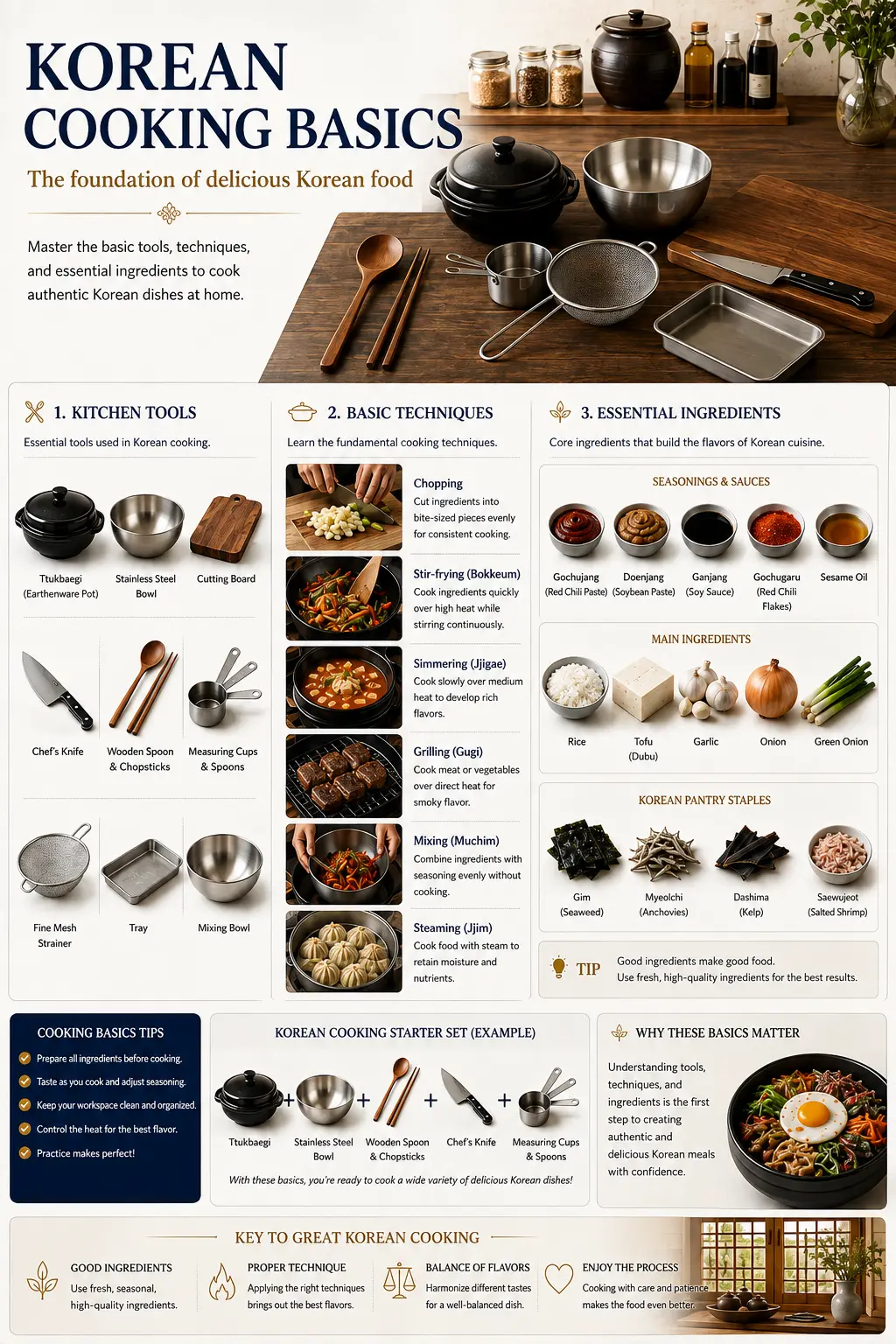
Cooking Basics
Korean cooking is based on simple but powerful principles: fresh ingredients, balanced flavors, and traditional preparation methods.
Open section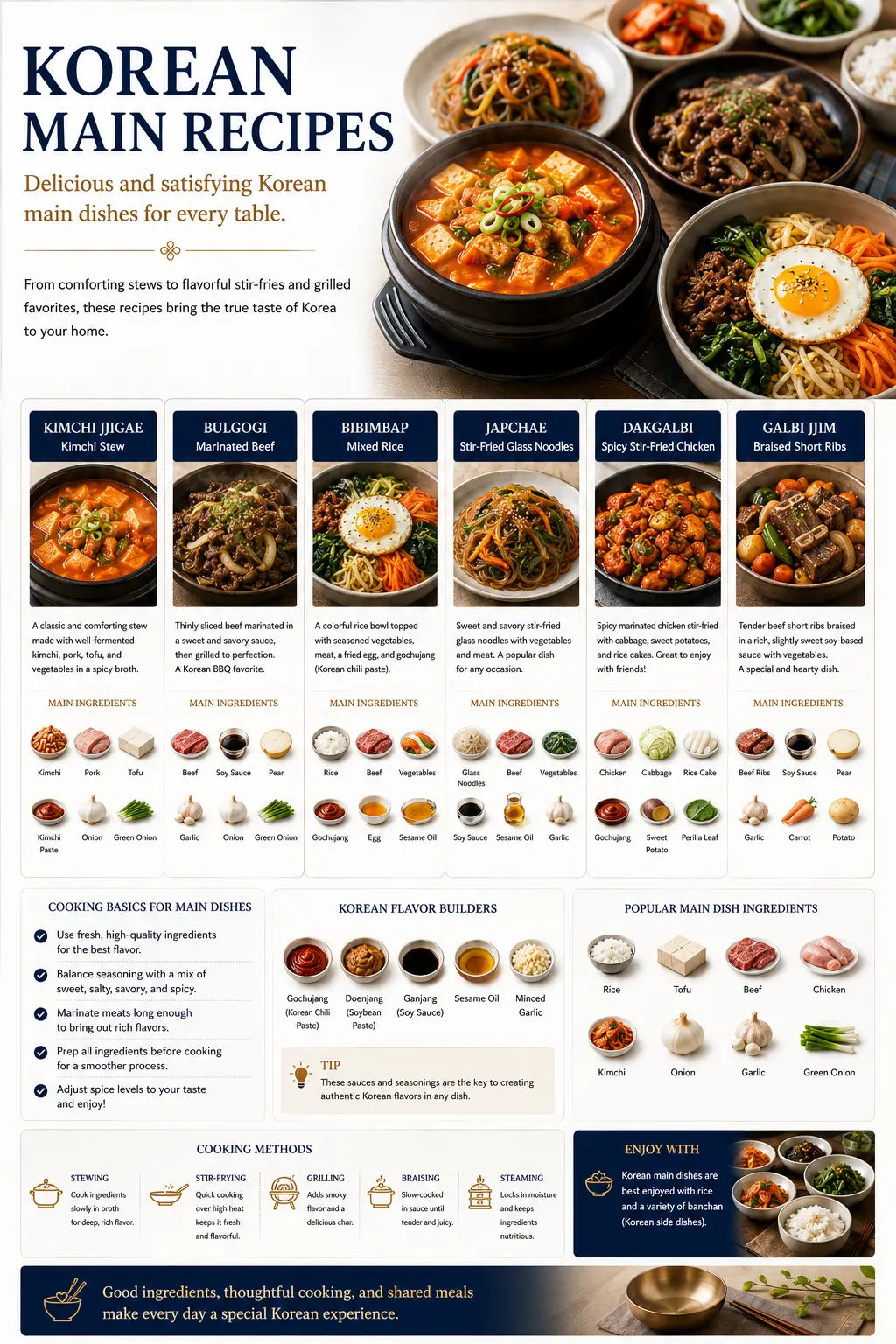
Korean Main Recipes
Korean main dishes represent the heart of Korean meals, combining rice, vegetables, meat, seafood and traditional seasonings into balanced meals.
Open section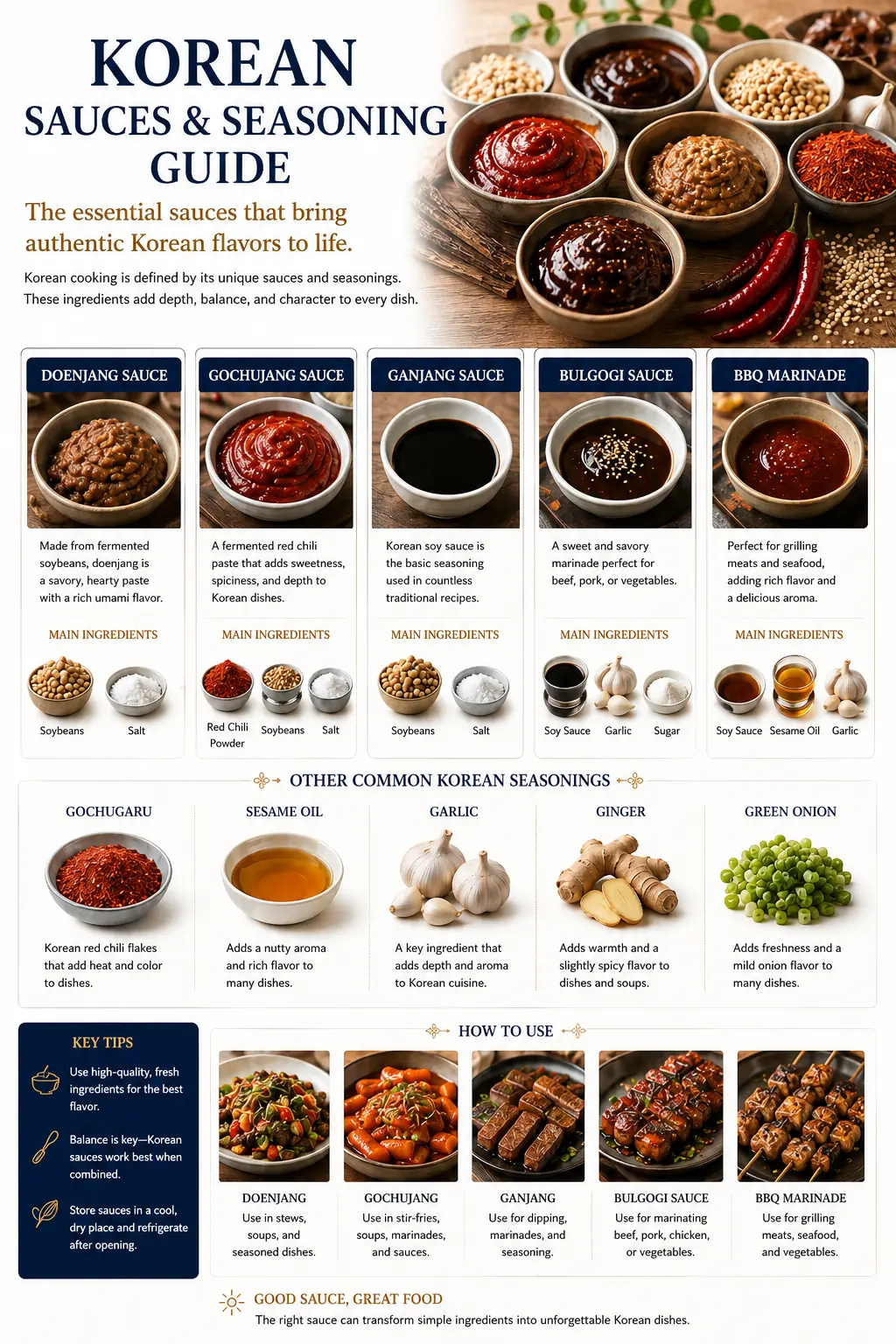
Korean Sauces
The unique taste of Korean food comes from traditional sauces and seasonings that have been developed through generations.
Open section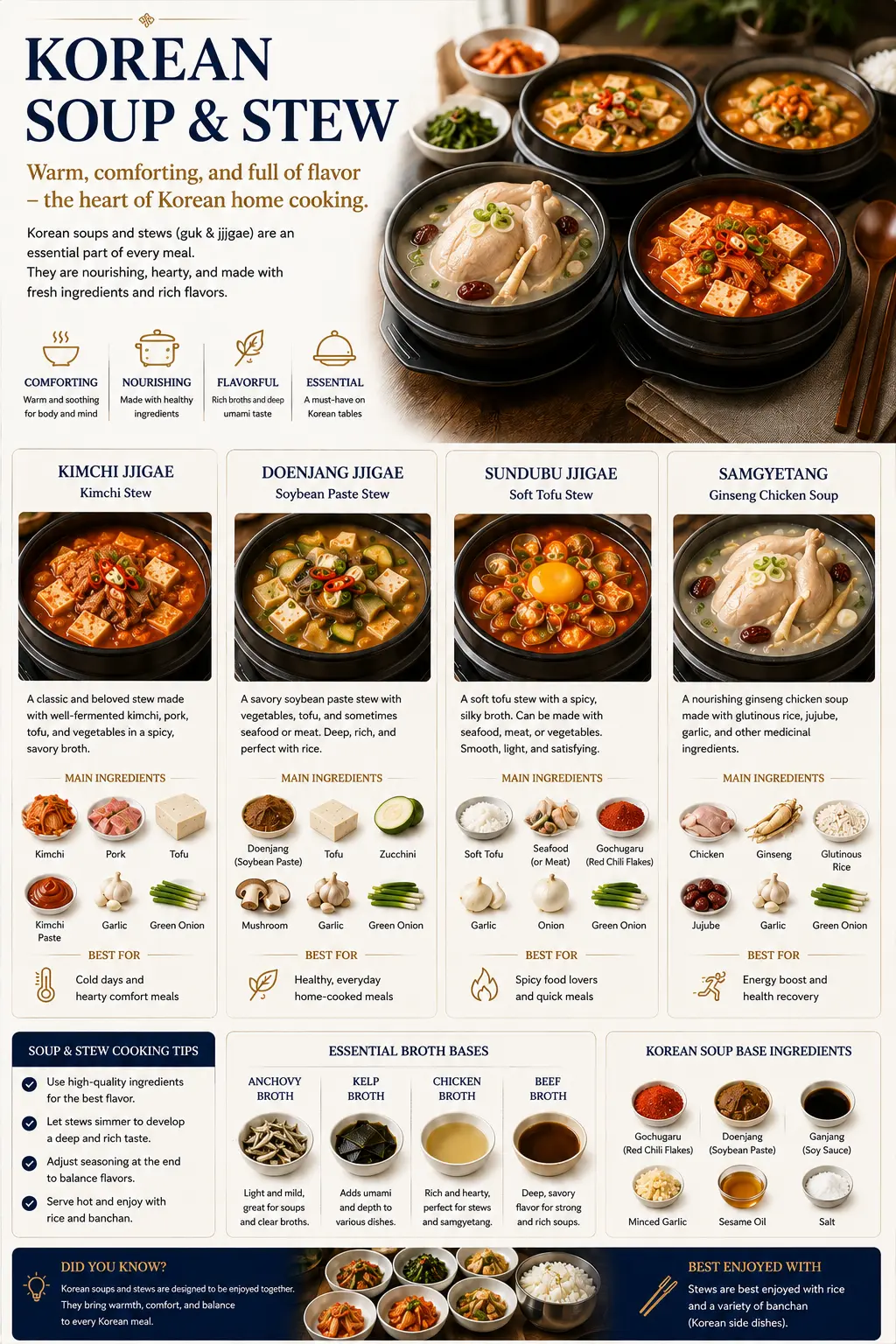
Korean Soup & Stew
Known as Guk, Tang and Jjigae, Korean soups and stews provide warmth, nutrition and deep flavors through traditional cooking methods.
Open section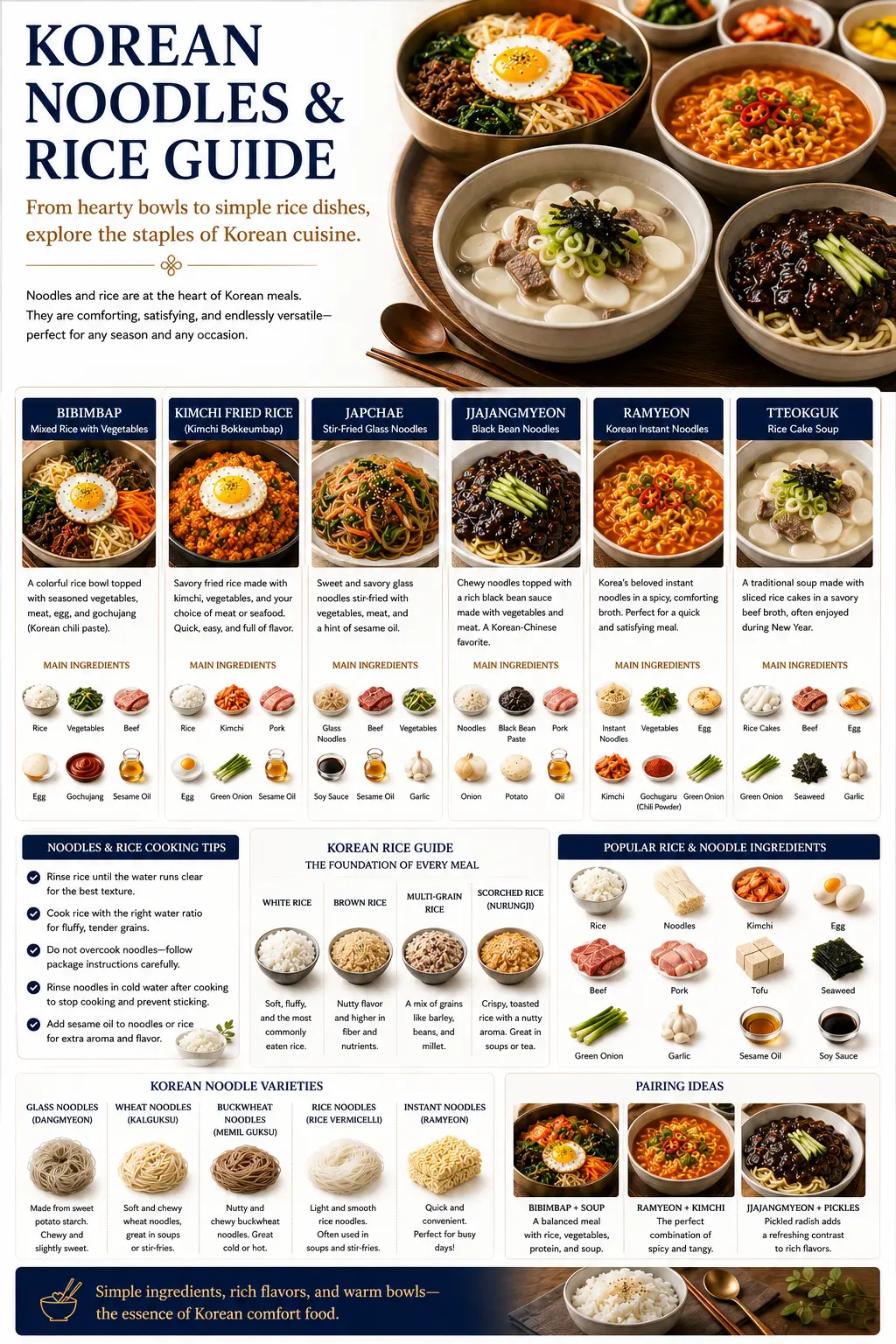
Korean Noodles & Rice
Rice and noodle dishes are at the center of Korean meals — from mixed rice bowls and glass noodles to rice rolls and rice cakes.
Open section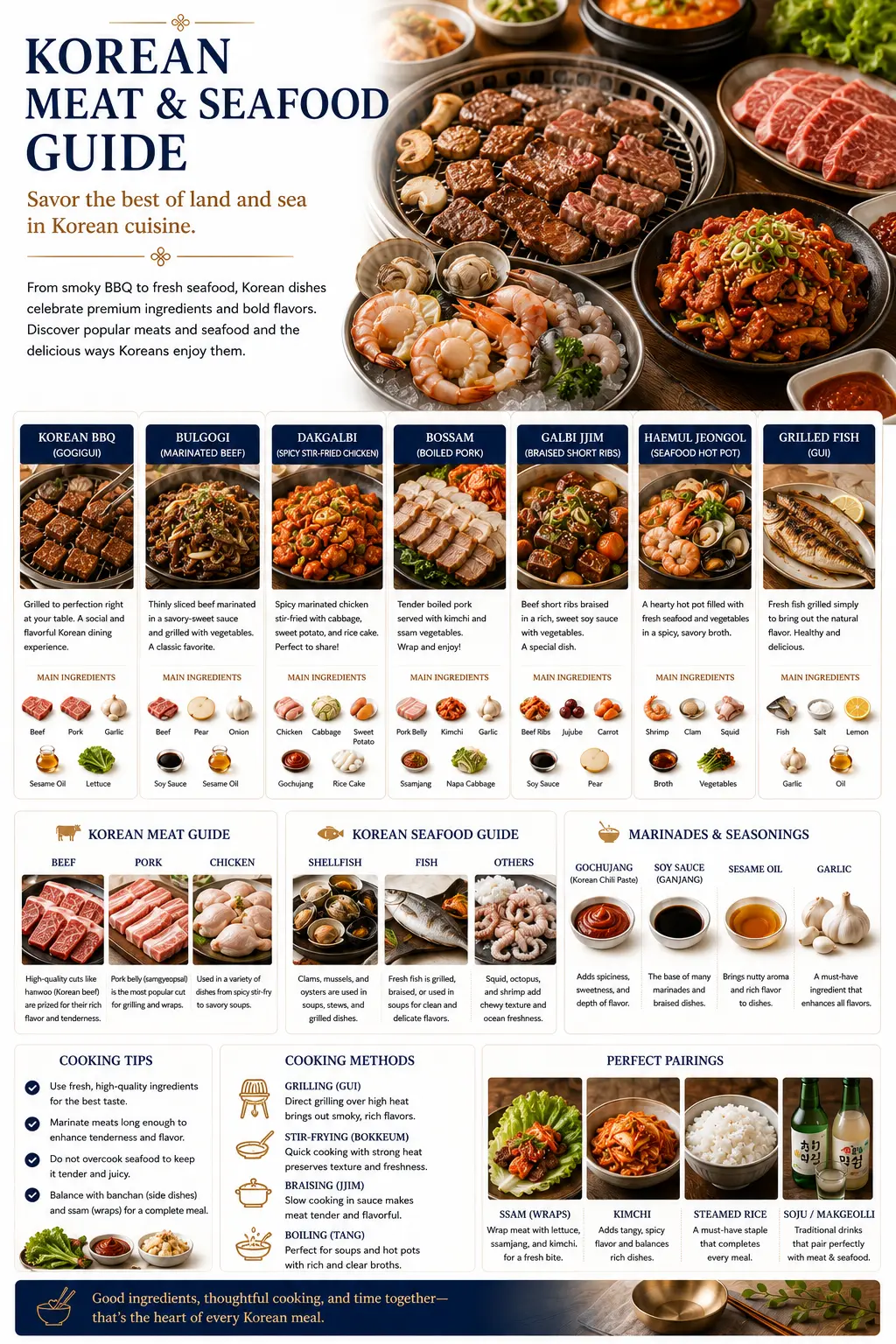
Korean Meat & Seafood
Korean BBQ, known as Gogi-gui, is one of the most popular Korean dining experiences worldwide — a social meal where people grill meat together at t…
Open section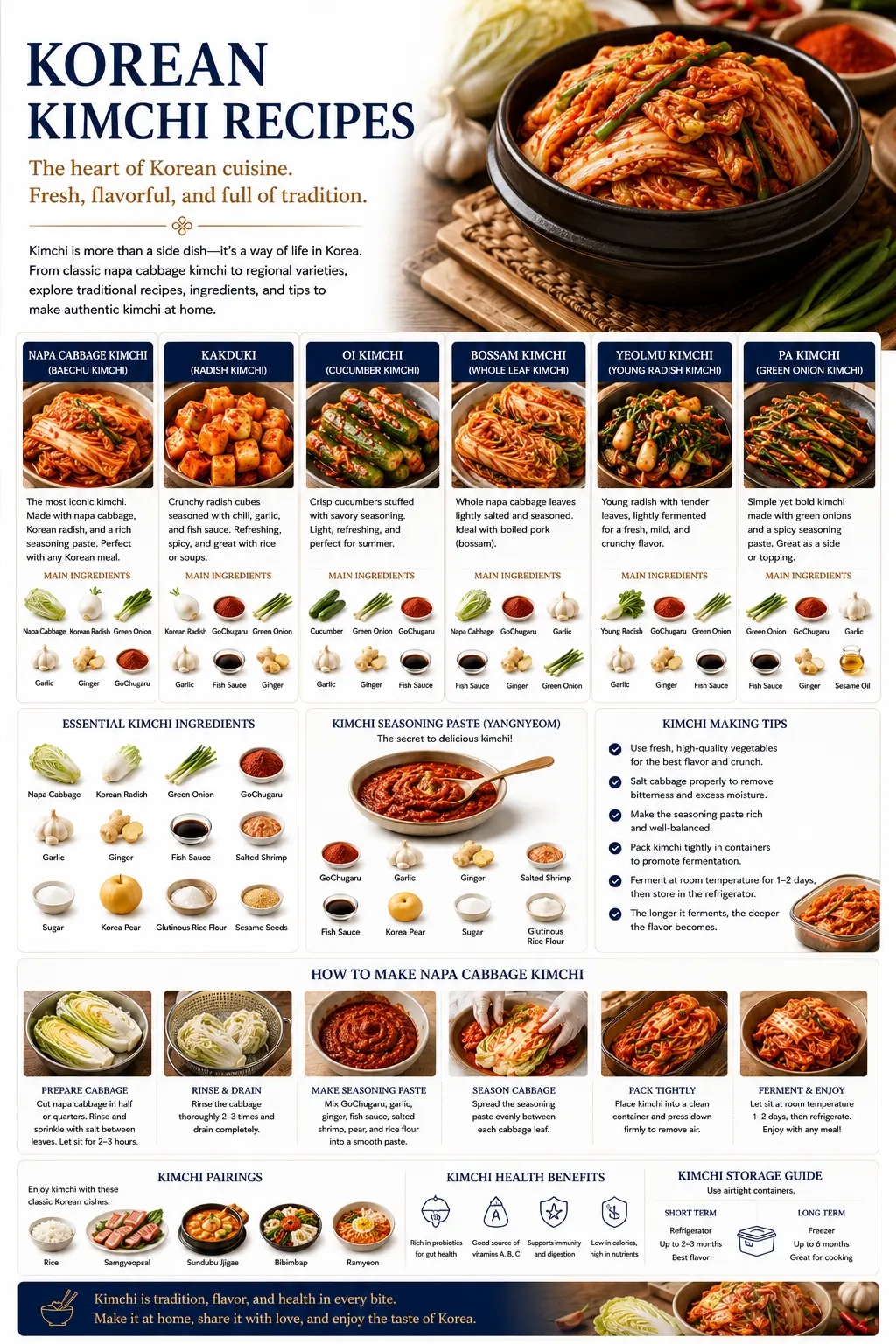
Korean Kimchi Recipes
Making kimchi involves careful preparation of ingredients, balanced seasoning and a natural fermentation process developed over generations.
Open section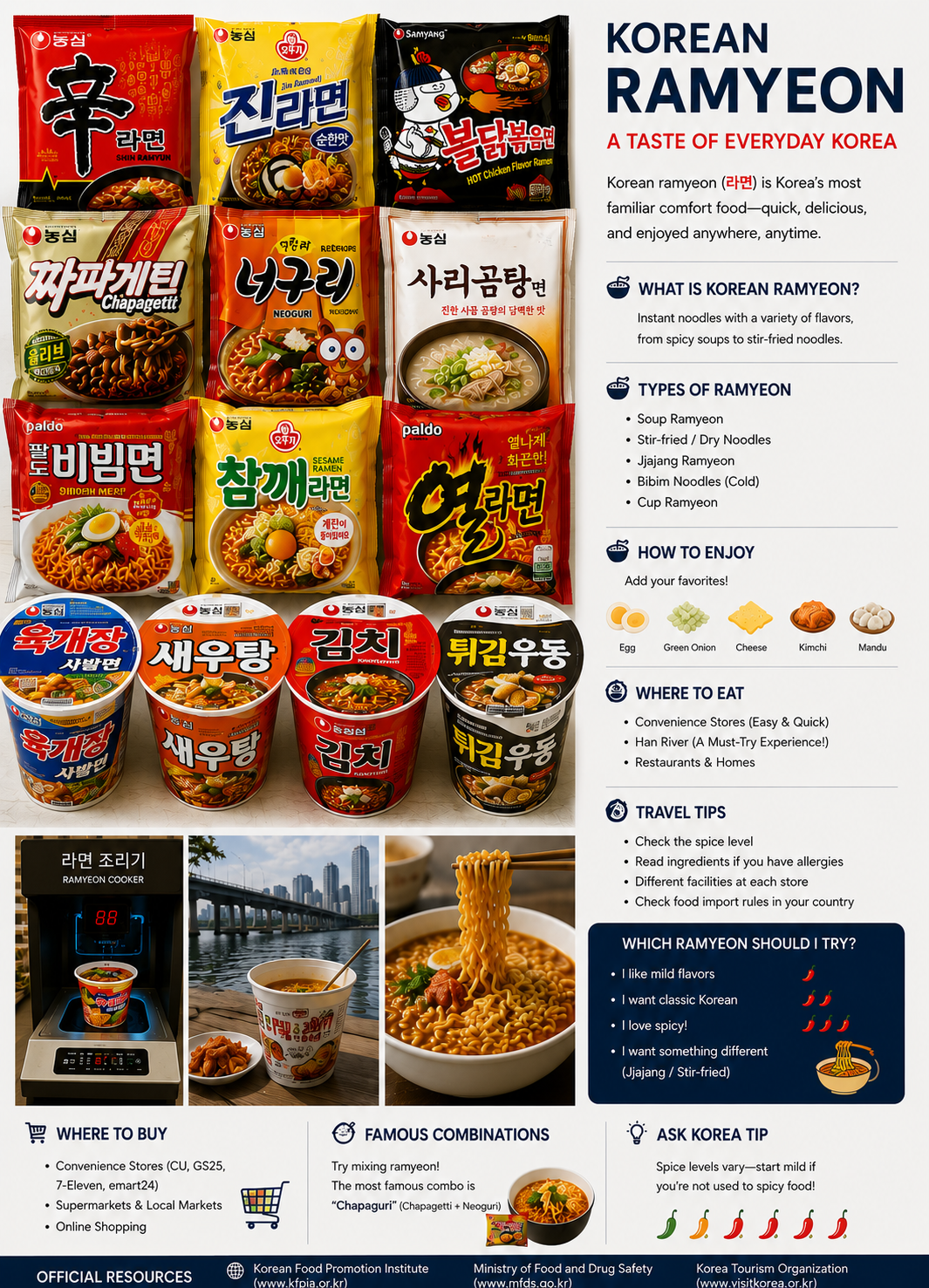
Korean Ramyeon
A practical guide to Korea's iconic instant noodles — from popular varieties and spice levels to cooking methods, toppings and convenience-store ramyeon.
Open sectionASK KOREA Transit