Korean Cooking Guide

Korean Soup & Stew

Known as Guk, Tang and Jjigae, Korean soups and stews provide warmth, nutrition and deep flavors through traditional cooking methods.

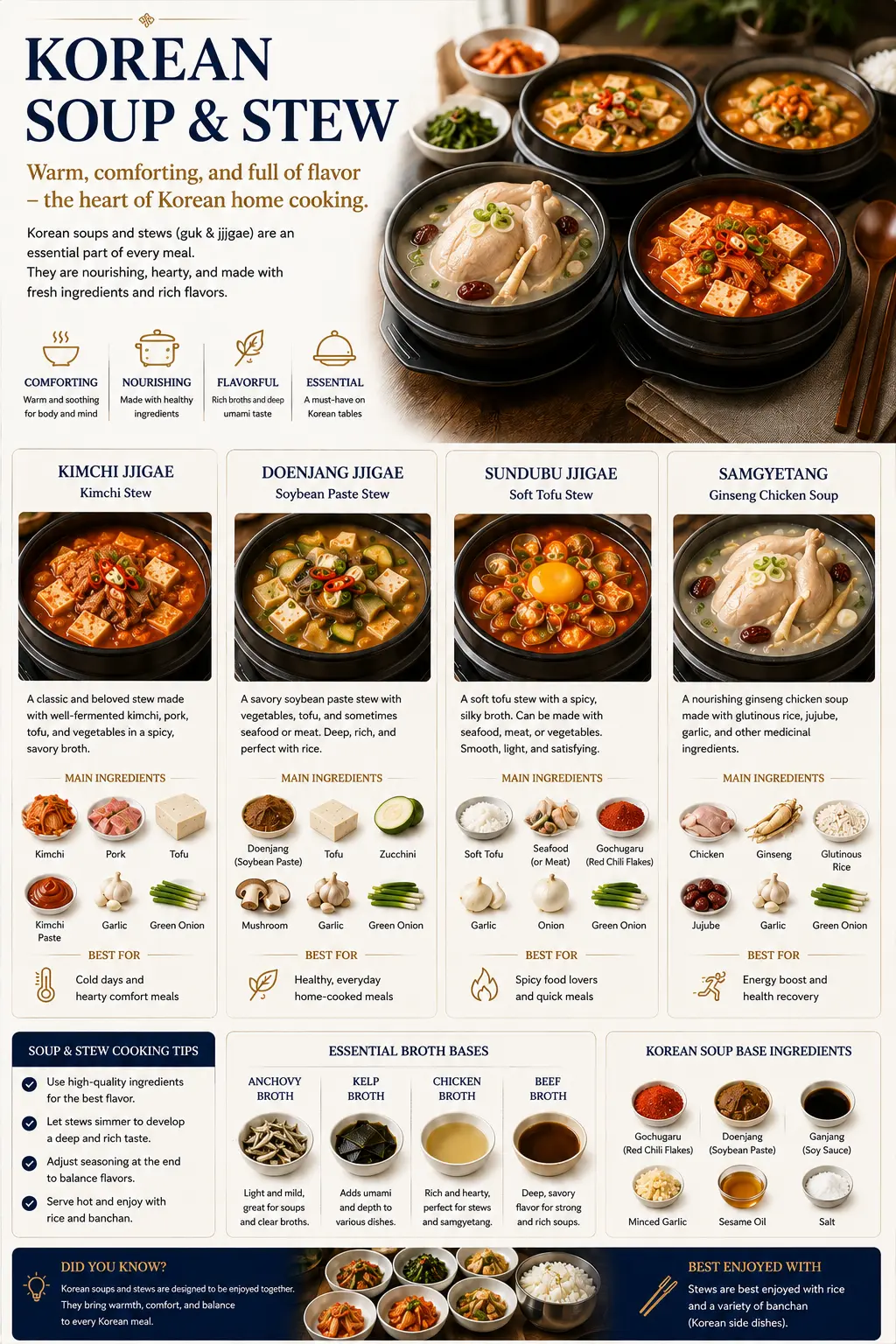
Korean Soup & Stew — kimchi jjigae, doenjang jjigae, sundubu jjigae and samgyetang
01 — Overview

Quick Summary

Korean soups and stews represent the warmth and depth of Korean cuisine. Through fermented ingredients, seasonal foods and traditional cooking methods, dishes like Kimchi Jjigae, Doenjang Jjigae, Sundubu Jjigae and Samgyetang show the heart of Korean home cooking.

Key takeaways

  • Korean soups and stews are essential parts of Hansik.
  • Kimchi Jjigae represents fermentation culture.
  • Doenjang Jjigae represents traditional home cooking.
  • Sundubu Jjigae is known for soft tofu and spicy flavor.
  • Samgyetang reflects Korean food and health philosophy.
  • Soup culture connects food with family and daily life.
02 — Full Guide

The Complete Guide

What makes Korean stews different

Unlike simple soups, Korean stews often contain strong flavors created by fermented ingredients, fresh vegetables, meat or seafood and long simmering methods.

Soup and stew culture reflects the Korean belief that food should provide both comfort and balance.

Kimchi Jjigae (Kimchi Stew)

Kimchi Jjigae is one of the most popular Korean stews. It is made with fermented kimchi and creates a rich, spicy and comforting flavor.

The flavor depends greatly on the quality and fermentation level of the kimchi. Older fermented kimchi usually creates a deeper and richer taste.

Kimchi Jjigae represents the connection between Korean fermentation culture and everyday cooking.

  • Main ingredients: kimchi, pork or tuna, tofu, green onion, garlic, gochugaru and kimchi broth.
  • Commonly enjoyed with rice, side dishes and Korean home meals.

Doenjang Jjigae (Soybean Paste Stew)

Doenjang Jjigae is a traditional Korean stew made with fermented soybean paste. It is one of the most common home-cooked dishes in Korea.

Many Korean families have their own style of making Doenjang Jjigae.

  • Main ingredients: doenjang, tofu, vegetables, mushroom, and seafood or meat depending on the recipe.
  • Characteristics: deep savory flavor, healthy fermented ingredients, simple preparation and a connection to family meals.

Sundubu Jjigae (Soft Tofu Stew)

Sundubu Jjigae is a spicy stew made with soft tofu. It is especially popular in Korea and internationally because of its rich flavor and soft texture.

It is usually served extremely hot in an earthenware pot. The hot temperature keeps the stew warm while creating a unique dining experience.

  • Main ingredients: soft tofu, seafood or meat, egg, gochugaru, garlic and green onion.
  • Popular versions: Seafood Sundubu, Beef Sundubu and Mushroom Sundubu.

Samgyetang (Ginseng Chicken Soup)

Samgyetang is a traditional Korean chicken soup made with a whole young chicken. It is especially associated with summer health traditions.

Koreans traditionally enjoy Samgyetang during the hottest days of summer. The idea is that consuming a nutritious hot soup helps restore energy during hot weather. Samgyetang represents the Korean philosophy of balancing the body through food.

  • Main ingredients: young chicken, ginseng, glutinous rice, garlic and jujube.

Soup and Stew Dining Culture

Soup and stew are not just dishes in Korea. They are part of everyday dining culture, providing warmth, comfort and a sense of home.

  • A typical Korean meal often includes rice, soup or stew, and side dishes.
Ask AI

Ask AI About This Topic

AI Assistant

Have a question about Korean Soup & Stew?

Get instant, locally-checked answers from the ASK KOREA AI. Ask anything from specific edge cases to itinerary decisions.

Ask this question
Suggested prompt

"Help me cook Korean food at home — korean soup & stew."

ASK KOREA Transit