Korean Cooking Guide

Cooking Basics

Korean cooking is based on simple but powerful principles: fresh ingredients, balanced flavors, and traditional preparation methods.

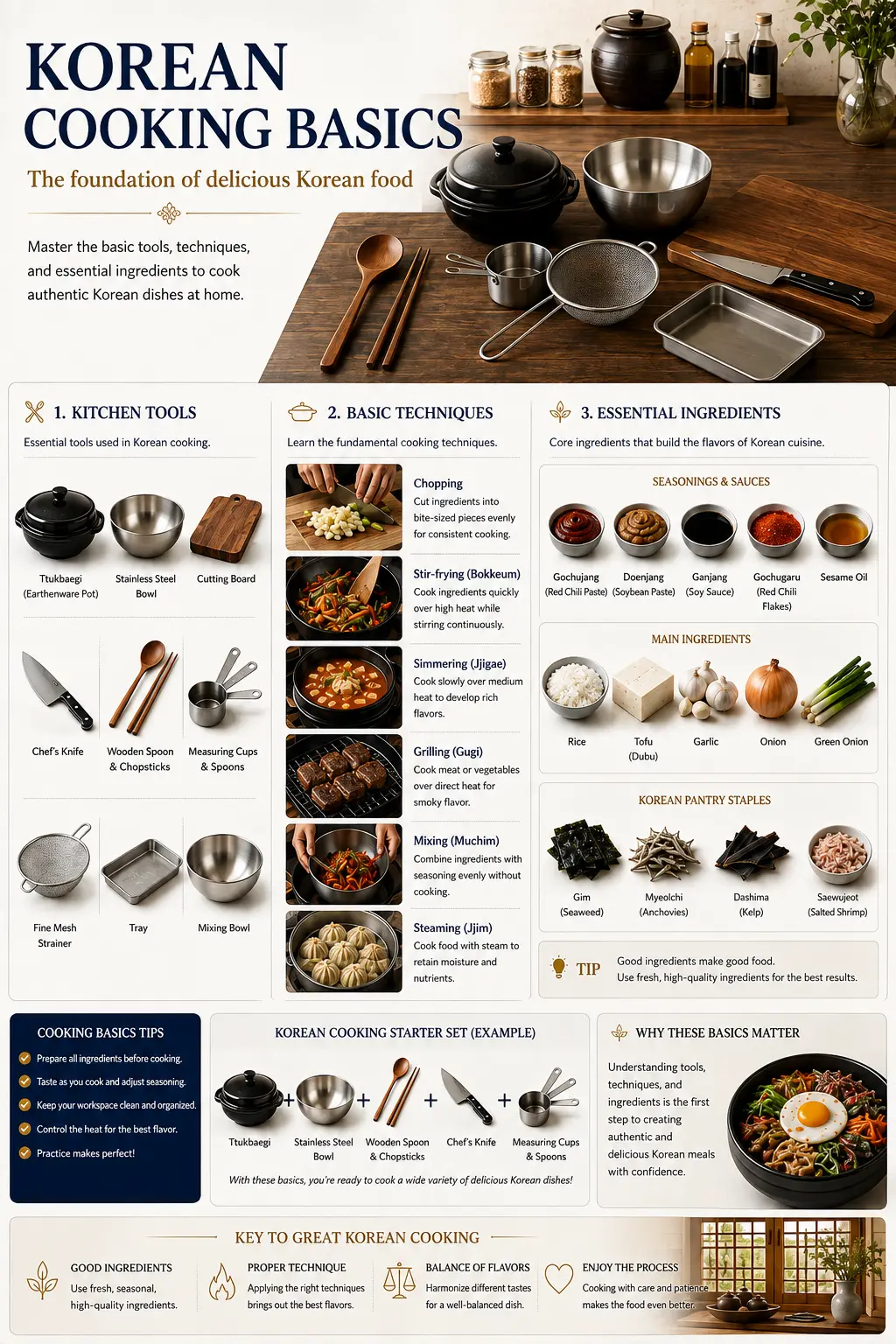
Korean Cooking Basics — kitchen tools, basic techniques and essential ingredients
01 — Overview

Quick Summary

Korean cooking combines traditional tools, balanced seasoning, fresh ingredients, and fermentation techniques. By learning basic methods and ingredients, anyone can begin to understand and enjoy the cooking principles behind Korean cuisine.

Key takeaways

  • Korean cooking is based on balance and harmony.
  • Traditional tools create unique flavors.
  • Seasoning is essential to Korean dishes.
  • Fermentation is a core cooking technique.
  • Basic ingredients form the foundation of Hansik.
02 — Full Guide

The Complete Guide

Kitchen Tools

Understanding basic Korean cooking techniques helps visitors and beginners recreate Korean dishes at home and better appreciate the food culture behind each recipe.

Traditional Korean cooking uses various tools that help create unique flavors and textures.

  • Dolsot (Stone Pot) — a heated stone bowl commonly used for dishes such as Dolsot Bibimbap and rice dishes. The stone pot keeps food hot and creates a crispy rice layer called nurungji.
  • Ttukbaegi (Earthenware Pot) — a traditional Korean clay pot used for Kimchi Jjigae, Doenjang Jjigae and Sundubu Jjigae. It maintains heat for a long time and is ideal for Korean soups and stews.
  • Korean Knife — a good knife is essential for preparing vegetables, meat, seafood and kimchi ingredients. Korean cooking often requires careful cutting to maintain texture and appearance.
  • Spoon and Chopsticks — Koreans traditionally use a spoon for rice and soup, and chopsticks for side dishes and ingredients. The combination is a unique part of Korean dining culture.

Basic Techniques

Korean cooking uses several basic techniques to create balanced flavors.

Seasoning (Yangnyeom) is one of the most important parts of Korean cooking. Common seasonings include gochujang, ganjang, doenjang, sesame oil, garlic, green onion and gochugaru. The right combination of seasoning creates the unique taste of Korean dishes.

Fermentation is a key technique in Korean cuisine. It is used to create kimchi, doenjang, gochujang and ganjang. Fermentation adds deep flavor and preserves food naturally.

  • Grilling (Gui) — a popular Korean cooking method used for bulgogi, galbi and samgyeopsal. Korean grilling focuses on fresh ingredients, proper heat control and marinade flavors.
  • Boiling and Stewing — many Korean dishes such as Kimchi Jjigae, Doenjang Jjigae and Samgyetang are prepared through slow cooking, allowing ingredients to combine and create deeper flavors.

Essential Ingredients

Korean cooking is built on several essential ingredients.

  • Main ingredients: rice, vegetables, meat, seafood and tofu.
  • Ganjang (Korean Soy Sauce).
  • Gochujang (Red Pepper Paste).
  • Doenjang (Soybean Paste).
  • Gochugaru (Korean Chili Powder).
  • Sesame oil, garlic and green onion.

Cooking Tips for Beginners

For beginners, Korean cooking becomes easier by understanding the basic flavor combinations.

  • Prepare ingredients before cooking.
  • Balance salty, spicy and savory flavors.
  • Use fresh ingredients.
  • Start with simple recipes.
  • Learn basic Korean sauces.
Ask AI

Ask AI About This Topic

AI Assistant

Have a question about Cooking Basics?

Get instant, locally-checked answers from the ASK KOREA AI. Ask anything from specific edge cases to itinerary decisions.

Ask this question
Suggested prompt

"Help me cook Korean food at home — cooking basics."

ASK KOREA Transit