Korean Cooking Guide

Korean Meat & Seafood

Korean BBQ, known as Gogi-gui, is one of the most popular Korean dining experiences worldwide — a social meal where people grill meat together at the table.

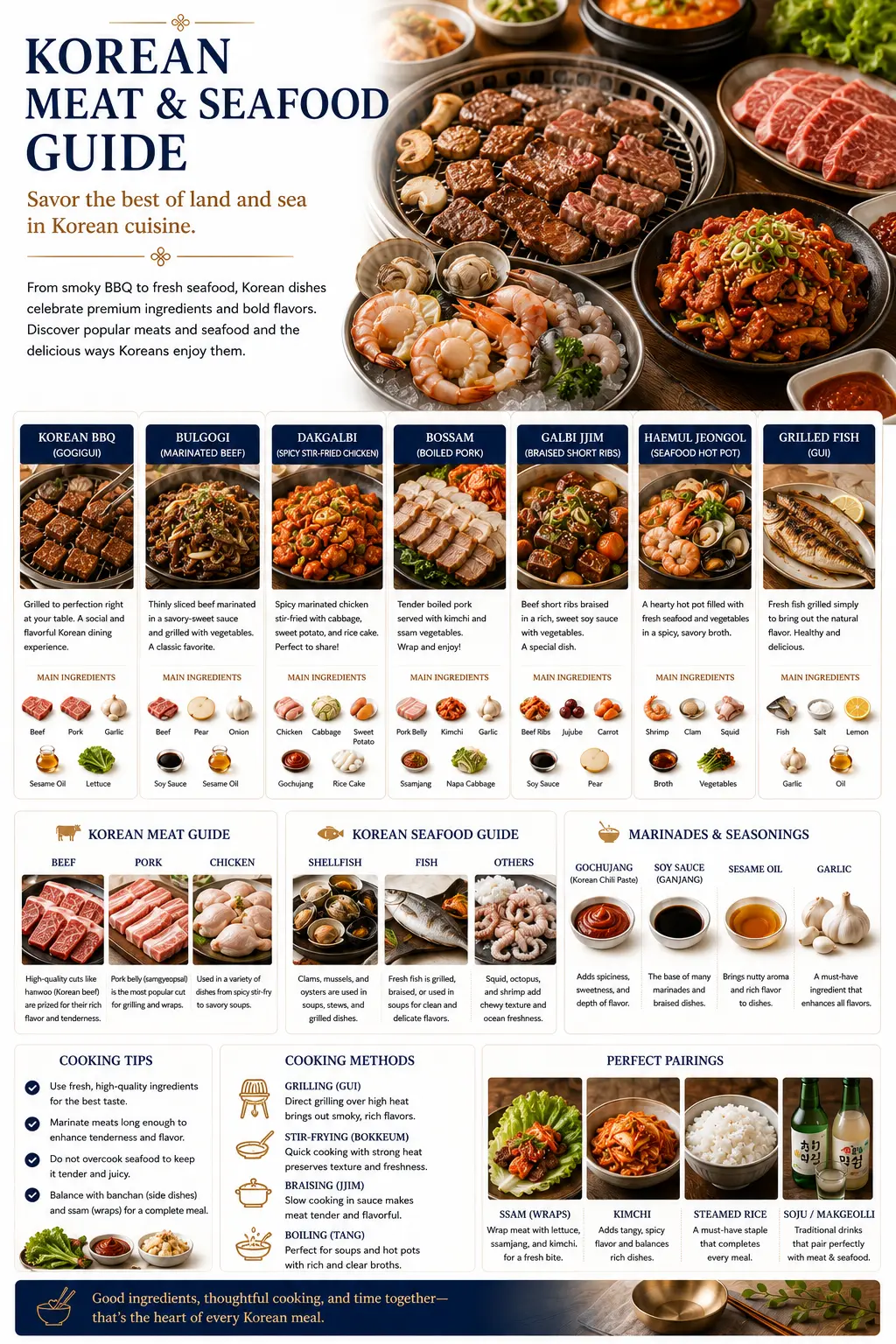
Korean Meat & Seafood Guide — Korean BBQ, bulgogi, dakgalbi, bossam, galbi jjim, seafood hot pot and grilled fish
01 — Overview

Quick Summary

Korean BBQ is one of Korea's most famous food experiences. Through fresh meat, traditional marinades, table grilling and shared dining culture, Korean BBQ represents the Korean philosophy of enjoying food together.

Key takeaways

  • Korean BBQ is a social dining experience.
  • Samgyeopsal and Galbi are popular choices.
  • Marinades create unique Korean flavors.
  • Table grilling creates interaction.
  • Ssam culture combines meat and fresh vegetables.
  • Banchan completes the BBQ experience.
02 — Full Guide

The Complete Guide

What Korean BBQ combines

Unlike many barbecue styles where food is prepared only in the kitchen, Korean BBQ is a social dining experience where people grill meat together at the table.

For many visitors, Korean BBQ is one of the most memorable food experiences in Korea.

  • Fresh meat.
  • Traditional marinades.
  • Table grilling.
  • Shared side dishes.
  • Korean dining culture.

Meat Selection

Choosing the right meat is an important part of Korean BBQ.

Samgyeopsal (pork belly) is one of the most popular Korean BBQ dishes, with thick slices, crispy grilled texture and rich flavor. It is usually enjoyed with lettuce wraps, garlic, green chili, ssamjang sauce and kimchi.

  • Galbi (beef short ribs) — a premium dish with tender texture and sweet and savory flavor, often prepared with soy sauce, garlic, sesame oil, sugar and a fruit-based marinade.
  • Bulgogi — thinly sliced beef marinated in a sweet and savory sauce, known for soft texture, rich aroma and balanced flavor.

Marinade

Marinade plays an important role in Korean BBQ. Traditional Korean marinades create a balance of sweet, salty, savory and aromatic flavors.

Traditional Korean marinades often use fruits such as pear. Fruit helps tenderize meat naturally, add sweetness and create a deeper flavor. This technique is one of the unique characteristics of Korean BBQ.

  • Common marinade ingredients: ganjang (Korean soy sauce), garlic, sesame oil, sugar, green onion, pepper and fruit puree such as pear or apple.

Grilling Method

One of the special features of Korean BBQ is grilling meat together at the table.

A popular way to enjoy Korean BBQ is Ssam, which means wrapping grilled meat with vegetables. The combination creates a balance of flavors and textures.

  • The experience includes choosing the meat, grilling together, cutting meat into smaller pieces, and eating with sauces and side dishes.
  • Typical ssam ingredients: lettuce, perilla leaves, meat, ssamjang sauce, garlic and kimchi.

Seafood in Korean cooking

Seafood is one of the essential ingredients of Korean cooking, together with rice, vegetables, meat and tofu, and a good knife is essential for preparing it.

Seafood also appears in many Korean stews and soups depending on the recipe.

  • Sundubu Jjigae can be made with seafood or meat, and Seafood Sundubu is one of its most popular versions.
  • Doenjang Jjigae may include seafood or meat depending on the recipe.
  • Eomuk, a Korean fish cake made from fish paste, flour or starch and seasonings, is often served on skewers with warm broth and is especially famous in Busan.

Side dishes and BBQ culture

Korean BBQ is always served with various side dishes, which balance the richness of grilled meat.

Korean BBQ is not only about food. It represents sharing, conversation, community and celebration, and people often enjoy it during family gatherings, friend meetings, business dinners and special occasions.

  • Common side dishes: kimchi, pickled vegetables, namul, salad and steamed egg.
Ask AI

Ask AI About This Topic

AI Assistant

Have a question about Korean Meat & Seafood?

Get instant, locally-checked answers from the ASK KOREA AI. Ask anything from specific edge cases to itinerary decisions.

Ask this question
Suggested prompt

"Help me cook Korean food at home — korean meat & seafood."

ASK KOREA Transit