Korean Cooking Guide

Korean Kimchi Recipes

Making kimchi involves careful preparation of ingredients, balanced seasoning and a natural fermentation process developed over generations.

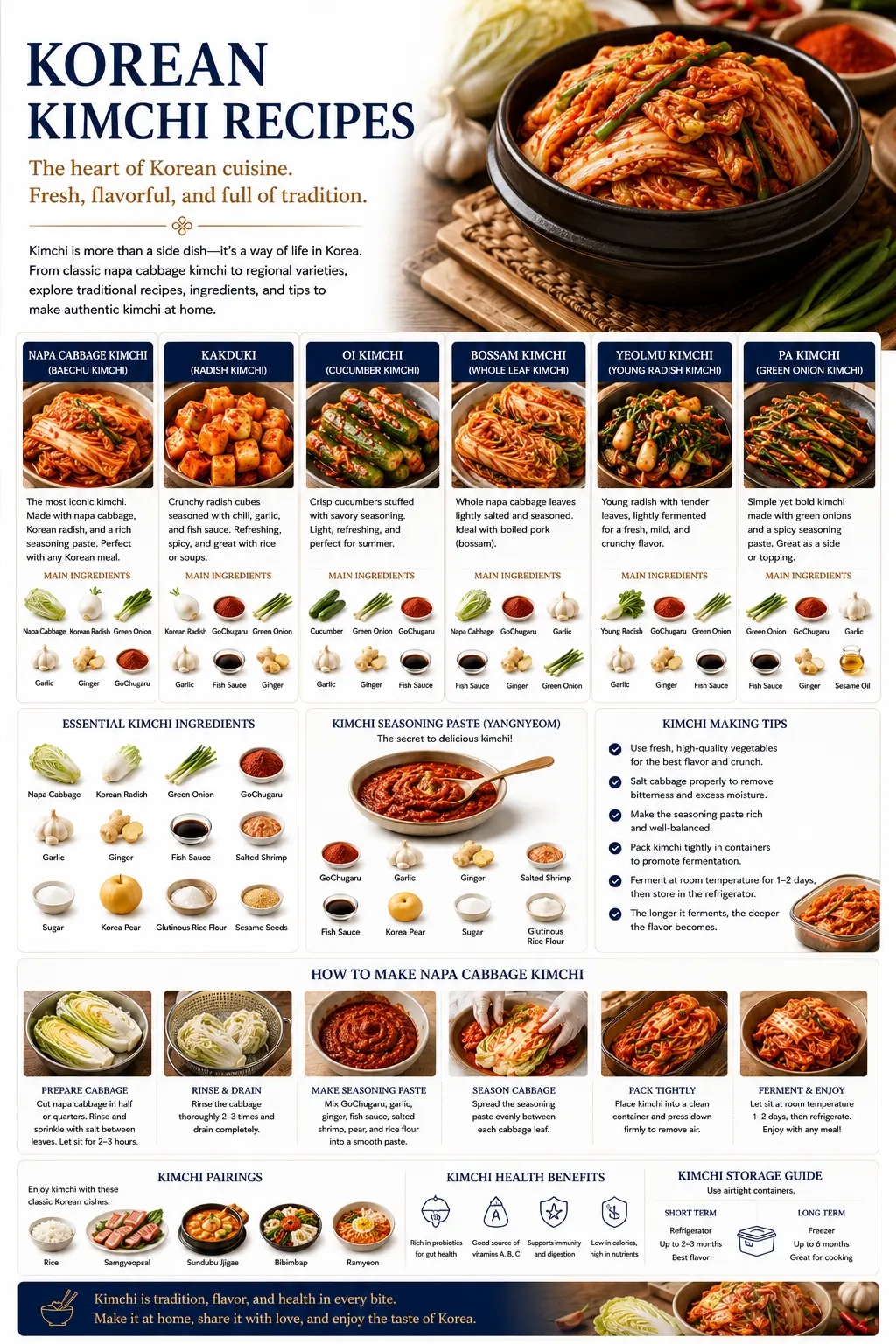
Korean Kimchi Recipes — napa cabbage kimchi, kakduki, oi kimchi, bossam kimchi, yeolmu kimchi and pa kimchi
01 — Overview

Quick Summary

Kimchi making is a traditional Korean process that combines fresh ingredients, balanced seasoning and natural fermentation. From preparing vegetables to fermentation and storage, every step reflects Korea's food knowledge and cultural traditions.

Key takeaways

  • Kimchi making combines tradition and science.
  • Fresh ingredients create the foundation of flavor.
  • Seasoning determines the character of kimchi.
  • Fermentation creates unique taste and texture.
  • Many regional kimchi varieties exist.
  • Kimchi making is a cultural experience.
02 — Full Guide

The Complete Guide

Kimchi Ingredients

Traditional kimchi is made with fresh vegetables and carefully selected seasonings. The ingredients may vary by region and recipe.

Napa cabbage (baechu) is the most common main ingredient for traditional kimchi, providing crunchy texture, mild sweetness and fresh flavor. Korean radish (mu) is used for kkakdugi, dongchimi and other seasonal kimchi varieties, creating a refreshing and crisp texture.

  • Essential seasonings: gochugaru (Korean chili powder), garlic, ginger, green onion, fish sauce, jeotgal (salted seafood) and salt.
  • The combination of these ingredients creates the unique Korean kimchi flavor.

Kimchi Seasoning (Yangnyeom)

Kimchi seasoning, called Yangnyeom, is the heart of kimchi making.

The amount and combination of seasoning creates different flavors depending on region, family recipe and personal preference.

  • A typical seasoning mixture includes gochugaru, garlic, ginger, green onion, fish sauce and salted seafood.
  • Sweet ingredients such as fruit or sugar are added depending on the recipe.

Preparation Method

Traditional kimchi preparation follows several steps.

Step 1 — Preparing the vegetables: napa cabbage is cleaned, cut and salted. Salting removes excess moisture and creates the right texture.

Step 2 — Preparing the seasoning: the kimchi seasoning is prepared by mixing spices, fermented ingredients and vegetables. The seasoning must have a balanced flavor.

Step 3 — Mixing: the seasoning is carefully applied between the cabbage leaves. This step requires experience to ensure even flavor, proper seasoning amount and good fermentation.

Fermentation Process

Fermentation gives kimchi its unique taste and character. During fermentation, natural microorganisms develop flavors, the taste becomes deeper and the texture changes gradually.

Traditionally, kimchi was stored in Onggi, Korean clay fermentation containers. Today, many households use refrigerators designed specifically for kimchi storage.

Storage Method

Proper storage helps maintain kimchi quality. Kimchi flavor changes naturally over time, creating different tastes depending on fermentation stages.

  • Keep kimchi in airtight containers.
  • Store at a suitable temperature.
  • Avoid frequent temperature changes.
  • Use clean utensils when serving.

Kimchi Recipes

Traditional Napa Cabbage Kimchi (Baechu Kimchi) is the most famous Korean kimchi variety, made with napa cabbage, gochugaru, garlic, ginger, green onion and fish sauce. It is spicy and savory with a deep fermented flavor.

  • Kkakdugi (Radish Kimchi) — made with cubed Korean radish; crunchy texture, refreshing taste and slight sweetness. Often served with Korean soups.
  • Cucumber Kimchi (Oi Sobagi) — a refreshing kimchi popular during warmer seasons, with crisp texture, fresh flavor and light taste.
  • White Kimchi (Baek Kimchi) — a mild kimchi made without red chili powder, with gentle flavor, less spice and refreshing taste.
Ask AI

Ask AI About This Topic

AI Assistant

Have a question about Korean Kimchi Recipes?

Get instant, locally-checked answers from the ASK KOREA AI. Ask anything from specific edge cases to itinerary decisions.

Ask this question
Suggested prompt

"Help me cook Korean food at home — korean kimchi recipes."

ASK KOREA Transit