Korean Ramyeon
Korean ramyeon (라면) is Korea's most familiar comfort food — quick, affordable and enjoyed anywhere, from home kitchens to convenience stores.
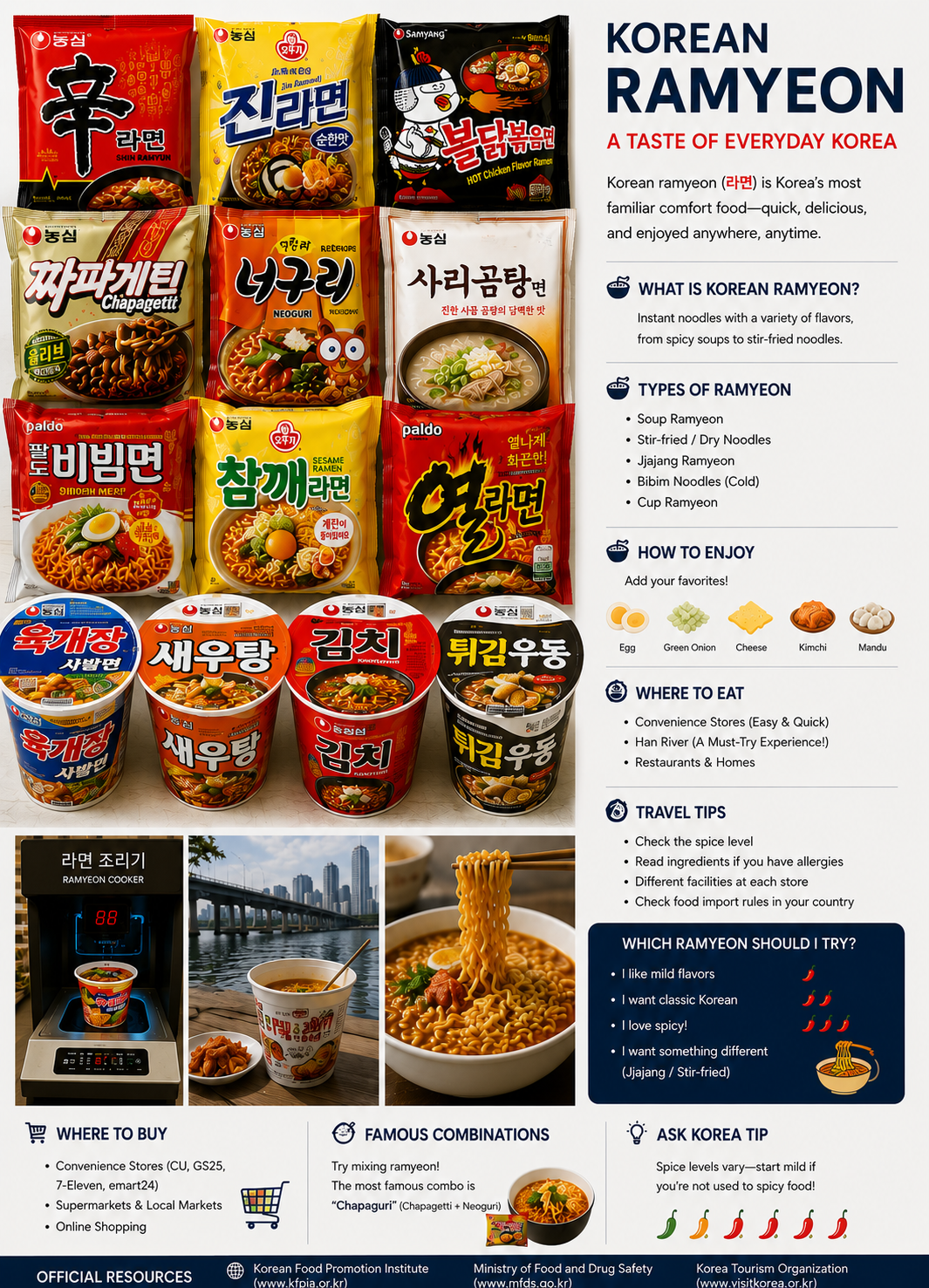
Quick Summary
Korean ramyeon is Korea's instant-noodle culture — 라면 in Korean — sold in convenience stores, supermarkets, grocery stores and online, in soup, stir-fried, jjajang, bibim and cup styles, with spice levels ranging from mild to extremely spicy.
Key takeaways
- What: Korean instant noodles — 라면 (ramyeon).
- Where: Convenience stores, supermarkets, grocery stores and online.
- Typical styles: Soup · Stir-fried · Jjajang · Bibim · Cup noodles.
- Spice level: Mild to extremely spicy.
- Easy traveler experience: Convenience-store ramyeon.
- Iconic Seoul experience: Han River ramyeon.
The Complete Guide
Easy Korean Ramyeon Recipes
Simple ways to upgrade Korean instant noodles.
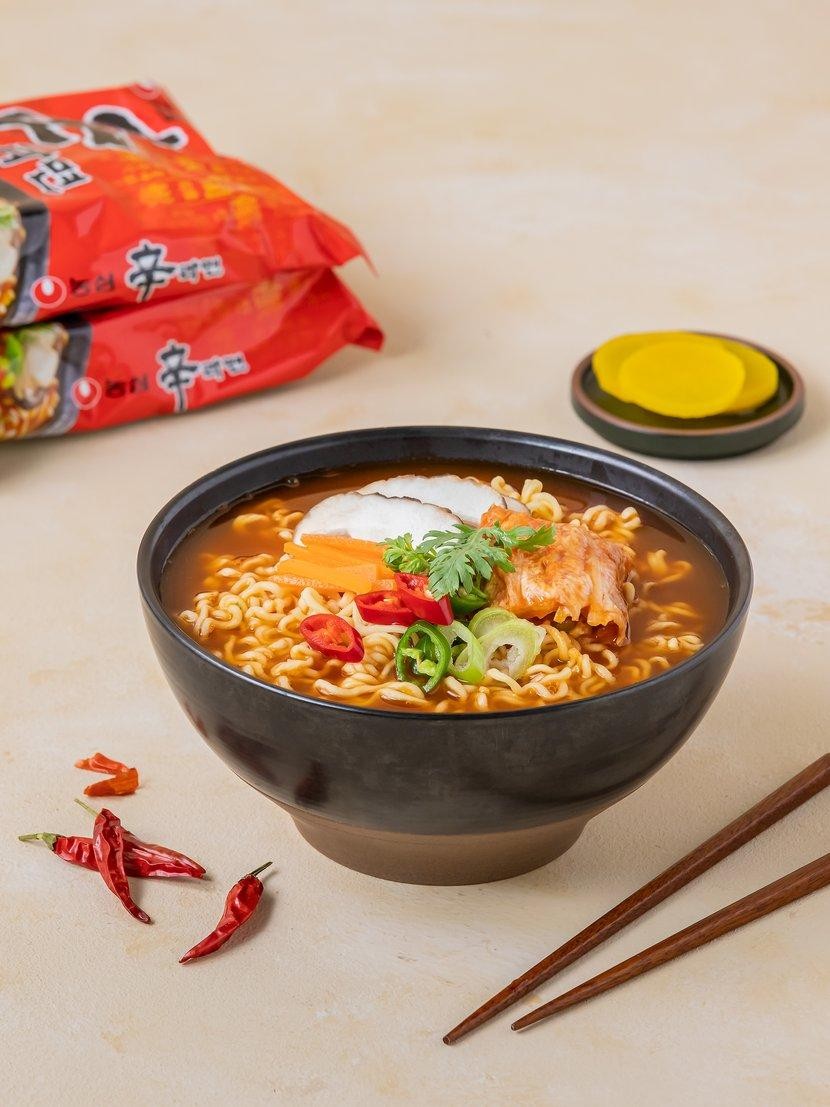
Egg Ramyeon
Cook the ramyeon according to the package instructions. Add one egg during the last 1–2 minutes. Leave it whole for a soft poached egg or stir it into the broth for an egg-drop texture.
Cheese Ramyeon
Prepare spicy ramyeon normally, then place one slice of cheese on top just before serving. Let it melt without stirring too much.
Mandu Ramyeon
Add 3–4 frozen Korean dumplings (mandu) to the boiling water before adding the noodles. Cook until the dumplings are fully heated, then add the noodles and soup seasoning.
Tteok Ramyeon
Add sliced Korean rice cakes (tteok) to the boiling broth. Cook until soft, then add the noodles.
Kimchi Ramyeon
Add a small handful of well-fermented kimchi to the boiling broth before adding the noodles. A little kimchi juice gives the soup a deeper, tangier flavor.
Budae-jjigae Style Ramyeon
Turn ordinary ramyeon into a simple army-stew-style meal. Add sliced sausage, Spam-style luncheon meat, kimchi and baked beans to the broth, then cook the noodles.
Seafood Ramyeon
Add shrimp, mussels, squid or clams to boiling water and cook until nearly done. Add the noodles and seasoning afterward.
Creamy Buldak Ramyeon
Cook Buldak-style noodles and drain most of the water. Mix in the sauce, then add a small amount of milk or cream and cheese.
Convenience Store Ramyeon Combo
Korean convenience stores make it easy to customize cup ramyeon. Popular additions include a boiled egg, sausage, cheese, triangle kimbap or packaged kimchi.
Try this: Cup ramyeon + cheese + sausage + triangle kimbap. It makes a quick and inexpensive Korean-style convenience-store meal.
Quick Tips

A Taste of Everyday Korea
Korean ramyeon (라면) is much more than instant noodles. It is one of Korea's most familiar comfort foods — eaten at home, in convenience stores, at highway rest areas, beside the Han River, and even after hiking a mountain.
Affordable, quick, and available almost everywhere, ramyeon is an easy way for visitors to experience a small but very real part of everyday Korean life.
What Is Korean Ramyeon?
Korean ramyeon is generally instant noodles sold in packets or cups. It should not be confused with Japanese ramen, which commonly refers to restaurant-prepared noodle dishes served with specially prepared broth and toppings.
Korean ramyeon is typically characterized by:
Most convenience stores, supermarkets, neighborhood marts and large discount stores carry numerous varieties.
ASK KOREA TIP: If you see the Korean word 라면, it means ramyeon. In English, you may also see it written as ramyun or ramen.
Main Types of Korean Ramyeon
Soup Ramyeon
The classic Korean style. Noodles are cooked in a seasoned broth, often with dried vegetables and other ingredients. This category includes many of Korea's best-known spicy and mild instant noodles.
Stir-Fried / Dry Noodles
Most of the water is removed after cooking and the noodles are mixed with a concentrated sauce. Korea's famous spicy chicken noodles belong to this category.
Jjajang Ramyeon
Instant noodles inspired by jjajangmyeon, Korea's black-bean-sauce noodle dish. The flavor is generally savory, slightly sweet and much less spicy than Korea's hottest ramyeon.
Bibim Noodles
Cold or cooled noodles mixed with a sweet, tangy and spicy sauce rather than served in hot soup. Especially popular during Korea's hot summer months.
Cup Ramyeon
The easiest option for travelers. Add hot water, wait for the specified cooking time, and eat directly from the container. Convenience stores throughout Korea usually provide hot water.
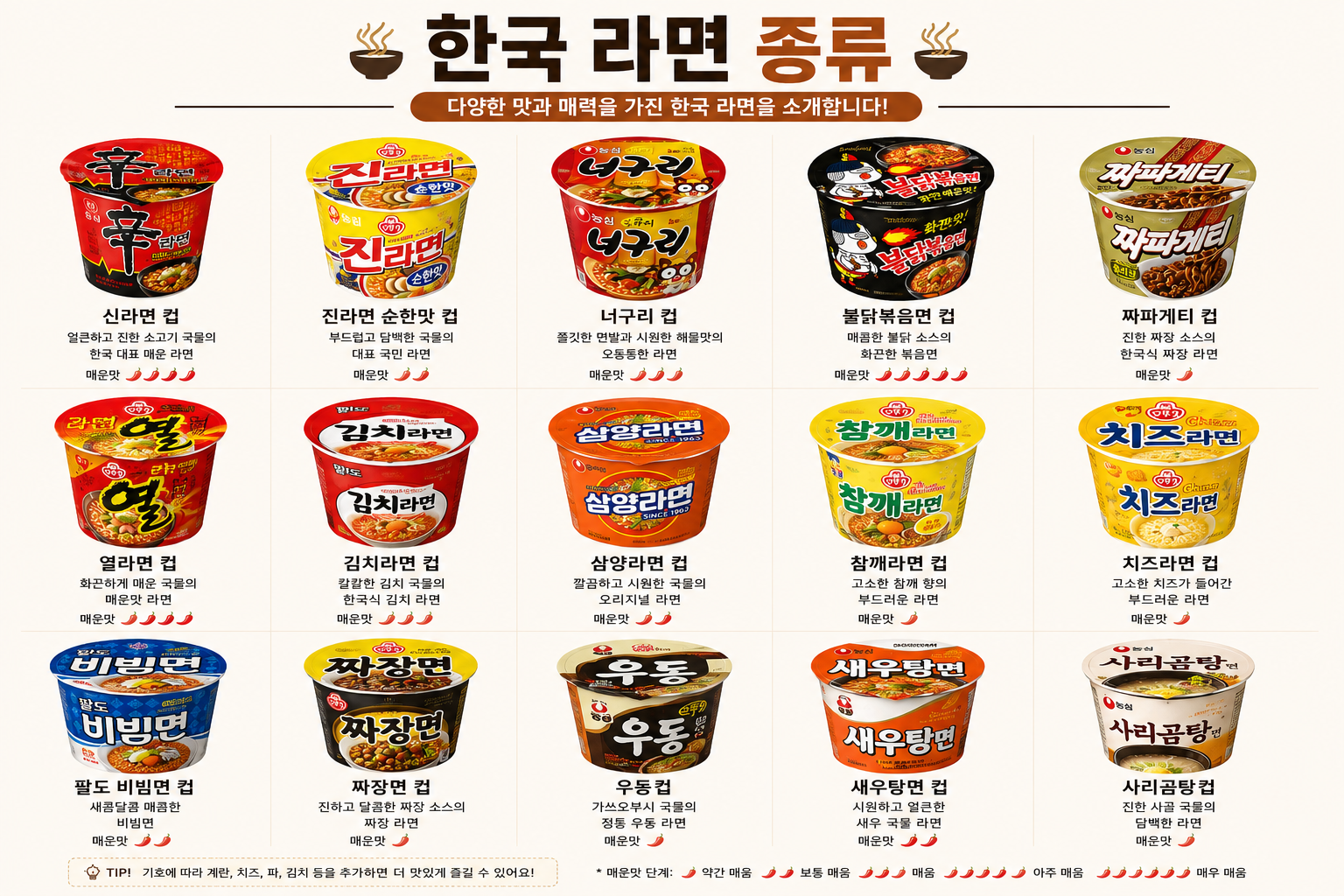
Famous Ramyeon Visitors Will See in Korea
Shin Ramyun
One of Korea's most recognizable instant noodles. It has a spicy beef-style broth, mushrooms and a strong savory flavor. For many visitors, it is a good introduction to classic Korean spicy ramyeon.
Jin Ramen
A very common everyday ramyeon available in Mild and Spicy versions. The Mild version can be a more approachable starting point for travelers who are not accustomed to Korean spice levels.
Neoguri
Known for its thick noodles and seafood-style broth. Its chewy noodles make it noticeably different from many standard soup ramyeon products.
Chapagetti
Instant jjajang-style noodles with a rich black-bean-sauce flavor. It contains no soup and is generally chosen for its savory rather than fiery character.
Buldak Bokkeum Myeon
Internationally famous Korean spicy stir-fried noodles. Several varieties exist, and some are extremely hot. Travelers with a low tolerance for spicy food should check the package carefully before choosing one.
Paldo Bibim Men
A well-known cold, spicy-sweet mixed noodle. It is particularly refreshing during summer and provides a very different experience from hot soup ramyeon.
Which Ramyeon Should I Try?
How Koreans Upgrade Ramyeon
Plain ramyeon is only the beginning. Many Koreans add extra ingredients while cooking it. Popular additions include:
An egg and sliced green onion are among the simplest additions.
Cheese is particularly popular with very spicy noodles because its richness can soften the perception of heat.
Travel Tip: Do not assume every optional topping is included in the package. At convenience stores, additional eggs, cheese or other ingredients usually need to be purchased separately.
Convenience Store Ramyeon
Eating ramyeon at a Korean convenience store can be an experience in itself.
Many larger stores have:
Choose your noodles, pay first, and use the preparation instructions printed on the package.
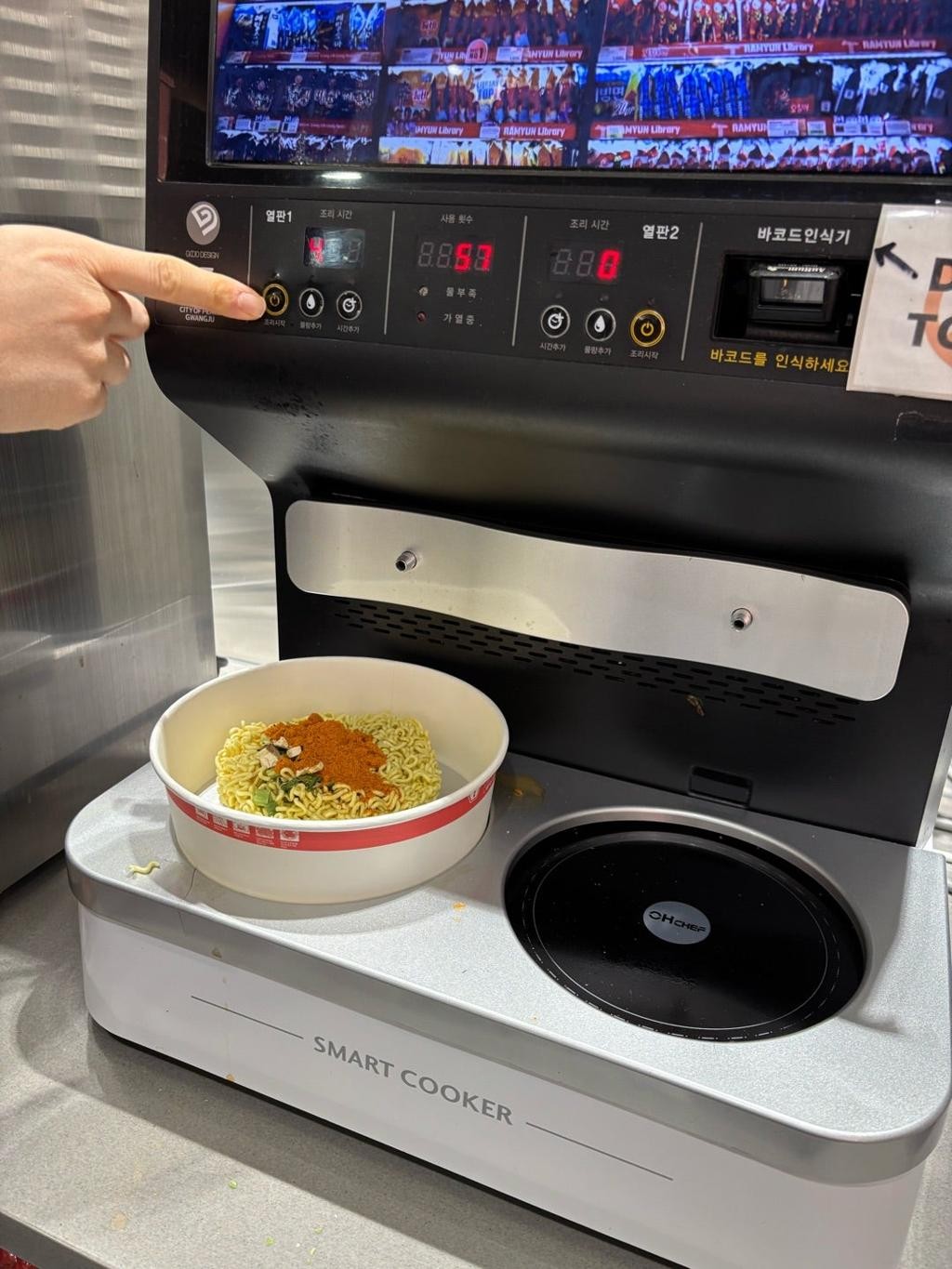
Some convenience stores have automatic cooking machines designed for noodles sold in special disposable bowls. The machine heats the water and cooks the noodles directly in the container.
Important: Equipment differs by store. Not every Korean convenience store has a ramyeon cooker or seating area.
Han River Ramyeon
One of Seoul's best-known casual food experiences is eating ramyeon beside the Han River.
Convenience stores around popular riverside parks sell instant noodles and, at some locations, special containers that can be cooked using automatic ramyeon machines.
Visitors commonly enjoy ramyeon together with convenience-store snacks and drinks while sitting beside the river.
It is inexpensive, informal and distinctly Korean.
Popular Han River parks include areas around Yeouido, Banpo and Ttukseom.
ASK KOREA TIP: Facilities and cooking equipment vary by convenience store and park location, so check what is available at the store before purchasing.
Ramyeon Combinations
Koreans sometimes combine different instant noodle products to create new flavors.
The most internationally recognizable example is Jjapaguri (Chapaguri), which combines jjajang-style noodles with spicy seafood-style noodles.
The combination became internationally famous after appearing in the Korean film Parasite.
There are many informal ramyeon combinations, and new ones frequently become popular through convenience stores and social media.
Where to Buy Ramyeon in Korea
Ramyeon is extremely easy to find.
Convenience Stores
CU, GS25, 7-Eleven, emart24 and other convenience stores carry both packet and cup noodles.
Supermarkets
Large supermarkets and neighborhood grocery stores generally provide a much wider selection and larger multipacks.
Traditional & Local Markets
Smaller grocery shops inside or around markets also commonly stock popular products.
Online
Korean online shopping services carry an enormous selection, although some platforms may require Korean payment, address or account information.
For short-term visitors, convenience stores and supermarkets are usually the simplest options.
Spicy Does Not Mean the Same Thing for Everyone
Korean ramyeon ranges from completely mild to extremely hot.
Packaging colors alone are not a reliable measure of spiciness, and products within the same brand can have very different heat levels.
If you are sensitive to spicy food:
Vegetarian, Halal & Allergy Information
Do not assume a vegetable-flavored or seafood-flavored ramyeon is vegetarian, halal or suitable for a particular allergy.
Seasoning packets may contain ingredients or derivatives that are not obvious from the product name.
Travelers with dietary restrictions should:
Product formulas can change, so ASK KOREA should not classify an entire brand as vegetarian, vegan or halal without verification of the specific product.
Taking Korean Ramyeon Home
Packaged ramyeon is a popular Korean souvenir, but food-import rules differ by destination country. Some noodle products may contain meat, meat extracts, seafood or other ingredients subject to customs or quarantine restrictions.
Before carrying ramyeon internationally:
Do not assume that commercially packaged instant noodles are automatically permitted into every country.
Good First Choices
FAQ
Is all Korean ramyeon spicy?
No. Korea has both mild and spicy varieties, although spicy products are particularly well known internationally.
Can I cook ramyeon inside a Korean convenience store?
Many convenience stores provide hot water and microwaves, and some have dedicated ramyeon cooking machines. Facilities vary by location.
What is Han River ramyeon?
It refers to the popular experience of buying and preparing instant noodles near Seoul's Han River parks and eating them beside the river.
What is the difference between ramyeon and ramen?
In Korea, ramyeon usually refers to Korean-style instant noodles. Japanese ramen generally refers to a different noodle tradition, commonly prepared as a restaurant dish.
Is Korean ramyeon halal or vegetarian?
Some individual products may be suitable or certified, but this cannot be assumed from the brand or flavor alone. Check the exact product's current ingredients and certification.
Can I take Korean ramyeon back to my country?
Often yes, but not always. Import restrictions differ by country, particularly for products containing meat or animal-derived ingredients. Check your destination country's current customs rules before traveling.
Pro Tips
- Korean ramyeon and Japanese restaurant-style ramen are not the same thing.
- Convenience stores are the easiest place for travelers to try ramyeon.
- Check cooking instructions because water quantity and preparation method vary.
- Do not judge spice level solely by package color.
- Check the exact product label for allergies and dietary restrictions.
- When taking ramyeon overseas, check the destination country's food-import rules.
Related Guides
Cooking Basics
Korean cooking is based on simple but powerful principles: fresh ingredients, balanced flavors, and traditional preparation methods.
Korean Main Recipes
Korean main dishes represent the heart of Korean meals, combining rice, vegetables, meat, seafood and traditional seasonings into balanced meals.
Korean Sauces
The unique taste of Korean food comes from traditional sauces and seasonings that have been developed through generations.
Ask AI About This Topic
Have a question about Korean Ramyeon?
Get instant, locally-checked answers from the ASK KOREA AI. Ask anything from specific edge cases to itinerary decisions.
"Help me cook Korean food at home — korean ramyeon."
ASK KOREA Transit