Government & Administration · Guide 06

Taxes & Administrative Basics

How income tax, VAT and everyday paperwork work in Korea — and where to get authoritative answers.

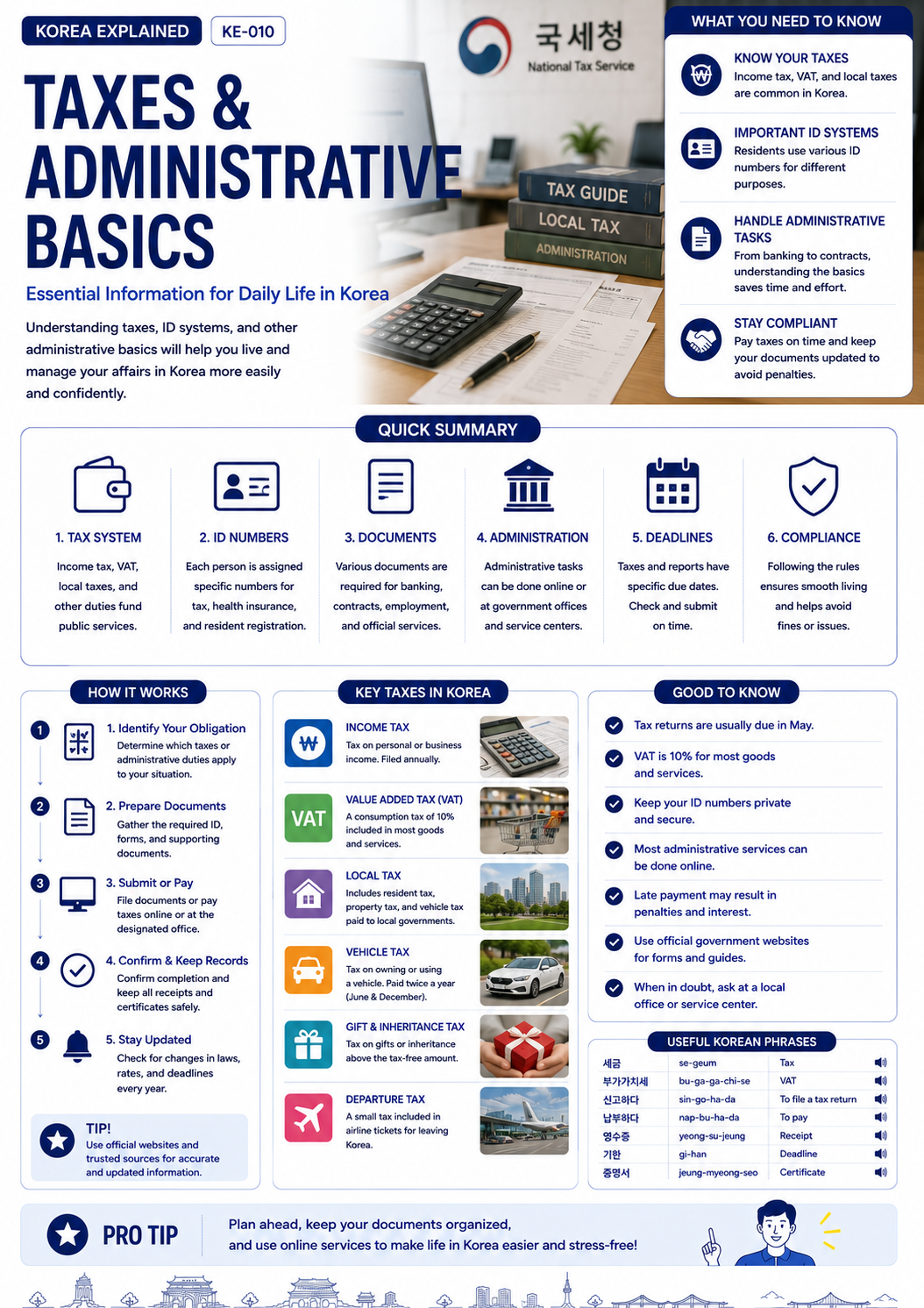
Taxes & administrative basics in Korea — ASK KOREA infographic
01 — Overview

Quick Summary

Korea's tax administration is highly digital, and most employees never file anything manually. Visitors mainly encounter tax through VAT included in prices and through the tax refund available on some purchases.

Key takeaways

  • VAT of ten percent is normally already included in displayed prices.
  • Tourists can claim refunds on qualifying purchases at participating stores.
  • Employees usually have income tax withheld by their employer.
  • Year-end settlement reconciles what was withheld against what was owed.
  • Freelancers and business owners have separate filing obligations.
02 — Full Guide

The Complete Guide

What visitors need to know

For a short trip, tax is mostly invisible. Prices on menus and shelves include VAT, and tipping is not expected. The one active step worth taking is the tax refund on qualifying purchases, which is available at participating stores and at airport refund counters.

  • Prices are shown inclusive of tax
  • Ask about tax-free shopping before paying at participating stores
  • Keep receipts and your passport for refund processing
  • Allow extra airport time if you plan to claim at departure

What residents need to know

If you work for a Korean employer, income tax and social contributions are generally deducted from your salary. Each year an end-of-year settlement compares the amount withheld with the amount actually owed, and the difference is refunded or collected.

  • Income tax is progressive and withheld monthly for employees
  • Year-end settlement usually happens in the early months of the year
  • Some countries have tax treaties with Korea affecting your position
  • Self-employed residents file separately and should consider professional advice

Everyday administrative habits

Korean administration runs on identity verification and documents. Keeping your records organised makes almost everything faster, from opening a bank account to renewing a contract.

  • Keep originals and digital copies of contracts and certificates
  • Note document expiry dates in your calendar
  • Confirm required documents before every office visit
  • Use official portals rather than intermediaries where possible

Frequently asked questions

  • Should I tip in Korea? No — tipping is not customary and prices already include tax.
  • Can every purchase be refunded? No, only qualifying purchases at participating stores within the stated conditions.
  • Do I file a tax return as an employee? Usually your employer handles year-end settlement.
  • Where can I get reliable tax advice? The National Tax Service and licensed Korean tax accountants.

Official resources

Tax rules change and vary by personal situation. ASK KOREA does not provide tax advice — use the official sources below.

  • National Tax Service (nts.go.kr) — official tax information and Hometax filing
  • Korea Customs Service — departure refunds and customs allowances
  • Government24 (gov.kr) — related certificates and documents
  • Your employer's HR team for withholding and year-end settlement
Pro Tips

Pro Tips

  • Ask 'tax free?' at the counter before paying — the paperwork must be issued at purchase.
  • Photograph refund receipts in case originals are lost before departure.
  • If your situation is unusual, pay once for professional advice rather than guessing.
Ask AI

Ask AI About This Topic

AI Assistant

Have a question about Taxes & Administrative Basics?

Get instant, locally-checked answers from the ASK KOREA AI. Ask anything from specific edge cases to itinerary decisions.

Ask this question
Suggested prompt

"Explain the basics of taxes in Korea for visitors and foreign residents, including VAT and tax refunds."

ASK KOREA Transit