A republic built on three branches
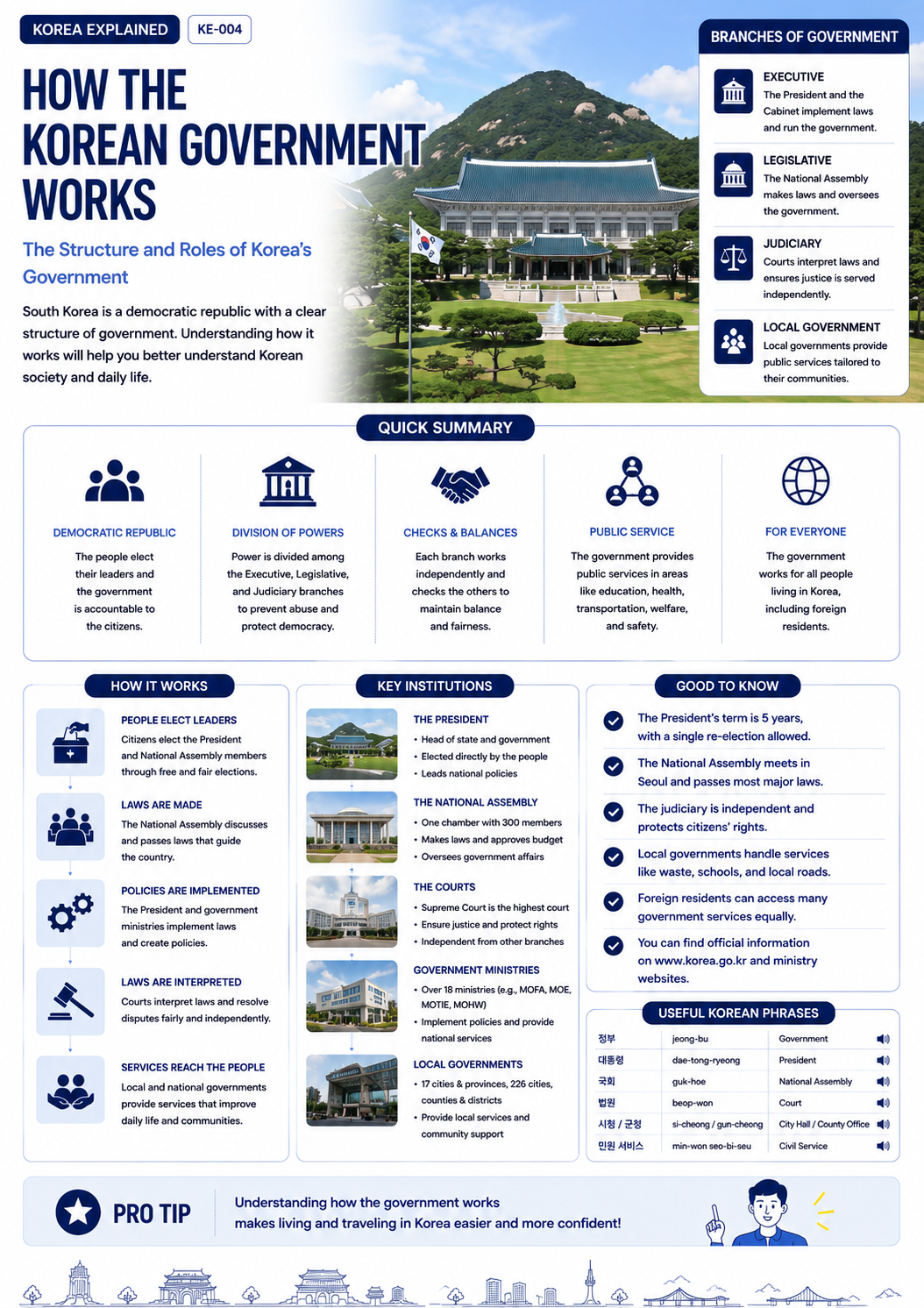
Korea's system separates power between the executive, the legislature and the judiciary. The president leads the executive branch and appoints a prime minister and cabinet ministers. The National Assembly passes legislation and approves the national budget. The courts interpret and apply the law independently of both.
This structure is only a few decades old in its current democratic form, which is part of why Korean public administration feels unusually modern, digital and fast compared with many older bureaucracies.
- Executive: president, prime minister and the ministries
- Legislative: the National Assembly, a single chamber
- Judicial: ordinary courts plus a separate Constitutional Court