Government & Administration · Guide 04

Immigration & Foreign Resident Services

Entry, stay, visas and the residence card — how Korea's immigration system is structured for foreigners.

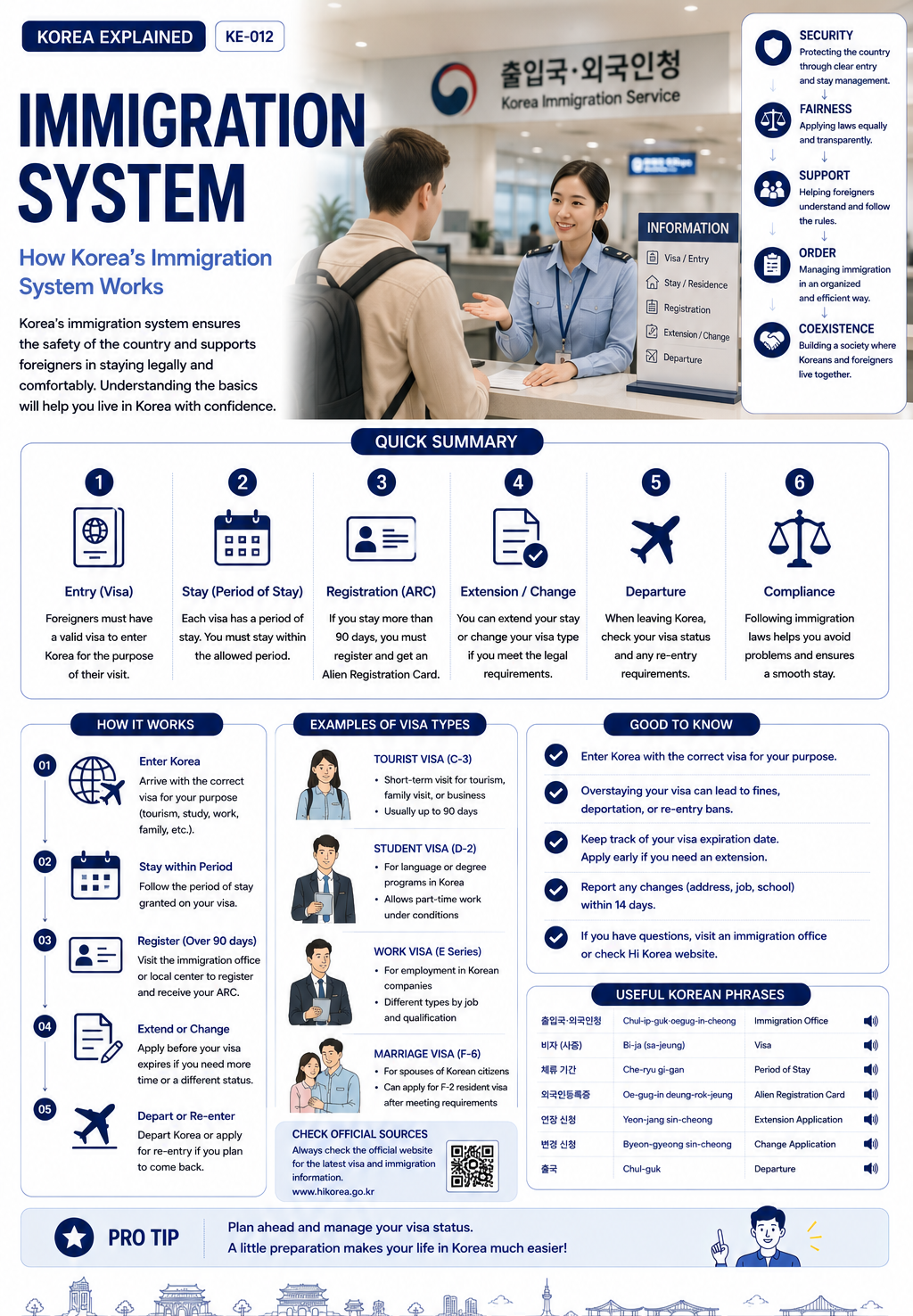
Korean immigration system — ASK KOREA infographic
01 — Overview

Quick Summary

Immigration in Korea is administered by the Ministry of Justice through immigration offices and the Hi Korea portal. Short visits, long stays and residence registration follow different tracks, and requirements depend on your nationality and purpose.

Key takeaways

  • Check entry requirements for your nationality well before booking travel.
  • Short-term visitors may need an electronic travel authorisation instead of a visa.
  • Stays beyond 90 days normally require a visa matching your activity.
  • Long-stay residents register and receive a residence card that acts as their Korean ID.
  • Never rely on unofficial summaries — verify everything on Hi Korea.
02 — Full Guide

The Complete Guide

Three stages: entry, stay and departure

It helps to picture immigration as three stages. Entry covers what you need before boarding and at the airport. Stay covers what you may do in Korea and for how long. Departure covers leaving and, if relevant, re-entering.

Each stage has its own rules, and the rules for your nationality may differ from those of the person sitting next to you on the plane.

  • Entry: passport validity, travel authorisation or visa, arrival records
  • Stay: permitted activity, permitted duration, extensions
  • Departure: leaving on time and, for residents, re-entry considerations
Visas and purpose of stay

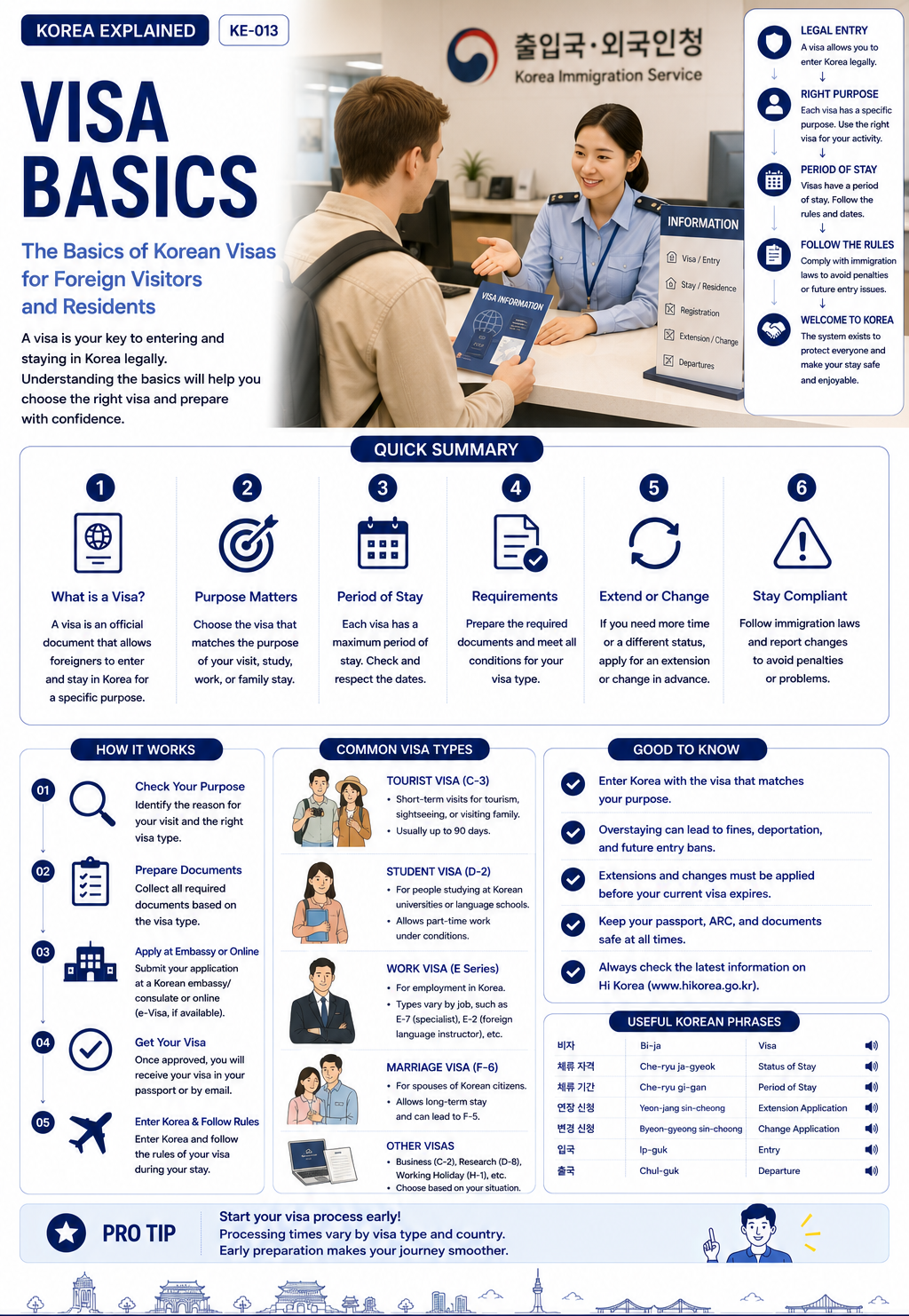
Korean visas are tied to purpose — tourism, study, work, business or family. The category determines what you are allowed to do. Working on a visa that does not permit work is treated seriously, so match the category to your real activity.

  • Tourism and short business visits
  • Study and language training
  • Employment and professional categories
  • Family and long-term residence categories

Registering as a resident

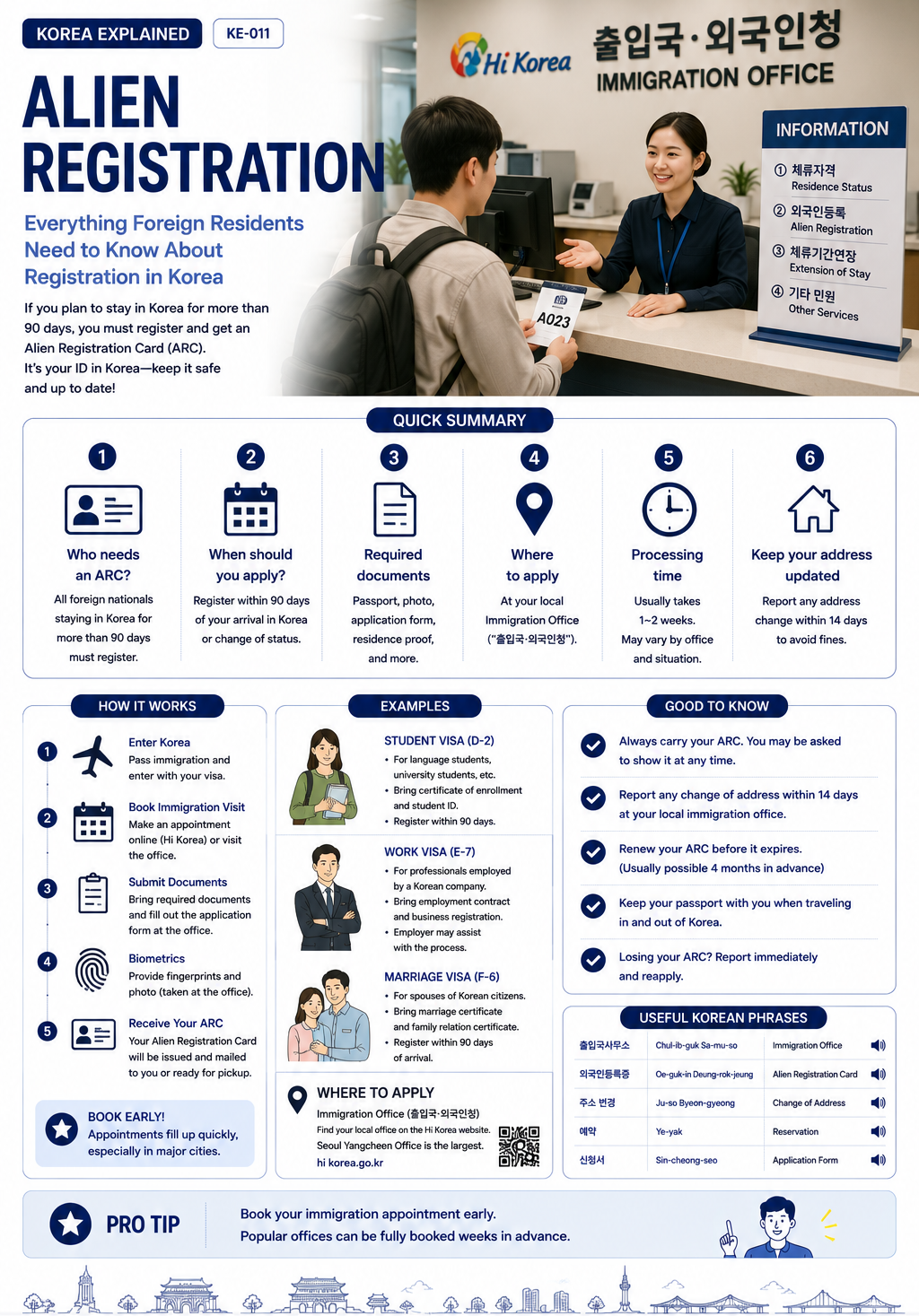
Foreign nationals staying long term register with immigration and receive a residence card. That card becomes your everyday identity document in Korea and is required for banking, phone contracts, health insurance and most online verification.

  • Book an immigration appointment through the official portal
  • Prepare the exact documents listed for your visa category
  • Carry the card once issued — it replaces your passport for most daily uses
  • Report changes of address and status within the required period

Frequently asked questions

  • Do I need a visa for a short holiday? It depends entirely on your nationality; check the official immigration site.
  • Can I extend my stay? Extensions exist for some categories and must be applied for before your permitted stay ends.
  • What if my card is lost? Report it and apply for a reissue through immigration as soon as possible.
  • Is there English support? Yes — the 1345 immigration contact centre supports multiple languages.

Official resources

ASK KOREA does not process applications or give legal advice. Use the official channels below for anything binding.

  • Hi Korea (hikorea.go.kr) — the official immigration portal and appointment system
  • 1345 Immigration Contact Center — multilingual phone support
  • Ministry of Justice — immigration policy and announcements
  • Your nearest Korean embassy or consulate for visa applications abroad
02 — Full Guide

The Complete Guide

Korean visa basics — ASK KOREA infographic
Alien registration card — ASK KOREA infographic
Pro Tips

Pro Tips

  • Book immigration appointments as early as possible; slots in Seoul fill quickly.
  • Keep digital and paper copies of every immigration document you receive.
  • Diary your permitted stay end date the day you arrive.
Ask AI

Ask AI About This Topic

AI Assistant

Have a question about Immigration & Foreign Resident Services?

Get instant, locally-checked answers from the ASK KOREA AI. Ask anything from specific edge cases to itinerary decisions.

Ask this question
Suggested prompt

"Explain how Korea's immigration system works for foreign visitors and residents, including visas and residence registration."

ASK KOREA Transit