Korea Food Guide · Guide 19

Bibimbap

Bibimbap is a bowl of warm rice topped with fresh vegetables, meat, egg and gochujang — mixed together for a perfect bite in every spoonful.
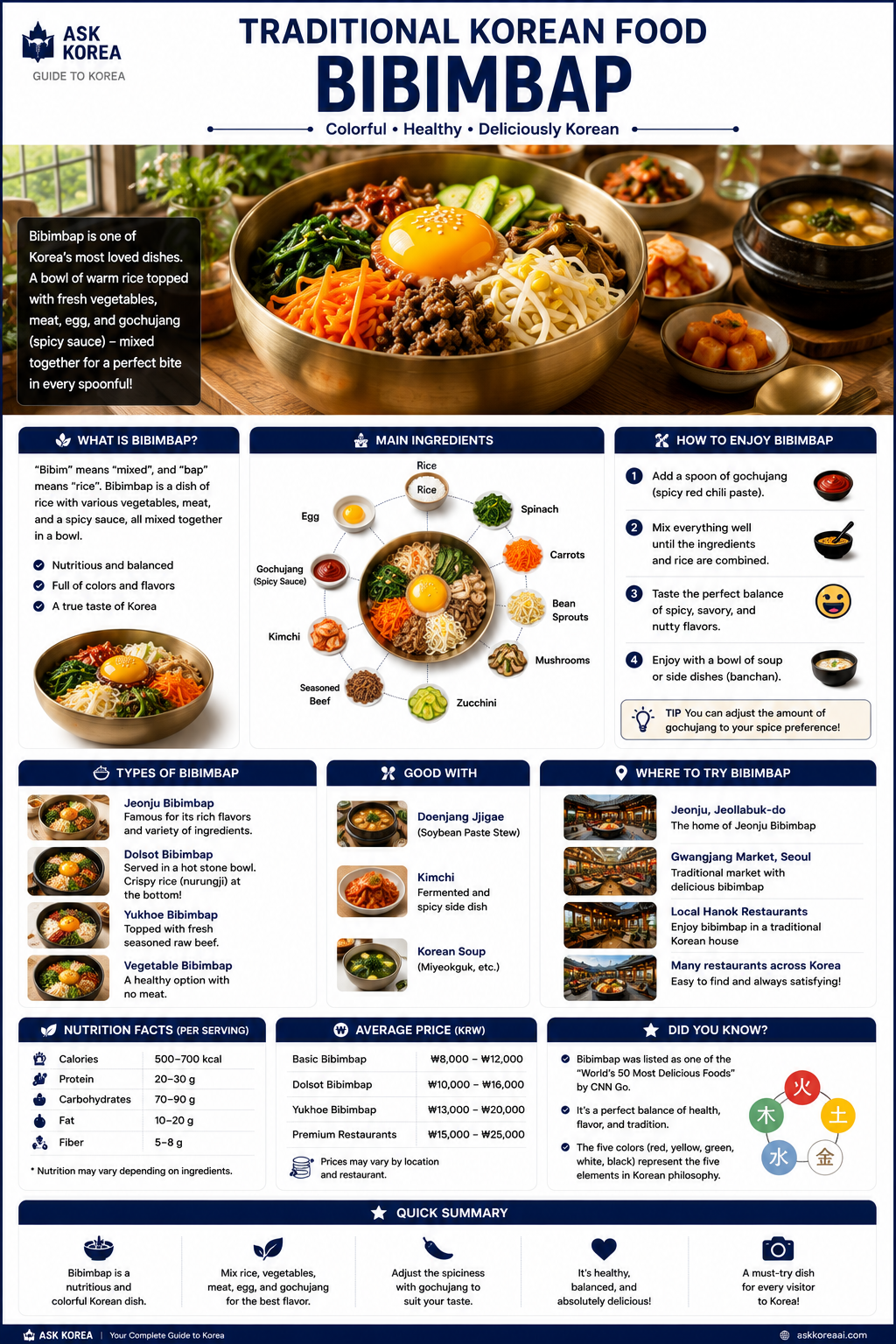
Bibimbap — ASK KOREA infographic
01 — Overview

Quick Summary

Bibimbap is a bowl of warm rice topped with fresh vegetables, meat, egg and gochujang — mixed together for a perfect bite in every spoonful.

Key takeaways

  • “Bibim” means mixed and “bap” means rice.
  • Colorful, healthy and balanced — a true taste of Korea.
  • Adjust the gochujang to suit your spice level.
  • Basic bowls start at ₩8,000–₩12,000.
02 — Full Guide

The Complete Guide

What Is Bibimbap?

“Bibim” means “mixed” and “bap” means “rice.” Bibimbap is a dish of rice with various vegetables, meat and a spicy sauce, all mixed together in a bowl.

  • Nutritious and balanced
  • Full of colors and flavors
  • A true taste of Korea

Main Ingredients

  • Rice
  • Spinach
  • Carrots
  • Bean sprouts
  • Mushrooms
  • Zucchini
  • Seasoned beef
  • Kimchi
  • Gochujang (spicy sauce)
  • Egg

How to Enjoy Bibimbap

You can adjust the amount of gochujang to your spice preference.

  • Add a spoon of gochujang (spicy red chili paste).
  • Mix everything well until the ingredients and rice are combined.
  • Taste the perfect balance of spicy, savory and nutty flavors.
  • Enjoy with a bowl of soup or side dishes (banchan).

Types of Bibimbap

  • Jeonju Bibimbap — famous for its rich flavors and variety of ingredients.
  • Dolsot Bibimbap — served in a hot stone bowl with crispy rice (nurungji) at the bottom.
  • Yukhoe Bibimbap — topped with fresh seasoned raw beef.
  • Vegetable Bibimbap — a healthy option with no meat.

Good With

  • Doenjang jjigae (soybean paste stew)
  • Kimchi
  • Korean soup (miyeokguk, etc.)

Where to Try Bibimbap

  • Jeonju, Jeollabuk-do — the home of Jeonju bibimbap.
  • Gwangjang Market, Seoul — traditional market with delicious bibimbap.
  • Local hanok restaurants — bibimbap in a traditional Korean house.
  • Many restaurants across Korea — easy to find and always satisfying.

Average Price (KRW)

Prices may vary by location and restaurant.

  • Basic bibimbap: ₩8,000 – ₩12,000
  • Dolsot bibimbap: ₩10,000 – ₩16,000
  • Yukhoe bibimbap: ₩13,000 – ₩20,000
  • Premium restaurants: ₩15,000 – ₩25,000

Nutrition Facts (per serving)

Nutrition may vary depending on ingredients.

  • Calories: 500–700 kcal
  • Protein: 20–30 g
  • Carbohydrates: 70–90 g
  • Fat: 10–20 g
  • Fiber: 5–8 g

Did You Know?

  • Bibimbap was listed as one of the “World's 50 Most Delicious Foods” by CNN Go.
  • It's a perfect balance of health, flavor and tradition.
  • The five colors (red, yellow, green, white, black) represent the five elements in Korean philosophy.
Ask AI

Ask AI About This Topic

AI Assistant

Have a question about Bibimbap?

Get instant, locally-checked answers from the ASK KOREA AI. Ask anything from specific edge cases to itinerary decisions.

Ask this question
Suggested prompt

"Tell me more about bibimbap in Korea and how to enjoy it as a visitor."

ASK KOREA Transit