UNESCO Natural Heritage Sites
UNESCO recognizes natural heritage sites of outstanding universal value for their exceptional beauty, geological processes, unique ecosystems and biodiversity.
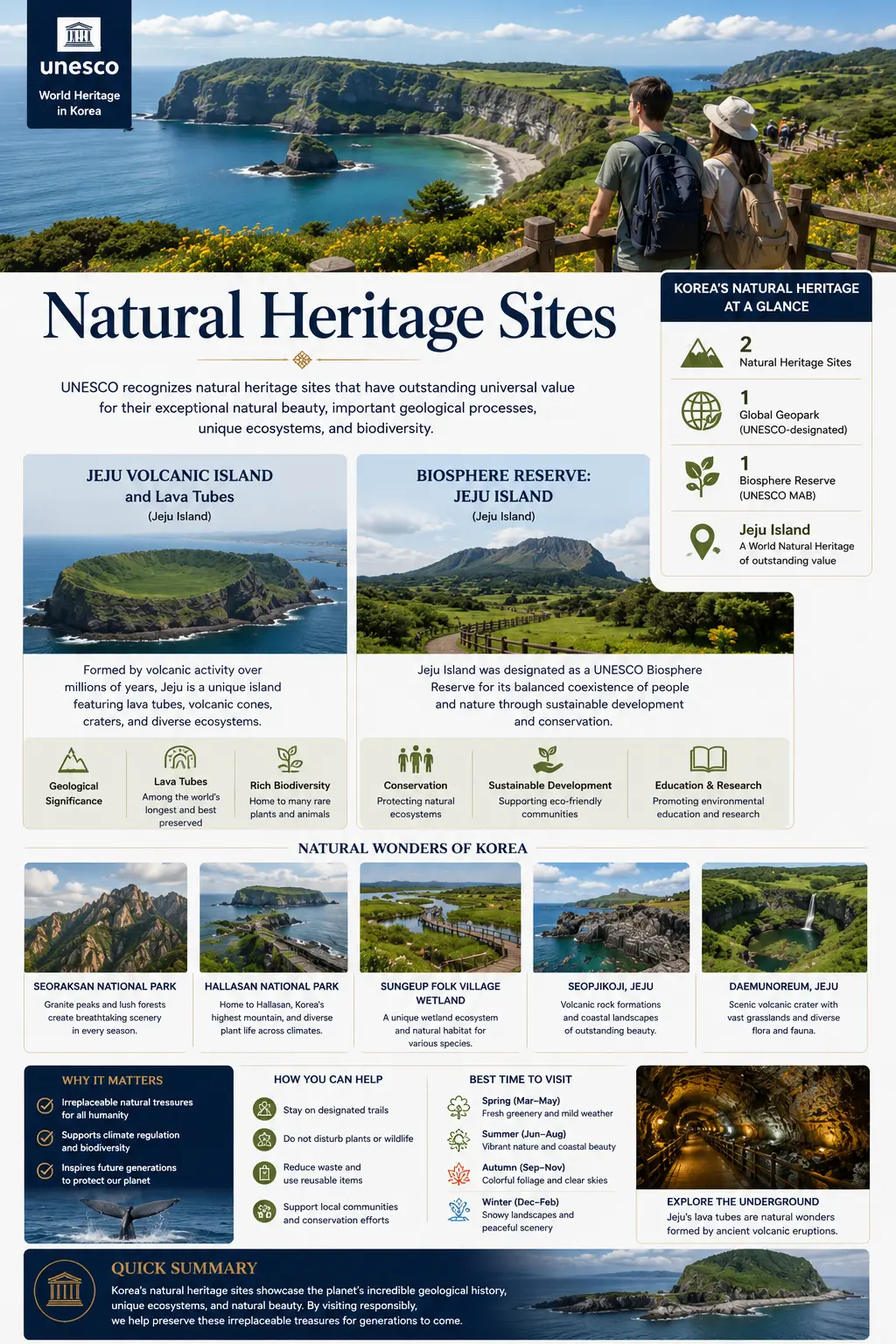
Quick Summary
Key takeaways
- Korea's UNESCO Natural Heritage highlights the extraordinary volcanic landscapes of Jeju Island, protecting unique geological formations and ecosystems of international importance.
The Complete Guide
South Korea's UNESCO Natural Heritage Sites protect some of the country's most extraordinary geological formations, volcanic landscapes, forests, and ecosystems. These areas demonstrate Korea's exceptional natural diversity and scientific importance.
Visitors can experience volcanic craters, lava tubes, dramatic coastlines, and protected ecosystems that are recognized as globally significant natural treasures.
Major UNESCO Natural Heritage Sites
Jeju Volcanic Island and Lava Tubes
Jeju Island is Korea's only UNESCO Natural World Heritage Site. It includes Hallasan Mountain, Seongsan Ilchulbong Tuff Cone, and the Geomunoreum Lava Tube System, one of the world's finest volcanic landscapes.
Hallasan National Park
Hallasan is South Korea's highest mountain and a dormant volcano with rich biodiversity, alpine vegetation, and spectacular crater scenery.
Seongsan Ilchulbong
Known as Sunrise Peak, this volcanic crater rising above the sea is one of Korea's most iconic natural landmarks and one of Jeju's most visited attractions.
Geomunoreum Lava Tube System
This extensive network of lava tubes is internationally recognized for its exceptional geological features and outstanding scientific value.
Highlights
Ask AI About This Topic
Have a question about UNESCO Natural Heritage Sites?
Get instant, locally-checked answers from the ASK KOREA AI. Ask anything from specific edge cases to itinerary decisions.
"How should I plan a Jeju trip around Korea's UNESCO natural heritage sites?"
ASK KOREA Transit