UNESCO Intangible Cultural Heritage
Intangible Cultural Heritage covers the living practices, expressions, knowledge and skills passed down through generations and still practised in communities across Korea.
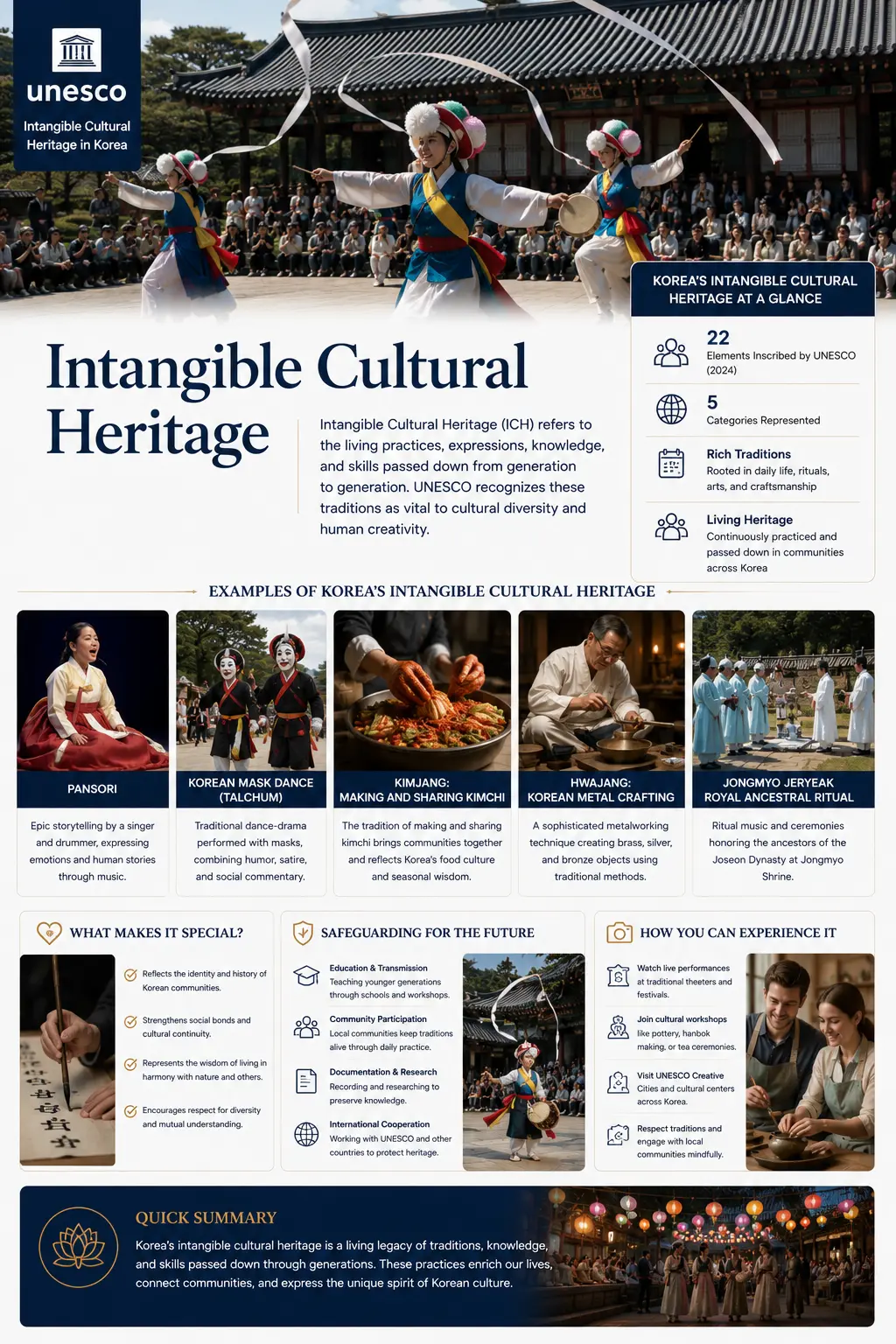
Quick Summary
Key takeaways
- Korea's UNESCO Intangible Cultural Heritage preserves living traditions that continue to connect modern society with centuries of history through music, festivals, ceremonies, craftsmanship, and community life.
The Complete Guide
UNESCO Intangible Cultural Heritage recognizes living traditions that are passed down from generation to generation. These traditions include performing arts, rituals, craftsmanship, festivals, and cultural practices that continue to play an important role in everyday life.
South Korea has received international recognition for preserving a wide variety of living cultural traditions. These traditions remain active through festivals, education, community events, and family customs, allowing visitors to experience Korean culture beyond historic buildings and monuments.
Major UNESCO Intangible Cultural Heritage
Jongmyo Jerye
Jongmyo Jerye is the royal ancestral memorial ceremony performed at Jongmyo Shrine in Seoul. This ceremony has been preserved for centuries and represents one of Korea's most important Confucian traditions.
Jongmyo Jeryeak
Performed during the royal ancestral rites, Jongmyo Jeryeak combines ceremonial music, dance, and ritual into one of the world's oldest continuously performed court traditions.
Pansori
Pansori is Korea's traditional musical storytelling performance. A single singer and drummer perform dramatic stories through expressive singing, narration, and acting.
Gangneung Danoje Festival
This traditional festival celebrates seasonal customs through folk performances, rituals, games, and community celebrations. It is one of Korea's oldest traditional festivals.
Namsadang Nori
Namsadang Nori is a traditional traveling performance that combines music, acrobatics, puppet theater, tightrope walking, and comedy.
Arirang
Arirang is Korea's best-known traditional folk song. Hundreds of regional versions exist, symbolizing Korean history, emotions, and cultural identity.
Kimjang
Kimjang is the traditional practice of preparing and sharing kimchi before winter. Families and communities gather to preserve food while strengthening social bonds.
Taekkyeon
Taekkyeon is Korea's traditional martial art known for its graceful movements, balance, and emphasis on harmony rather than force.
Jeju Haenyeo Culture
The tradition of the Haenyeo, female free divers of Jeju Island, represents one of Korea's most unique cultural practices. Their knowledge of the sea, sustainable harvesting methods, and strong community spirit have been recognized by UNESCO.
Highlights
Ask AI About This Topic
Have a question about UNESCO Intangible Cultural Heritage?
Get instant, locally-checked answers from the ASK KOREA AI. Ask anything from specific edge cases to itinerary decisions.
"Where can I actually experience Korea's UNESCO intangible cultural heritage as a traveller?"
ASK KOREA Transit