UNESCO Cultural Heritage Sites
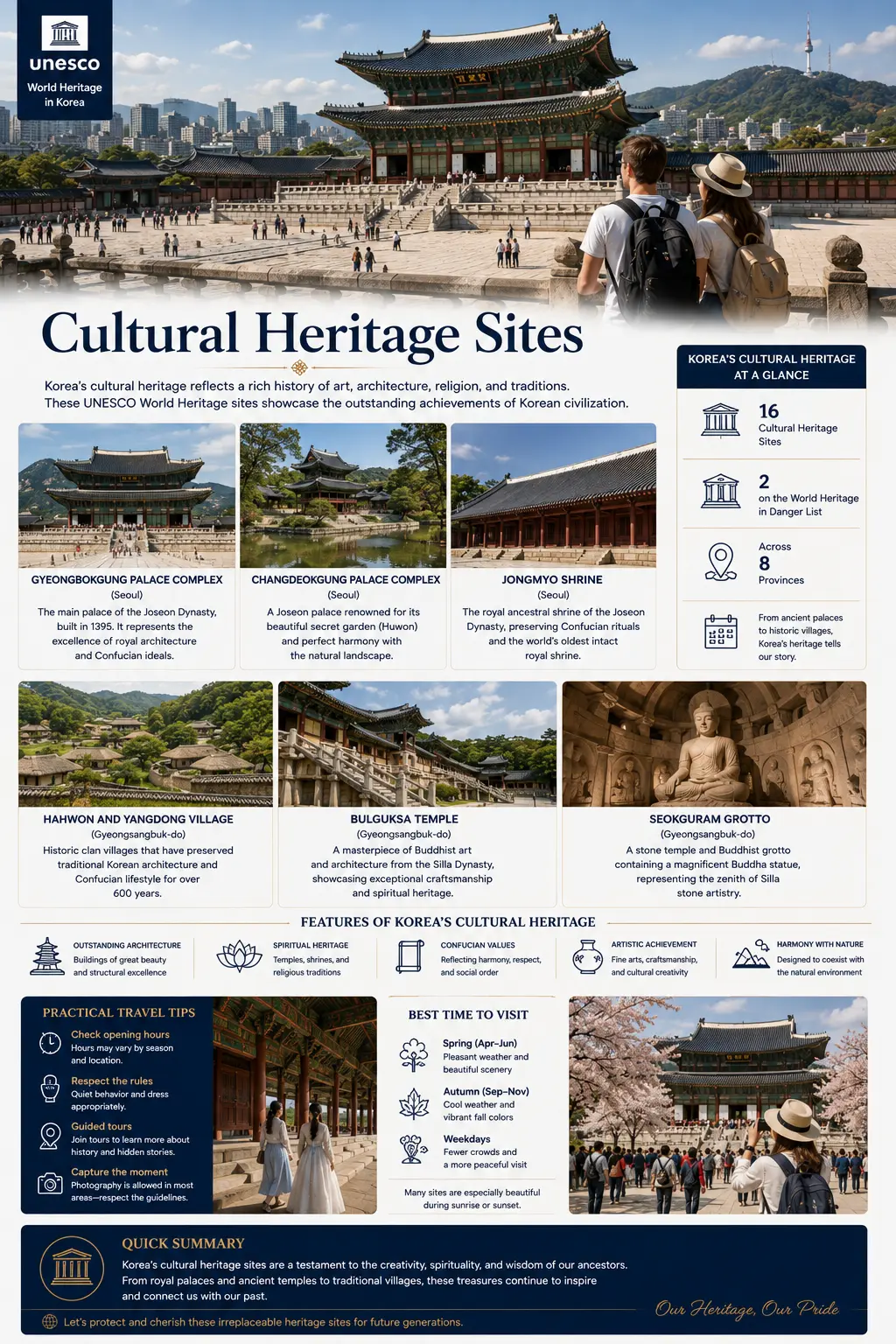
Korea's UNESCO Cultural Heritage Sites showcase the outstanding achievements of Korean civilization in art, architecture, religion and traditional life.
Quick Summary
Key takeaways
- Korea's UNESCO Cultural Heritage Sites showcase the country's remarkable history through temples, palaces, fortresses, and traditional villages that continue to preserve Korea's architectural and cultural legacy.
The Complete Guide
South Korea's UNESCO Cultural Heritage Sites preserve the country's most significant achievements in architecture, religion, engineering, and traditional society. These remarkable landmarks span more than a thousand years of Korean history and provide valuable insight into the nation's cultural development.
Visitors can explore ancient temples, royal fortresses, historic villages, and archaeological sites that continue to represent Korea's cultural identity today.
Major UNESCO Cultural Heritage Sites
Bulguksa Temple
Located in Gyeongju, Bulguksa Temple is one of Korea's finest Buddhist temples and a masterpiece of Unified Silla architecture. Elegant stone pagodas, bridges, and halls demonstrate exceptional artistic and engineering achievements.
Seokguram Grotto
Situated on Mount Tohamsan, Seokguram Grotto houses one of Asia's most celebrated stone Buddha statues. The remarkable granite sanctuary reflects the highest level of Buddhist art during the Unified Silla Period.
Jongmyo Shrine
Jongmyo Shrine in Seoul is the oldest royal Confucian shrine still used for ancestral memorial ceremonies. Traditional rituals continue to be performed today, preserving centuries-old royal customs.
Changdeokgung Palace
Changdeokgung Palace is renowned for its harmonious integration with the surrounding natural landscape. Its Secret Garden is considered one of Korea's most beautiful examples of traditional landscape architecture.
Hwaseong Fortress
Located in Suwon, Hwaseong Fortress is an outstanding example of eighteenth-century military architecture, combining traditional Korean and Western engineering techniques.
Historic Villages of Korea
Hahoe Folk Village and Yangdong Folk Village preserve traditional Korean architecture, Confucian culture, and village life that have remained largely unchanged for centuries.
Baekje Historic Areas
The Baekje Historic Areas include ancient royal palaces, temples, tombs, and fortresses that illustrate the remarkable culture of the Baekje Kingdom.
Sansa, Buddhist Mountain Monasteries
These mountain monasteries represent Korea's living Buddhist tradition and continue to function as important religious centers while welcoming visitors from around the world.
Highlights
Ask AI About This Topic
Have a question about UNESCO Cultural Heritage Sites?
Get instant, locally-checked answers from the ASK KOREA AI. Ask anything from specific edge cases to itinerary decisions.
"Which of Korea's UNESCO cultural heritage sites should I prioritise on a first visit?"
ASK KOREA Transit