What Is UNESCO World Heritage?
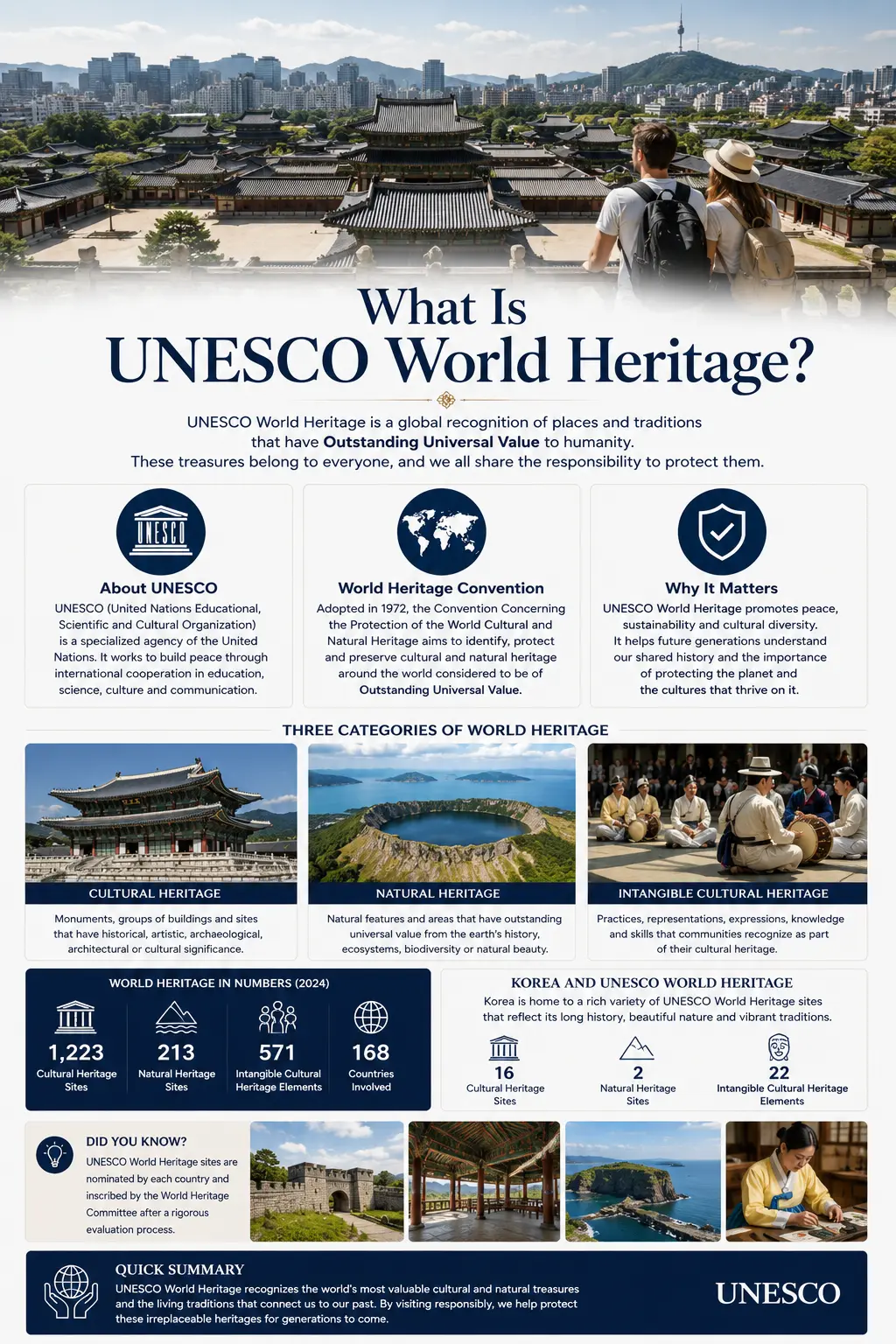
UNESCO World Heritage recognizes places and traditions of Outstanding Universal Value that belong to everyone and that we all share the responsibility to protect.
Quick Summary
Key takeaways
- UNESCO World Heritage recognizes Korea's most valuable cultural and natural treasures while helping preserve them for future generations.
The Complete Guide
UNESCO World Heritage is an international program established by the United Nations Educational, Scientific and Cultural Organization (UNESCO) to identify and protect places of exceptional cultural or natural importance.
Sites are selected because they possess Outstanding Universal Value, meaning they are considered significant not only for one nation but for all humanity.
South Korea has earned international recognition through a growing number of UNESCO World Heritage properties, as well as UNESCO Intangible Cultural Heritage traditions that continue to thrive today.
These designations demonstrate Korea's commitment to preserving its historic monuments, traditional culture, and natural environments for future generations.
UNESCO Categories
Cultural Heritage
Historic buildings, archaeological sites, palaces, temples, villages, and monuments.
Natural Heritage
Outstanding natural landscapes, geological formations, and protected ecosystems.
Intangible Cultural Heritage
Living traditions including music, festivals, craftsmanship, rituals, and traditional knowledge.
Highlights
Ask AI About This Topic
Have a question about What Is UNESCO World Heritage??
Get instant, locally-checked answers from the ASK KOREA AI. Ask anything from specific edge cases to itinerary decisions.
"Explain UNESCO World Heritage categories and how many sites Korea has in each."
ASK KOREA Transit