Traditional Korean Tea
From premium green tea grown in Boseong and Hadong to fruit, flower and grain herbal teas, Korea offers a remarkable variety of traditional teas.
Quick Summary
Key takeaways
- Korean green tea represents one of the country's finest agricultural and cultural traditions, combining exceptional quality, beautiful landscapes, and centuries of tea-making expertise.
- Korean herbal teas offer a wide variety of natural flavors and traditional beverages that reflect centuries of Korean wellness culture and hospitality.
The Complete Guide
Green Tea
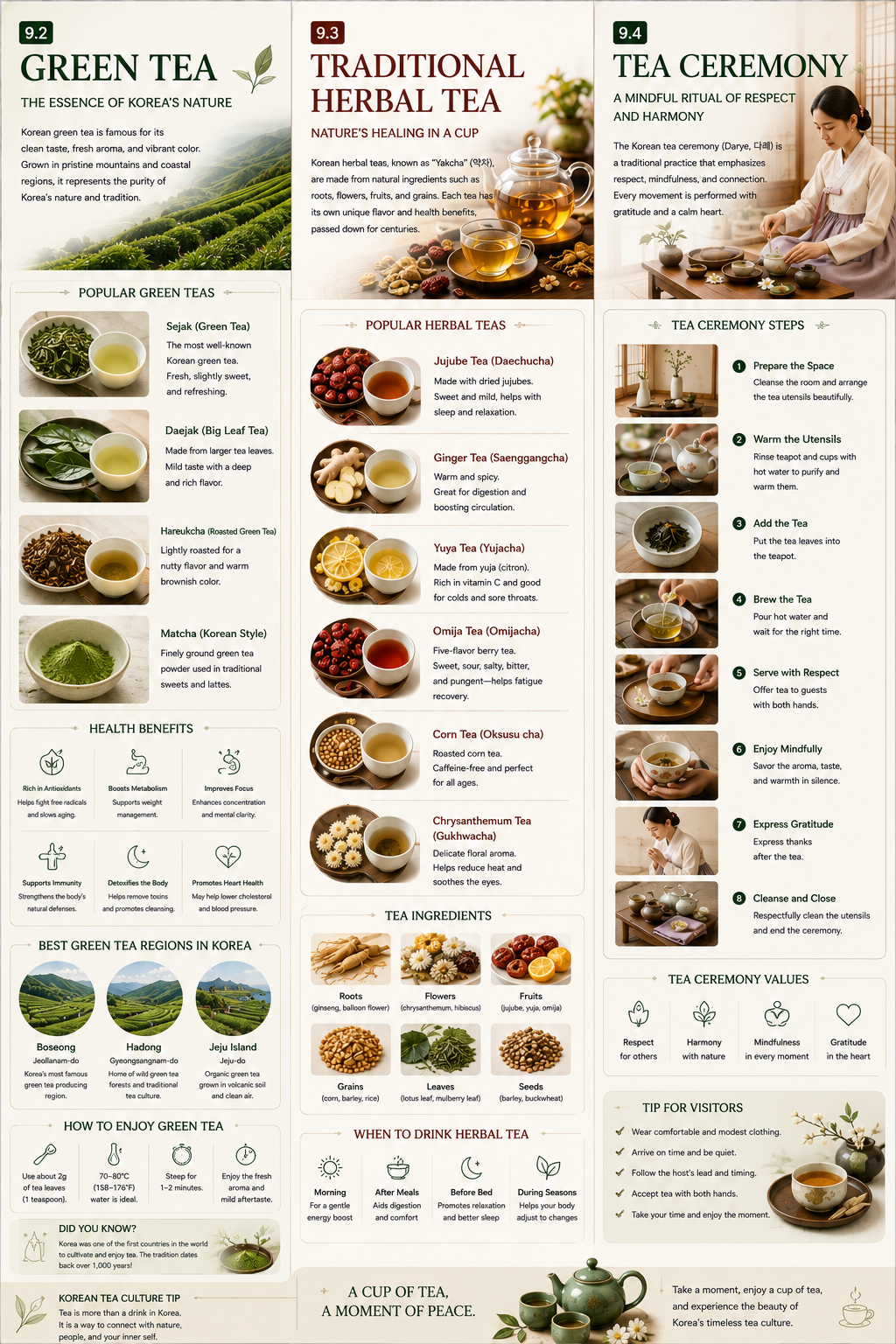
Green tea is Korea's most famous traditional tea and has been cultivated for more than a thousand years. The country's mild climate, fertile soil, and mountainous terrain produce tea leaves known for their delicate aroma, smooth flavor, and vibrant color.
The two most famous green tea producing regions are Boseong in Jeollanam-do and Hadong in Gyeongsangnam-do. Visitors can explore beautiful tea plantations, participate in tea-picking experiences, and learn traditional tea-making techniques while enjoying spectacular natural scenery.
Korean green tea is commonly enjoyed both hot and cold and is also used in desserts, ice cream, pastries, and traditional sweets.
Famous Green Tea Regions
Boseong
Korea's largest green tea producing region, famous for its rolling tea fields and annual Green Tea Festival.
Hadong
One of Korea's oldest tea-growing regions, known for traditional cultivation methods and premium-quality tea.
Green Tea Products
Health Benefits
Highlights
Traditional Herbal Tea
In addition to green tea, Korea has a rich tradition of herbal teas made from fruits, flowers, roots, grains, and medicinal plants. Unlike true tea made from tea leaves, these beverages are naturally caffeine-free and are enjoyed for their unique flavors, seasonal traditions, and wellness benefits.
Many herbal teas have been part of Korean daily life for centuries and are commonly served at home, traditional tea houses, and Korean restaurants.
Popular Korean Herbal Teas
Yujacha (Citron Tea)
Made from preserved citron and honey, Yujacha has a sweet citrus flavor and is especially popular during the winter months.
Omijacha (Five-Flavor Berry Tea)
Prepared from magnolia vine berries, Omijacha is famous for offering five distinct tastes—sweet, sour, salty, bitter, and pungent—in a single drink.
Daechucha (Jujube Tea)
A naturally sweet tea made from dried Korean jujubes. It is traditionally enjoyed during colder seasons.
Saenggangcha (Ginger Tea)
Made with fresh ginger and honey, this warming tea is commonly served during winter.
Maesilcha (Green Plum Tea)
Prepared from Korean green plums, this refreshing tea has a pleasant balance of sweetness and acidity.
Bori-cha (Barley Tea)
One of Korea's most common everyday beverages, barley tea is served both hot and cold and is often provided free of charge in restaurants.
Corn Tea (Oksusu-cha)
Made from roasted corn, this naturally sweet and aromatic tea is widely enjoyed throughout Korea.
Highlights
Ask AI About This Topic
Have a question about Traditional Korean Tea?
Get instant, locally-checked answers from the ASK KOREA AI. Ask anything from specific edge cases to itinerary decisions.
"Which traditional Korean teas should I try, and where do they come from?"
ASK KOREA Transit