Tea Ceremony & Tea Houses
The Korean tea ceremony and traditional tea houses offer some of the country's most peaceful cultural experiences.
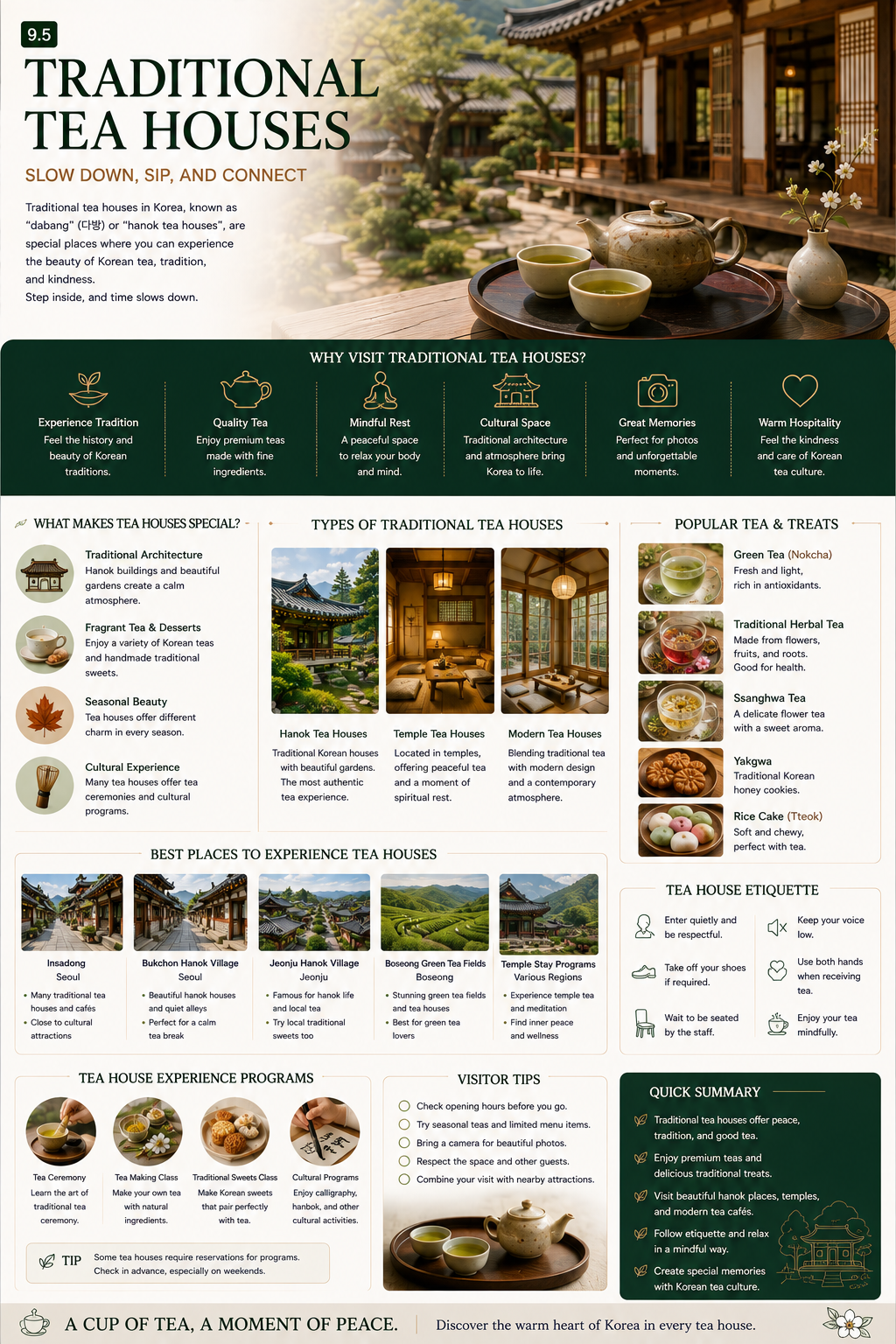
Quick Summary
Key takeaways
- The Korean tea ceremony offers visitors a peaceful cultural experience that celebrates simplicity, hospitality, and harmony through the sharing of traditional tea.
- Traditional tea houses offer one of Korea's most peaceful cultural experiences, allowing visitors to enjoy authentic tea, traditional desserts, and historic Hanok architecture in a relaxing atmosphere.
The Complete Guide
Tea Ceremony
The Korean tea ceremony, known as Darye, is a graceful cultural tradition that emphasizes simplicity, respect, and mindfulness. Rather than following rigid formal procedures, Darye encourages participants to enjoy tea in a relaxed atmosphere while appreciating nature, conversation, and quiet reflection.
Tea ceremonies are commonly held in traditional tea houses, Hanok villages, cultural centers, Buddhist temples, and tea museums throughout Korea.
Typical Tea Ceremony
Preparing the Tea
Tea is carefully prepared using traditional teaware and fresh water.
Serving the Tea
Tea is served respectfully to each guest using traditional etiquette.
Appreciating the Tea
Participants observe the aroma, color, and flavor while enjoying a peaceful atmosphere.
Conversation
Tea encourages calm discussion and shared appreciation rather than silence.
Traditional Tea Utensils
Highlights
Traditional Tea Houses
Traditional Korean tea houses, known as Dachabang, offer visitors a peaceful place to experience Korea's tea culture in an authentic setting. Many tea houses are located inside beautifully preserved Hanok buildings, where guests can enjoy traditional teas, Korean desserts, and quiet surroundings.
Unlike modern cafés, traditional tea houses emphasize relaxation, conversation, and appreciation of Korean culture. Wooden architecture, paper windows, traditional furniture, and carefully designed gardens create a calm atmosphere that reflects the philosophy of Korean tea culture.
Many tea houses also serve handmade traditional sweets that perfectly complement Korean teas.
Best Places to Experience Traditional Tea Houses
Insadong
Seoul's most famous traditional cultural district, home to numerous historic tea houses serving a wide variety of Korean teas.
Bukchon Hanok Village
Visitors can enjoy tea inside beautifully preserved Hanok houses while overlooking traditional streets.
Jeonju Hanok Village
Traditional tea houses here offer authentic Korean tea experiences alongside Jeonju's famous cultural attractions.
Boseong
Tea houses overlooking Korea's largest green tea plantations provide spectacular scenery and freshly harvested tea.
Traditional Korean Tea House Menu
Green Tea
Fresh Korean green tea served hot or cold.
Herbal Teas
Yujacha, Omijacha, Daechucha, Saenggangcha, and many seasonal varieties.
Traditional Desserts
Highlights
Ask AI About This Topic
Have a question about Tea Ceremony & Tea Houses?
Get instant, locally-checked answers from the ASK KOREA AI. Ask anything from specific edge cases to itinerary decisions.
"Where can I join a Korean tea ceremony or visit a traditional tea house?"
ASK KOREA Transit