What Is Korean Tea Culture?
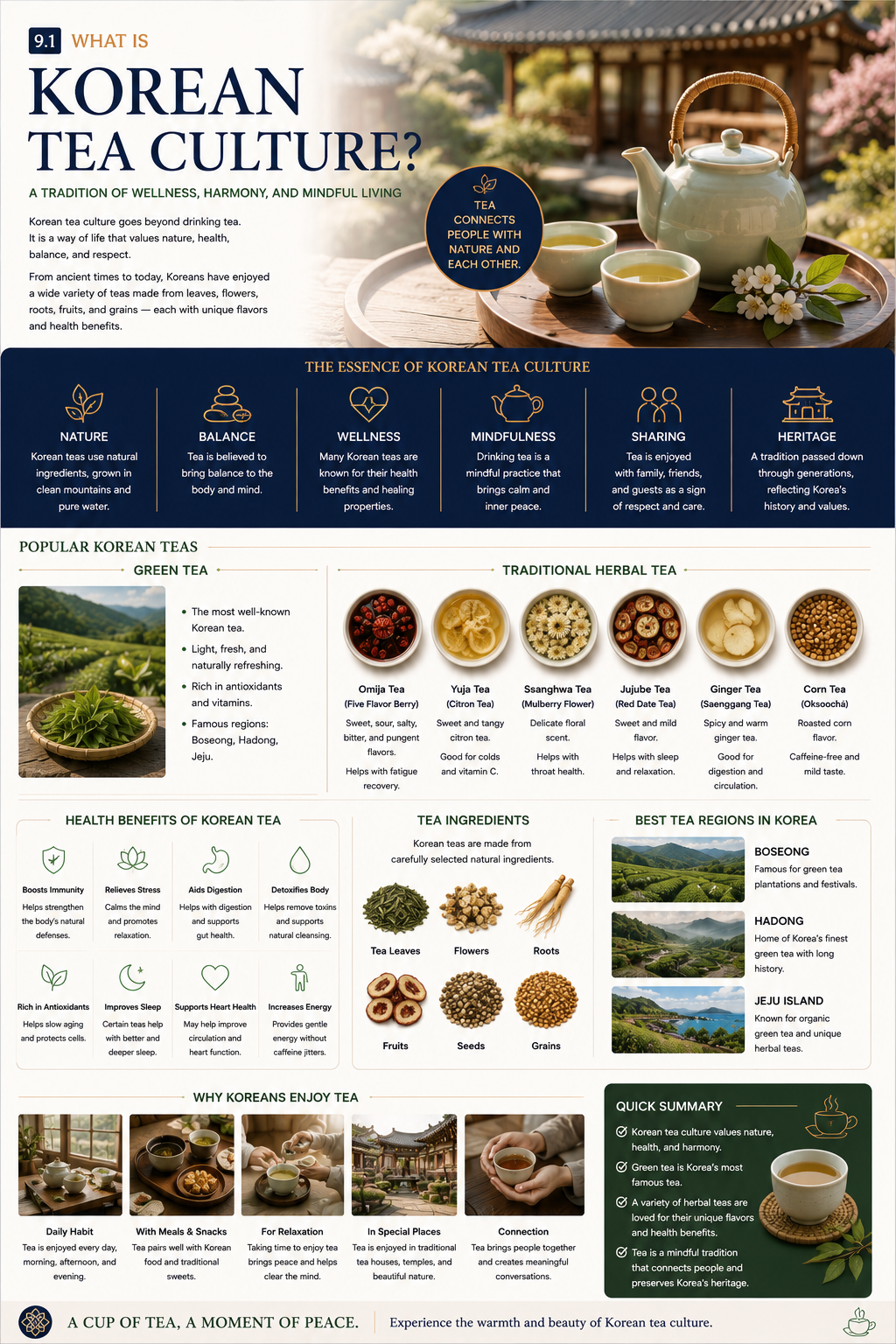
Korean tea culture is a centuries-old tradition centred on harmony, respect and quiet appreciation rather than elaborate ritual.
Quick Summary
Key takeaways
- Korean tea culture emphasizes simplicity, harmony, and hospitality, allowing visitors to experience one of Korea's most refined and peaceful cultural traditions.
The Complete Guide
Korean tea culture is a centuries-old tradition centered on harmony, respect, and quiet appreciation rather than elaborate rituals. Known as Darye, meaning "etiquette for tea," the tradition emphasizes creating a peaceful atmosphere where people can relax, reflect, and enjoy meaningful conversation.
Unlike highly formal tea ceremonies found elsewhere in East Asia, Korean tea culture values simplicity and naturalness. The focus is not on perfection but on sharing tea with sincerity and hospitality.
Tea has long been associated with Buddhist temples, Confucian scholars, royal courts, and family gatherings. Today, this tradition continues in historic tea houses, Hanok cafés, cultural centers, and tea plantations throughout Korea.
Characteristics of Korean Tea Culture
Simplicity
Tea is enjoyed in a calm and comfortable atmosphere without unnecessary formality.
Harmony
The tea setting is designed to create balance between people, nature, and the surrounding environment.
Hospitality
Serving tea is considered an expression of respect and kindness toward guests.
Mindfulness
Tea encourages participants to slow down, relax, and appreciate the present moment.
Highlights
Ask AI About This Topic
Have a question about What Is Korean Tea Culture??
Get instant, locally-checked answers from the ASK KOREA AI. Ask anything from specific edge cases to itinerary decisions.
"Explain Korean tea culture and what makes Darye different from other tea traditions."
ASK KOREA Transit