Korea Tea Culture Travel Guide
This guide covers tea etiquette and how to plan tea plantation visits, ceremonies and tea house experiences across Korea.
Quick Summary
Key takeaways
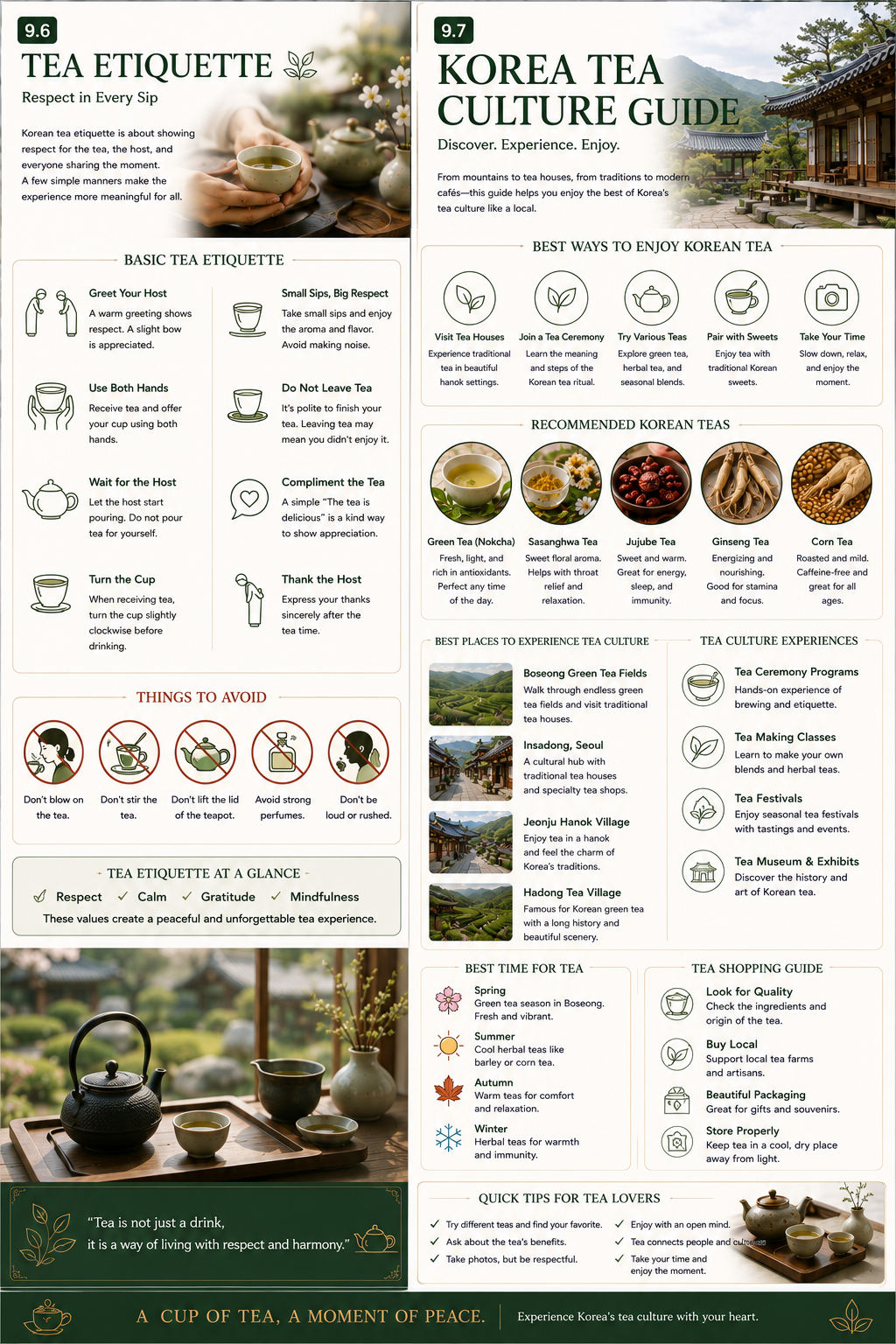
- Korean tea etiquette emphasizes respect, simplicity, and hospitality, allowing everyone to enjoy tea in a peaceful and welcoming environment.
- Korean tea culture offers visitors a peaceful journey through centuries of history, hospitality, and wellness. From traditional tea houses and beautiful tea plantations to herbal teas and tea ceremonies, Korea provides unforgettable experiences that reflect the elegance and tranquility of its cultural heritage.
The Complete Guide
Tea Etiquette
Tea etiquette in Korea is based on respect, hospitality, and consideration for others. Unlike highly formal ceremonies, Korean tea culture encourages natural and comfortable interactions while maintaining traditional courtesy.
Following basic tea etiquette helps visitors better appreciate Korea's cultural traditions and enjoy meaningful tea experiences.
Before Drinking Tea
During Tea
During Tea Ceremonies
In Traditional Tea Houses
Highlights
Korea Tea Culture Guide
Tea culture is one of Korea's most elegant and relaxing cultural traditions. Whether visiting historic tea houses, exploring scenic tea plantations, participating in tea ceremonies, or enjoying traditional herbal teas, visitors can experience an important part of Korea's cultural heritage.
Choosing the Best Tea Experience
For First-Time Visitors
For Tea Plantations
For Traditional Tea Ceremonies
For Traditional Desserts
For Scenic Views
What to Try
Best Seasons
Spring
Fresh tea leaves begin to appear, making it an excellent season for plantation visits.
Summer
Lush green tea fields provide spectacular scenery.
Autumn
Comfortable weather is ideal for visiting tea houses and cultural villages.
Winter
Warm herbal teas create cozy and memorable cultural experiences.
Travel Tips
Ask AI About This Topic
Have a question about Korea Tea Culture Travel Guide?
Get instant, locally-checked answers from the ASK KOREA AI. Ask anything from specific edge cases to itinerary decisions.
"Plan a Korea tea culture trip with plantations, tea houses and a tea ceremony."
ASK KOREA Transit