Marine Harvesting
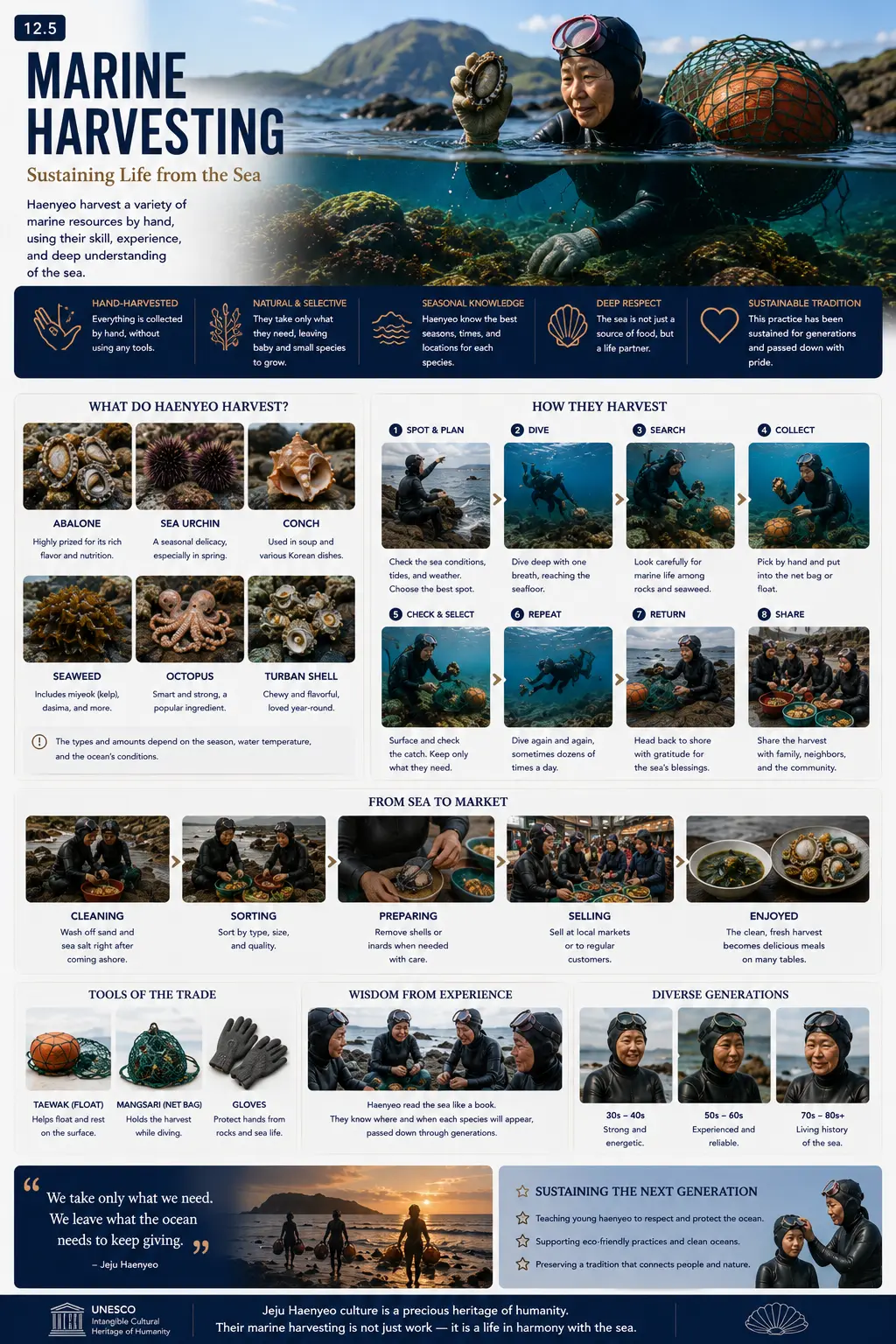
Haenyeo harvest marine resources entirely by hand, guided by seasonal knowledge and sustainable rules.
Quick Summary
Key takeaways
- Marine harvesting is the foundation of Haenyeo culture. Through remarkable free-diving skills and generations of ecological knowledge, Jeju's women divers sustainably harvest premium seafood while protecting the marine environment for future generations.
The Complete Guide
Marine harvesting is the heart of the Haenyeo tradition. Rather than using large fishing vessels or mechanical equipment, Haenyeo carefully collect marine resources by hand while free diving. This centuries-old practice reflects a deep respect for nature and demonstrates how humans and the ocean can coexist sustainably.
Each dive requires careful observation of tides, underwater terrain, and marine life. Haenyeo harvest only mature seafood and avoid damaging the surrounding ecosystem, ensuring that future generations can continue this remarkable tradition.
Their environmentally responsible approach has become an internationally recognized example of sustainable coastal resource management.
Abalone
Abalone is one of the most valuable seafood products collected by the Haenyeo.
Living on rocky seabeds, abalone require careful harvesting by hand to avoid damaging both the shellfish and the surrounding habitat.
Fresh Jeju abalone is widely served grilled, steamed, in porridge, or as sashimi at seafood restaurants across the island.
Sea Urchin
Sea urchins are harvested during their peak season and are highly prized for their rich, creamy flavor.
Haenyeo carefully collect mature sea urchins while leaving younger specimens undisturbed to support natural population recovery.
Fresh sea urchin is commonly enjoyed over rice, in soups, or as sashimi.
Sea Cucumber
Sea cucumbers are another important marine product harvested by Haenyeo.
Collected from the ocean floor, they are popular in Korean cuisine and are also processed into premium dried seafood products.
Because sea cucumbers grow slowly, Haenyeo carefully follow sustainable harvesting practices to protect future populations.
Octopus
Haenyeo occasionally harvest octopus hidden among rocks and coastal reefs.
This requires exceptional knowledge of underwater habitats, as octopus are highly intelligent and well camouflaged.
Fresh octopus is widely enjoyed throughout Jeju in dishes such as grilled octopus, stir-fried octopus, and seafood stews.
Shellfish
Various shellfish are collected depending on the season and local coastal conditions.
Common shellfish include:
Harvesting methods vary according to species, water depth, and seasonal regulations.
Sustainable Harvesting
One of the greatest strengths of the Haenyeo tradition is its commitment to sustainability.
Haenyeo carefully protect marine ecosystems by:
These practices have helped preserve Jeju's coastal environment for centuries and contributed to the UNESCO recognition of Haenyeo culture.
Highlights
Ask AI About This Topic
Have a question about Marine Harvesting?
Get instant, locally-checked answers from the ASK KOREA AI. Ask anything from specific edge cases to itinerary decisions.
"What do Jeju haenyeo harvest and how do they do it sustainably?"
ASK KOREA Transit