UNESCO Cultural Heritage
In 2016, Jeju Haenyeo Culture was inscribed on UNESCO's Representative List of the Intangible Cultural Heritage of Humanity.
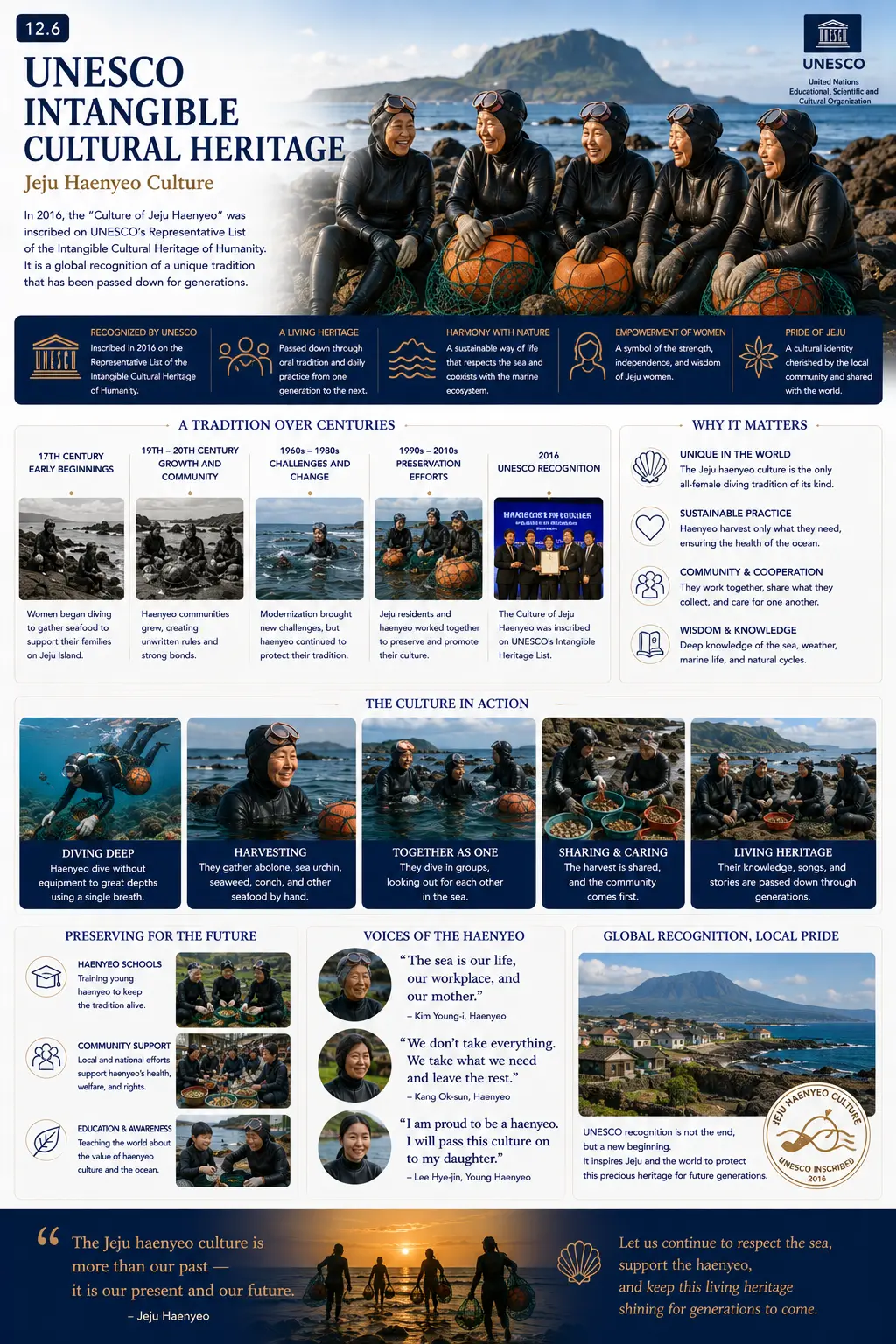
Quick Summary
Key takeaways
- UNESCO's recognition of Jeju Haenyeo Culture celebrates one of the world's most extraordinary living traditions, honoring generations of women whose remarkable free-diving skills, sustainable practices, and deep connection with the sea continue to inspire people around the globe.
The Complete Guide
The Jeju Haenyeo are recognized not only as skilled free divers but also as guardians of one of the world's most remarkable living cultural traditions. Their knowledge of the sea, sustainable harvesting practices, community cooperation, and unique way of life have been passed down through generations for centuries.
In recognition of this exceptional cultural value, Jeju Haenyeo Culture was inscribed on the UNESCO Representative List of the Intangible Cultural Heritage of Humanity in 2016. This recognition highlights the importance of preserving both the cultural traditions of the Haenyeo and the marine environment they have protected for generations.
Today, UNESCO recognition has increased international awareness of the Haenyeo and supports ongoing education, research, cultural preservation, and community programs throughout Jeju Island.
UNESCO Recognition
In 2016, UNESCO officially recognized Jeju Haenyeo Culture as an Intangible Cultural Heritage of Humanity.
Unlike monuments or historic buildings, intangible heritage recognizes living traditions, knowledge, skills, and cultural practices that continue to be passed from one generation to the next.
The Haenyeo tradition was recognized because it represents an extraordinary combination of:
Cultural Significance
The Haenyeo are far more than seafood harvesters.
They represent:
For centuries, Haenyeo have played a central role in supporting Jeju families and preserving the island's distinctive cultural identity.
Their knowledge is traditionally passed from experienced divers to younger generations through observation, practice, and daily life rather than formal classrooms.
Global Recognition
Today, the Haenyeo have become internationally recognized cultural ambassadors for Korea.
Their story has been featured in:
Visitors from around the world travel to Jeju to learn about this extraordinary maritime tradition.
Why It Matters
The Haenyeo tradition demonstrates how cultural heritage and environmental sustainability can coexist.
Their example teaches valuable lessons about:
As the number of active Haenyeo continues to decline, preserving their knowledge has become increasingly important for future generations.
Highlights
Ask AI About This Topic
Have a question about UNESCO Cultural Heritage?
Get instant, locally-checked answers from the ASK KOREA AI. Ask anything from specific edge cases to itinerary decisions.
"Why is Jeju Haenyeo Culture recognized by UNESCO?"
ASK KOREA Transit