Free-Diving Techniques
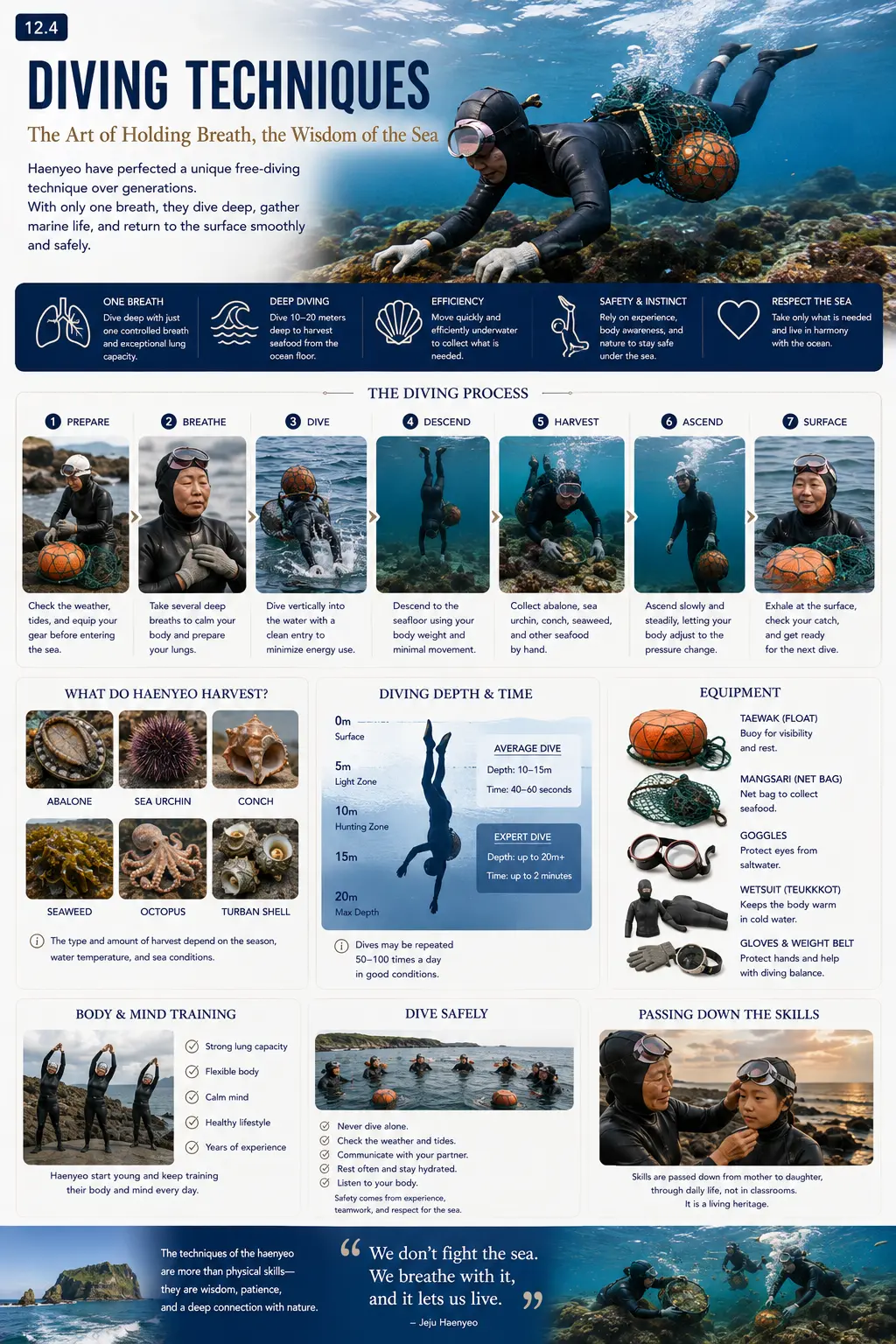
Haenyeo have perfected a unique free-diving technique over generations, diving deep on a single breath.
Quick Summary
Key takeaways
- The Haenyeo's diving techniques combine extraordinary physical endurance, specialized breathing skills, deep environmental knowledge, and centuries of experience, making them one of the world's most respected communities of professional free divers.
The Complete Guide
The diving techniques of the Jeju Haenyeo are among the most remarkable examples of human endurance and traditional knowledge. Unlike modern scuba divers, Haenyeo harvest marine resources without oxygen tanks or breathing equipment, relying entirely on breath-hold diving, experience, and physical conditioning.
Years of practice enable Haenyeo to dive repeatedly throughout the day while remaining calm, conserving energy, and working safely in constantly changing ocean conditions.
Their techniques have been refined over centuries and continue to be passed from experienced divers to younger generations.
Breath-Hold Diving
Haenyeo practice free diving, meaning they dive using only a single breath before returning to the surface.
Most working dives last 30 seconds to 2 minutes, depending on sea conditions, water depth, and the type of marine life being collected.
Experienced Haenyeo may dive 10–20 meters (33–66 feet) below the surface and repeat hundreds of dives during a single working day.
Unlike recreational free divers who often focus on maximum depth or time, Haenyeo prioritize safety, efficiency, and sustainable harvesting.
Sumbisori (Breathing Technique)
One of the most distinctive features of Haenyeo diving is Sumbisori, the unique whistling sound made when exhaling after surfacing.
This controlled breathing technique helps divers:
The sound of Sumbisori has become one of the most recognizable symbols of Jeju Haenyeo culture.
Diving Equipment
Although the diving techniques remain traditional, modern Haenyeo use practical equipment to improve safety and comfort.
Typical equipment includes:
The floating Tewak serves as both a safety marker and a storage float for harvested seafood.
Safety Skills
Safety is the highest priority for every Haenyeo.
Experienced divers carefully evaluate:
Haenyeo usually dive in groups, allowing members to monitor one another throughout the day.
Years of experience enable them to recognize dangerous conditions before entering the water.
Environmental Knowledge
Haenyeo possess an extraordinary understanding of the marine environment developed through generations of observation.
They understand:
Rather than harvesting everything available, Haenyeo carefully protect younger marine life and avoid damaging underwater ecosystems, ensuring that future generations can continue their tradition.
Highlights
Ask AI About This Topic
Have a question about Free-Diving Techniques?
Get instant, locally-checked answers from the ASK KOREA AI. Ask anything from specific edge cases to itinerary decisions.
"How do Jeju haenyeo free-dive without oxygen tanks?"
ASK KOREA Transit