History of the Haenyeo
The history of the Jeju Haenyeo spans centuries of resilience, independence and community cooperation on Jeju Island.
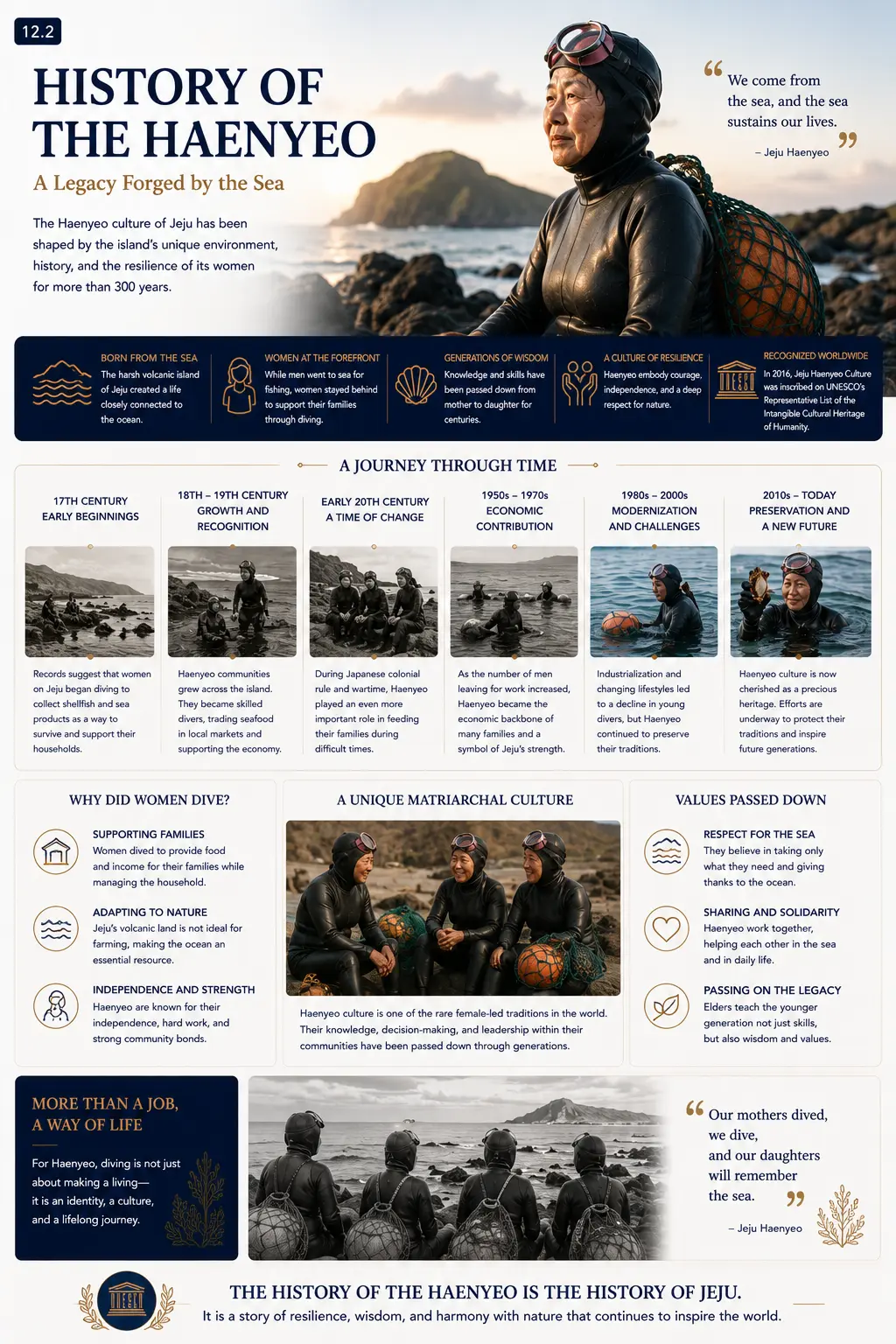
Quick Summary
Key takeaways
- The history of the Haenyeo tells the remarkable story of generations of Jeju women whose courage, independence, and sustainable relationship with the sea have shaped one of Korea's most unique and respected cultural traditions.
The Complete Guide
The history of the Jeju Haenyeo spans several centuries and reflects the resilience, independence, and strong community spirit of the people of Jeju Island. Over time, the Haenyeo evolved from occasional coastal gatherers into highly skilled professional free divers whose work became central to Jeju's economy and cultural identity.
Unlike many traditional societies where men were the primary providers, Jeju developed a unique maritime culture in which women played the leading economic role through free diving and seafood harvesting.
Today, the Haenyeo remain a powerful symbol of courage, environmental stewardship, and women's leadership, preserving one of Korea's most extraordinary living traditions.
Origins
The earliest records of free diving on Jeju Island date back many centuries. Initially, both men and women collected shellfish and seaweed from coastal waters.
By the 17th century, women gradually became the primary divers due to social, economic, and environmental changes. Their exceptional endurance and diving abilities eventually established the Haenyeo tradition that continues today.
Joseon Dynasty
During the Joseon Dynasty (1392–1897), the Haenyeo became increasingly important to Jeju's economy.
They harvested valuable marine products including:
These products were supplied to the royal court and traded throughout Korea.
Historical records describe the remarkable diving abilities of Jeju women, who worked year-round despite difficult sea conditions and cold water.
Modern History
During the 20th century, improvements in diving suits made underwater work safer and more efficient. However, rapid modernization, urbanization, and changing career opportunities gradually reduced the number of young women entering the profession.
Today, most active Haenyeo are older women, many of whom have spent decades preserving this unique way of life.
Despite these challenges, the Haenyeo continue to demonstrate extraordinary skill while passing their knowledge to younger generations through education and cultural programs.
Preservation Efforts
Recognizing the importance of preserving this unique tradition, the Jeju Special Self-Governing Province and the Korean government actively support numerous preservation initiatives.
These include:
In 2016, Jeju Haenyeo Culture was officially inscribed on the UNESCO Representative List of the Intangible Cultural Heritage of Humanity, bringing worldwide recognition to one of Korea's most treasured cultural traditions.
Highlights
Ask AI About This Topic
Have a question about History of the Haenyeo?
Get instant, locally-checked answers from the ASK KOREA AI. Ask anything from specific edge cases to itinerary decisions.
"Tell me the history of the Jeju Haenyeo."
ASK KOREA Transit