Who Are the Jeju Haenyeo?
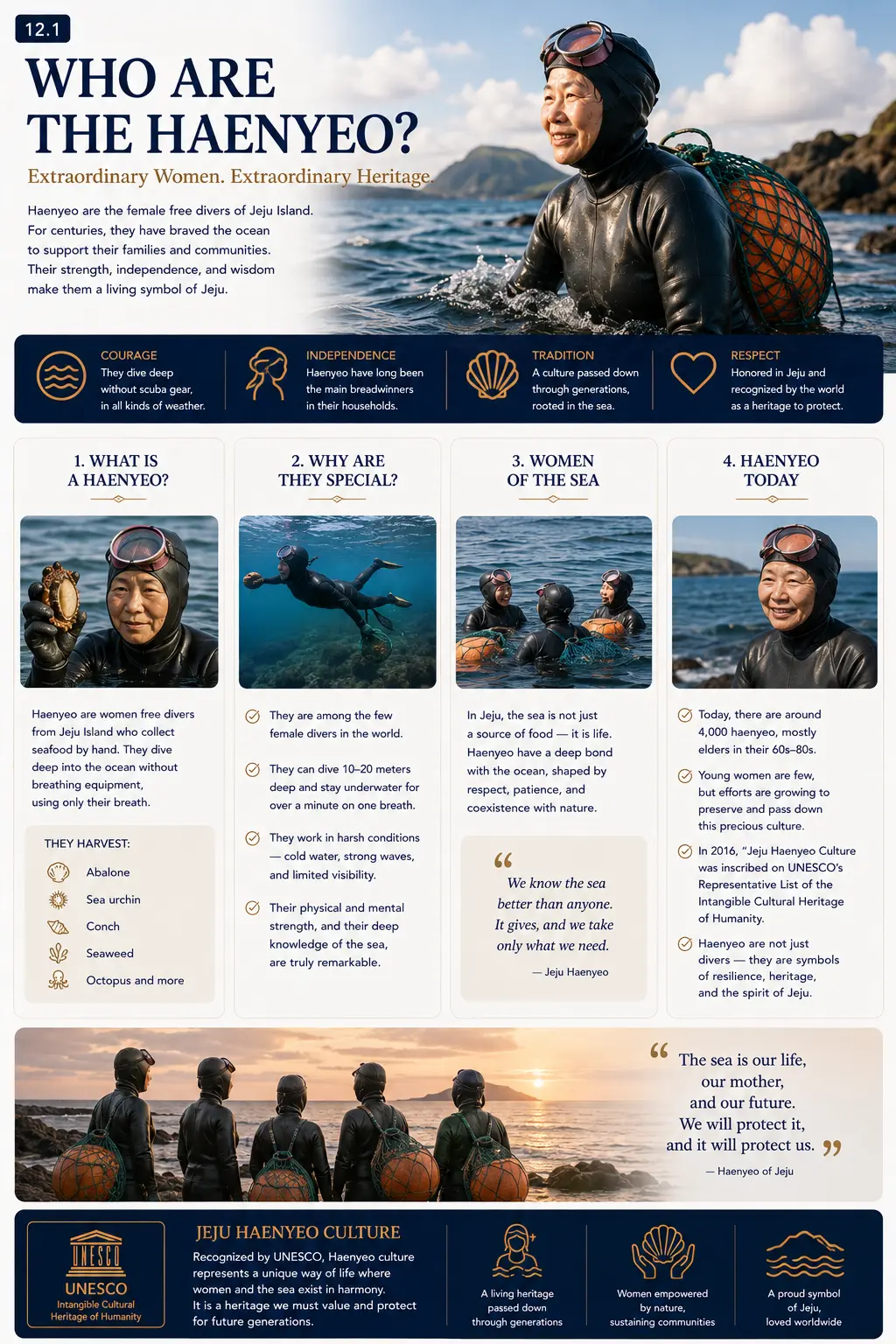
The Haenyeo, or “Women of the Sea,” are Jeju Island's female free divers who harvest seafood by breath-hold diving.
Quick Summary
Key takeaways
- The Haenyeo are Jeju Island's legendary women free divers whose remarkable breath-hold diving skills, sustainable harvesting methods, and centuries-old traditions have made them one of the world's most extraordinary living cultural heritages.
The Complete Guide
The Haenyeo, meaning "Women of the Sea," are highly skilled female free divers from Jeju Island who harvest seafood without using scuba equipment or oxygen tanks. Instead, they rely entirely on breath-hold diving, physical endurance, and generations of knowledge passed down through their communities.
For centuries, the Haenyeo have supported their families and local villages by collecting abalone, sea urchins, sea cucumbers, octopus, shellfish, and seaweed from the ocean floor. Their work requires exceptional physical strength, mental discipline, and a profound understanding of tides, currents, weather, and marine ecosystems.
Today, although the number of active Haenyeo has declined, they remain one of Korea's most respected cultural symbols and continue to inspire people around the world through their resilience, independence, and sustainable way of life.
What Is a Haenyeo?
A Haenyeo is a professional female free diver who harvests marine resources by holding her breath underwater, often diving to depths of 10–20 meters (33–66 feet) for several hours each day without breathing equipment.
Unlike recreational divers, Haenyeo depend on traditional knowledge and experience rather than modern technology, making their profession one of the world's most remarkable examples of human endurance.
Why Are They Special?
The Haenyeo are recognized internationally for their extraordinary skills and cultural significance.
They are admired because they:
Their unique way of life earned international recognition when Jeju Haenyeo Culture was inscribed on UNESCO's Representative List of the Intangible Cultural Heritage of Humanity in 2016.
Women of the Sea
The Haenyeo are often called the "Women of the Sea" because their lives are closely connected to the ocean.
Throughout history, many families on Jeju Island depended primarily on the income earned by Haenyeo. Their courage and determination helped shape Jeju's unique culture, where women traditionally played important economic and social roles within their communities.
Their relationship with the sea is based not only on livelihood but also on deep respect for nature and sustainable resource management.
Haenyeo Today
Today, most active Haenyeo are older women who continue to preserve their traditions despite rapid social change.
To protect this cultural heritage, Jeju Island now supports:
Visitors can watch real Haenyeo demonstrations, visit museums, enjoy freshly harvested seafood, and participate in educational programs that introduce this extraordinary maritime tradition.
Highlights
Ask AI About This Topic
Have a question about Who Are the Jeju Haenyeo??
Get instant, locally-checked answers from the ASK KOREA AI. Ask anything from specific edge cases to itinerary decisions.
"Who are the Jeju Haenyeo and what makes them special?"
ASK KOREA Transit