Daily Life of the Haenyeo
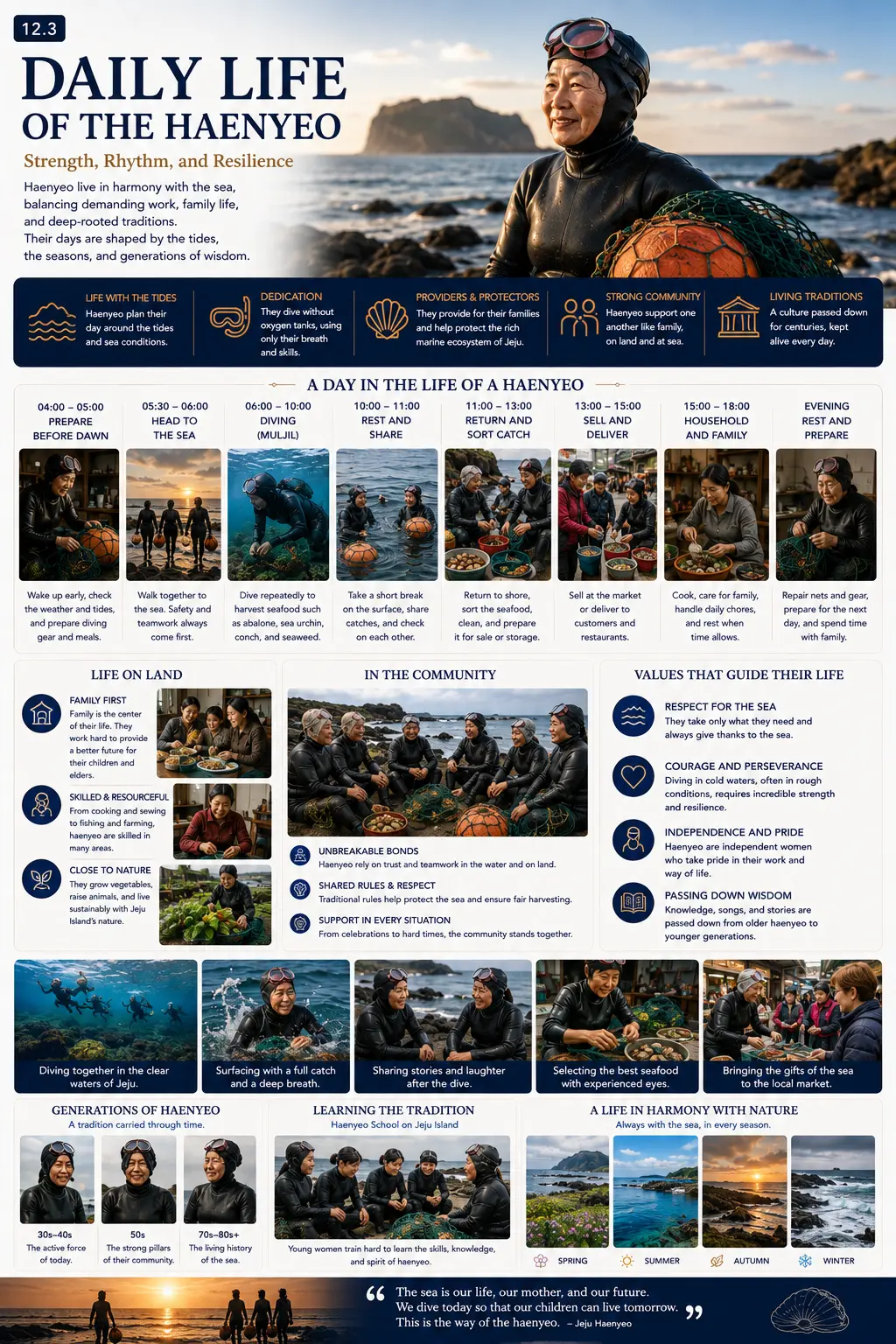
Haenyeo life follows the tides and seasons, balancing demanding dives with community and family life.
Quick Summary
Key takeaways
- The daily life of the Haenyeo revolves around the sea, combining exceptional free-diving skills, strong community cooperation, traditional knowledge, and sustainable harvesting practices that have been preserved on Jeju Island for generations.
The Complete Guide
The daily life of a Haenyeo is built around the rhythm of the sea. Every working day depends on weather conditions, tides, ocean currents, and seasonal changes. Long before entering the water, Haenyeo carefully observe the sea and prepare both physically and mentally for diving.
Unlike commercial fishing, Haenyeo rely entirely on their own strength, breath-hold diving skills, and generations of accumulated knowledge. Their work demands discipline, patience, teamwork, and deep respect for the marine environment.
Although modern technology has changed many industries, the daily routine of the Haenyeo remains remarkably traditional and continues to preserve one of Korea's oldest maritime cultures.
Daily Schedule
A typical working day begins early in the morning.
Before diving, Haenyeo gather at the village's Bulteok—a traditional stone shelter used for changing clothes, warming themselves by a fire, sharing information about sea conditions, and preparing equipment.
After discussing weather, tides, and diving locations, they travel to the coast and enter the sea together.
Depending on conditions, diving sessions may last three to five hours, with frequent short breaks between dives.
Equipment
Although traditional diving suits made from cotton have been replaced by modern wetsuits, Haenyeo still use relatively simple equipment.
Common equipment includes:
The bright orange Tewak floating on the sea has become one of the most recognizable symbols of Jeju Haenyeo.
Seasonal Work
Marine harvesting changes throughout the year.
Different seasons bring different marine products, and Haenyeo carefully adjust their diving activities to protect marine resources and avoid overharvesting.
Examples include:
This seasonal approach reflects centuries of sustainable harvesting practices.
Community Life
Haenyeo rarely work alone.
They dive in groups, constantly watching one another to ensure safety. Strong cooperation and mutual trust are essential because underwater conditions can change rapidly.
Knowledge is shared freely among generations, with experienced Haenyeo teaching younger members about:
Their close-knit communities have helped preserve Haenyeo culture for centuries.
Haenyeo Songs & Traditions
Music and oral traditions have long been part of Haenyeo culture.
Traditional songs were sung while preparing equipment, rowing boats, or gathering after work. These songs strengthened community bonds and helped preserve local history and customs.
Other traditions include:
These customs continue to play an important role in preserving Jeju's cultural identity.
Highlights
Ask AI About This Topic
Have a question about Daily Life of the Haenyeo?
Get instant, locally-checked answers from the ASK KOREA AI. Ask anything from specific edge cases to itinerary decisions.
"What does a typical day look like for a Jeju haenyeo?"
ASK KOREA Transit