Seoul Hanok Villages
Seoul is home to Korea's most famous Hanok village, where traditional Korean houses stand alongside modern cafés, galleries, museums and cultural centers.
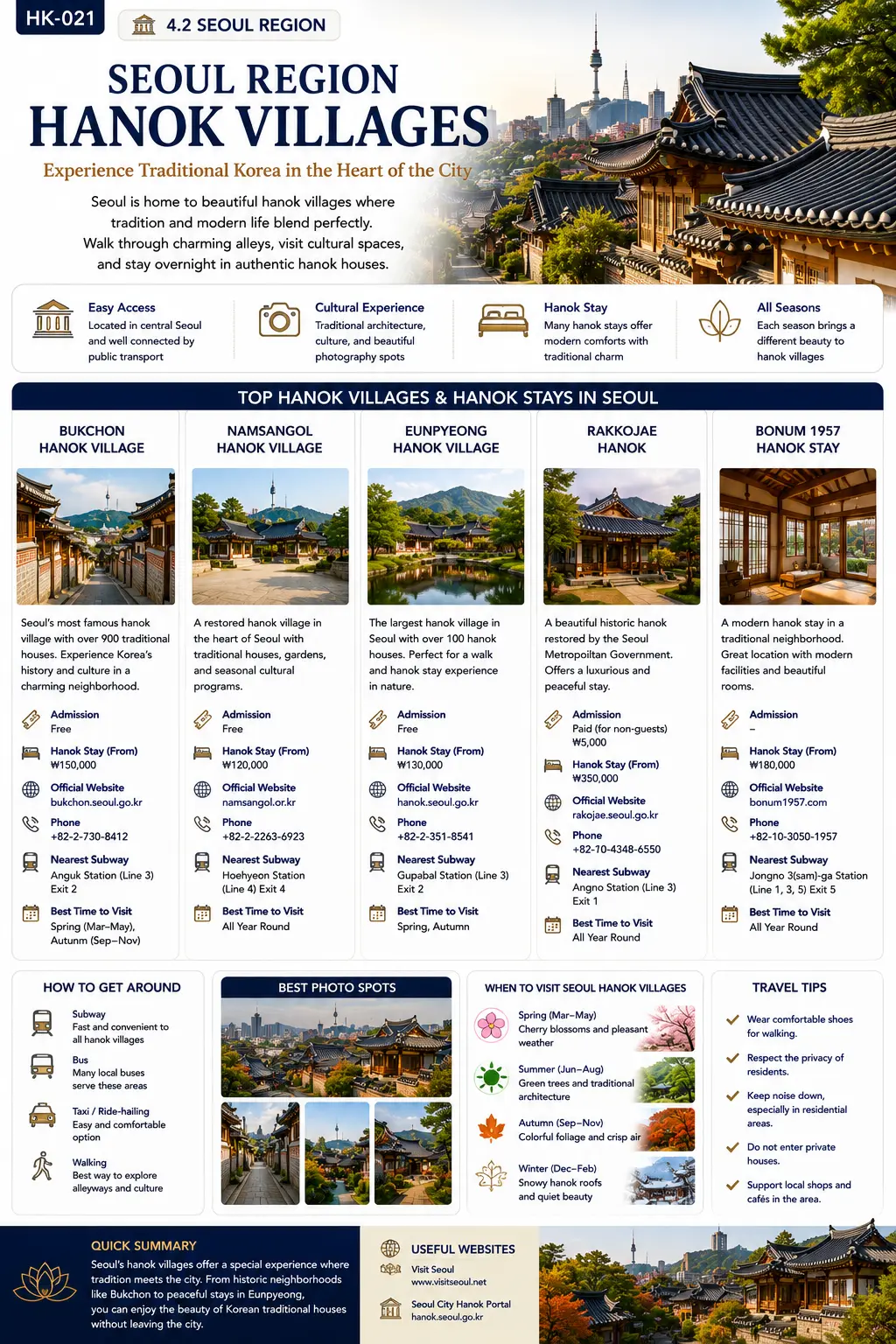
Quick Summary
Key takeaways
- The Seoul Region offers the most accessible Hanok experiences in Korea, where visitors can explore beautifully preserved traditional neighborhoods while enjoying modern cultural attractions and convenient transportation.
The Complete Guide
Seoul is home to Korea's most famous Hanok village, where traditional Korean houses stand alongside modern cafés, galleries, museums, and cultural centers. These historic neighborhoods allow visitors to experience Korea's architectural heritage while remaining in the heart of the capital.
Hanok Villages in the Seoul Region
Bukchon Hanok Village
Bukchon Hanok Village is Korea's best-known traditional village, located between Gyeongbokgung Palace and Changdeokgung Palace. More than 900 traditional Hanok houses line its narrow stone alleys, creating one of Seoul's most iconic cultural destinations.
Many Hanok buildings now serve as cultural centers, museums, tea houses, art galleries, boutique accommodations, and craft workshops. Visitors can enjoy panoramic views of Seoul while exploring centuries-old architecture.
Namsangol Hanok Village
Located near Namsan Mountain, Namsangol Hanok Village features carefully restored traditional houses relocated from various parts of Korea. The village offers cultural performances, traditional games, tea ceremonies, and educational programs throughout the year.
Eunpyeong Hanok Village
Eunpyeong Hanok Village combines traditional Hanok architecture with modern residential design. Set against the backdrop of Bukhansan National Park, the village offers peaceful scenery, cafés, and excellent photography opportunities.
Highlights
Ask AI About This Topic
Have a question about Seoul Hanok Villages?
Get instant, locally-checked answers from the ASK KOREA AI. Ask anything from specific edge cases to itinerary decisions.
"Plan a day exploring Seoul's Hanok villages including Bukchon, Namsangol and Eunpyeong."
ASK KOREA Transit