What Is a Hanok Village?
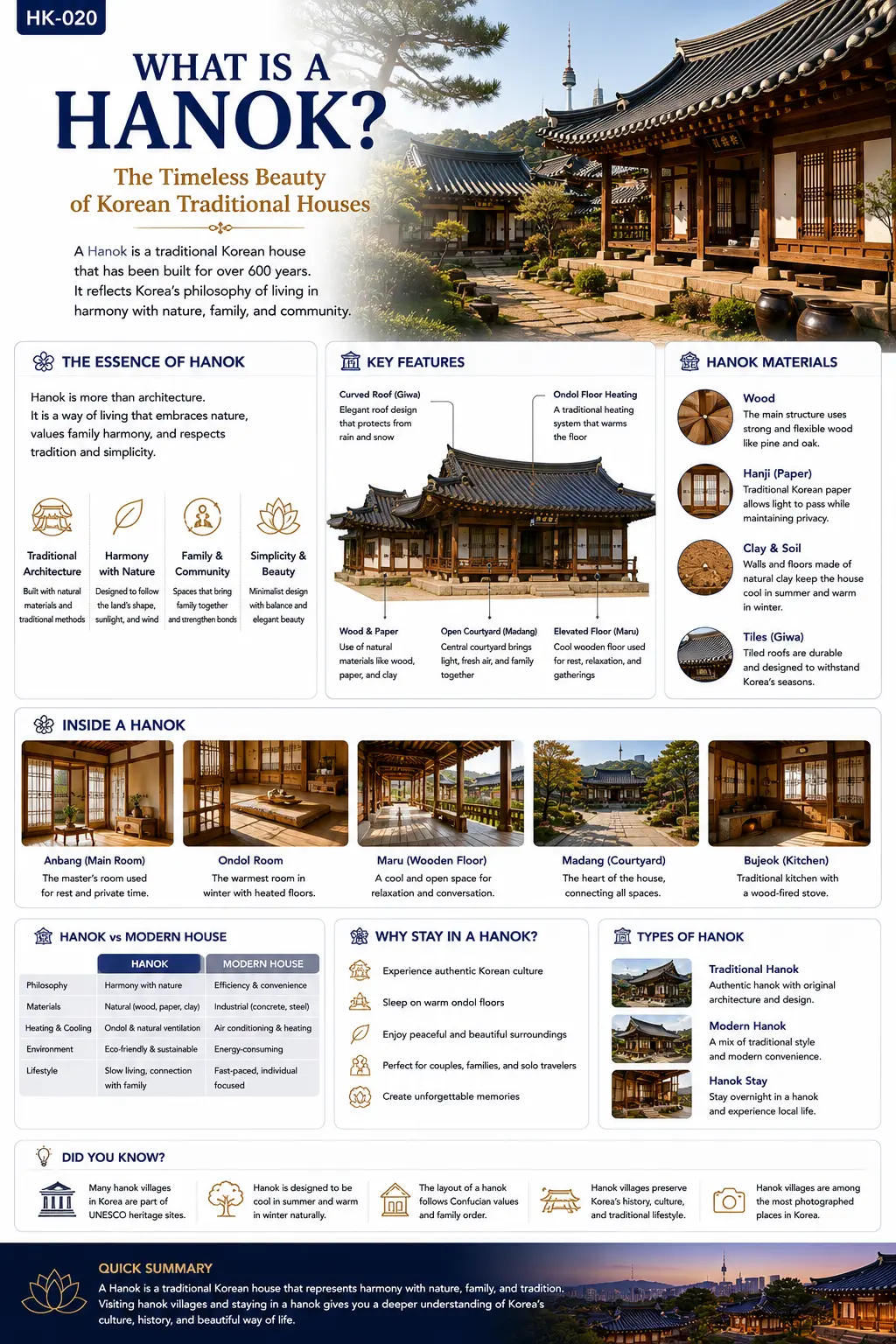
A Hanok is a traditional Korean house designed to achieve harmony between people and nature, built using natural materials such as wood, stone, clay and traditional Korean paper (Hanji).
Quick Summary
Key takeaways
- Hanok represents Korea's traditional architectural philosophy, combining natural materials, climate-responsive design, and harmony with nature to create comfortable and beautiful living spaces that continue to inspire visitors today. memcite
The Complete Guide
A Hanok is a traditional Korean house designed to achieve harmony between people and nature. Built using natural materials such as wood, stone, clay, and traditional Korean paper (Hanji), Hanok architecture emphasizes sustainability, comfort, and balance with the surrounding environment.
Unlike modern buildings, Hanok homes are carefully positioned according to the landscape, allowing natural sunlight, fresh air, and seasonal changes to become part of everyday living. Features such as the Ondol underfloor heating system and the Maru wooden floor demonstrate Korea's long-standing architectural ingenuity and adaptation to its climate.
Today, Hanok villages preserve this architectural tradition while allowing visitors to experience Korean history through accommodations, cultural activities, museums, cafés, and local communities.
Traditional Hanok Features
Ondol
A traditional underfloor heating system that has kept Korean homes warm for centuries and inspired modern radiant floor heating technology.
Maru
An elevated wooden floor that provides natural ventilation and a comfortable living space during warmer months.
Hanji
Traditional Korean paper used for doors and windows, allowing soft natural light and excellent air circulation.
Giwa Roof
Elegant curved roof tiles that symbolize traditional Korean architecture while helping protect buildings from changing weather conditions.
Madang
An open courtyard serving as the center of family life and outdoor activities.
Highlights
Ask AI About This Topic
Have a question about What Is a Hanok Village??
Get instant, locally-checked answers from the ASK KOREA AI. Ask anything from specific edge cases to itinerary decisions.
"Explain what a Hanok is and which traditional features I should look for when visiting one."
ASK KOREA Transit