Gyeongsang Region Hanok Villages
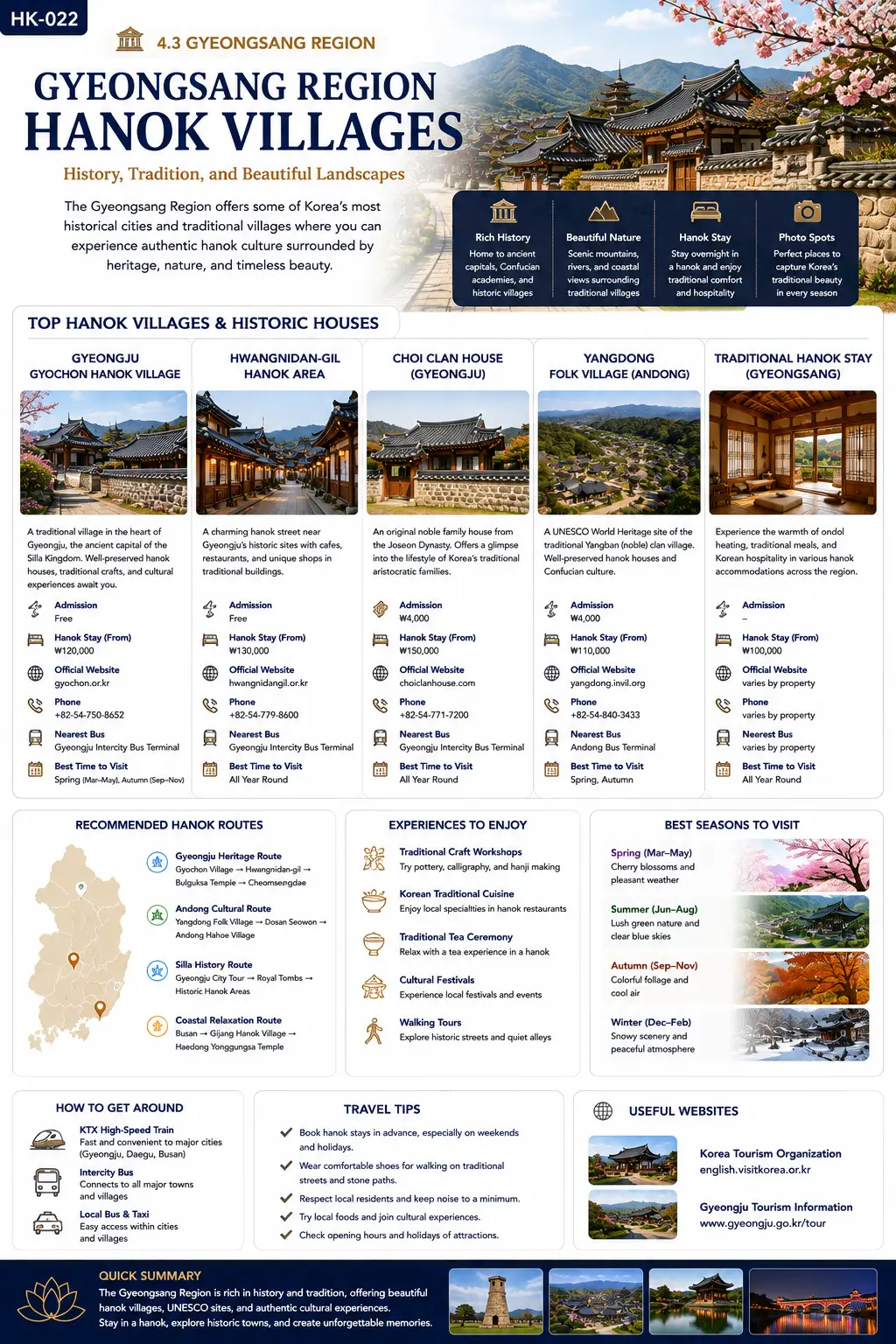
The Gyeongsang Region preserves some of Korea's most authentic traditional villages, reflecting Confucian culture, aristocratic lifestyles and centuries of architectural heritage.
Quick Summary
Key takeaways
- The Gyeongsang Region offers visitors authentic traditional villages where Korea's architectural heritage, Confucian culture, and local customs continue to thrive in everyday life.
The Complete Guide
The Gyeongsang Region preserves some of Korea's most authentic traditional villages, reflecting Confucian culture, aristocratic lifestyles, and centuries of architectural heritage. Many of these villages remain inhabited today, allowing visitors to experience living history rather than reconstructed museums.
Hanok Villages in the Gyeongsang Region
Andong Hahoe Folk Village
Andong Hahoe Folk Village is one of Korea's most important traditional villages and a UNESCO World Heritage Site. Surrounded by the Nakdong River, the village preserves traditional Hanok homes, Confucian academies, and cultural customs that have remained largely unchanged for hundreds of years.
Visitors can experience traditional mask dance performances, historic residences, local cuisine, and peaceful countryside scenery.
Gyeongju Gyochon Traditional Village
Located near Gyeongju's historic center, Gyochon Traditional Village preserves the atmosphere of the ancient Silla capital. Visitors can explore traditional Hanok houses, experience traditional crafts, taste local specialties, and learn about Korea's historic aristocratic culture.
Highlights
Ask AI About This Topic
Have a question about Gyeongsang Region Hanok Villages?
Get instant, locally-checked answers from the ASK KOREA AI. Ask anything from specific edge cases to itinerary decisions.
"How do I visit Andong Hahoe Folk Village and Gyeongju Gyochon Village from Seoul?"
ASK KOREA Transit