Woodcraft & Bamboo Crafts
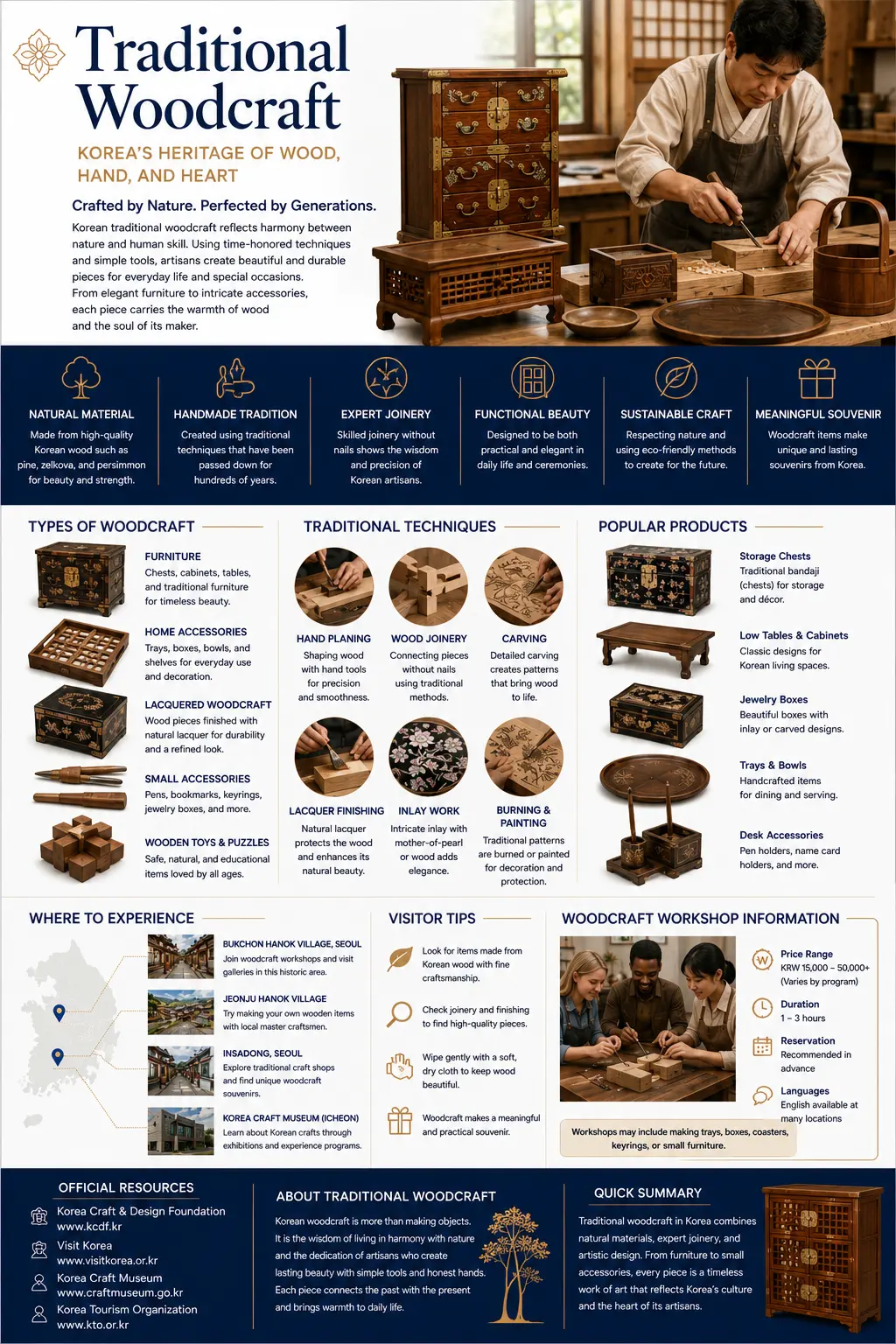
Traditional Korean woodcraft reflects centuries of craftsmanship, practicality and respect for natural materials, from sophisticated joinery to everyday household objects.
Quick Summary
Key takeaways
- Traditional Korean woodcraft demonstrates remarkable craftsmanship through elegant furniture, architectural elements, and practical household objects that celebrate the natural beauty of wood.
The Complete Guide
Traditional Korean woodcraft reflects centuries of craftsmanship, practicality, and respect for natural materials. Korean artisans create furniture, architectural elements, household objects, and decorative items using carefully selected native woods.
Rather than relying on nails, many traditional woodworking techniques use sophisticated wooden joints that provide both strength and flexibility. The natural grain of the wood is preserved, emphasizing simplicity and harmony with nature.
Many traditional wooden objects remain in use today and can be seen in Hanok houses, Buddhist temples, royal palaces, and museums throughout Korea.
Traditional Woodcraft Products
Characteristics
Natural Beauty
Wood grain is highlighted rather than hidden.
Traditional Joinery
Complex wooden joints minimize the use of metal fasteners.
Functional Design
Furniture is designed for everyday use while maintaining artistic elegance.
Long-lasting Craftsmanship
Many traditional wooden pieces remain preserved for centuries.
Highlights
Ask AI About This Topic
Have a question about Woodcraft & Bamboo Crafts?
Get instant, locally-checked answers from the ASK KOREA AI. Ask anything from specific edge cases to itinerary decisions.
"Where can I try Korean woodcraft, and what makes traditional joinery special?"
ASK KOREA Transit