Metal Crafts
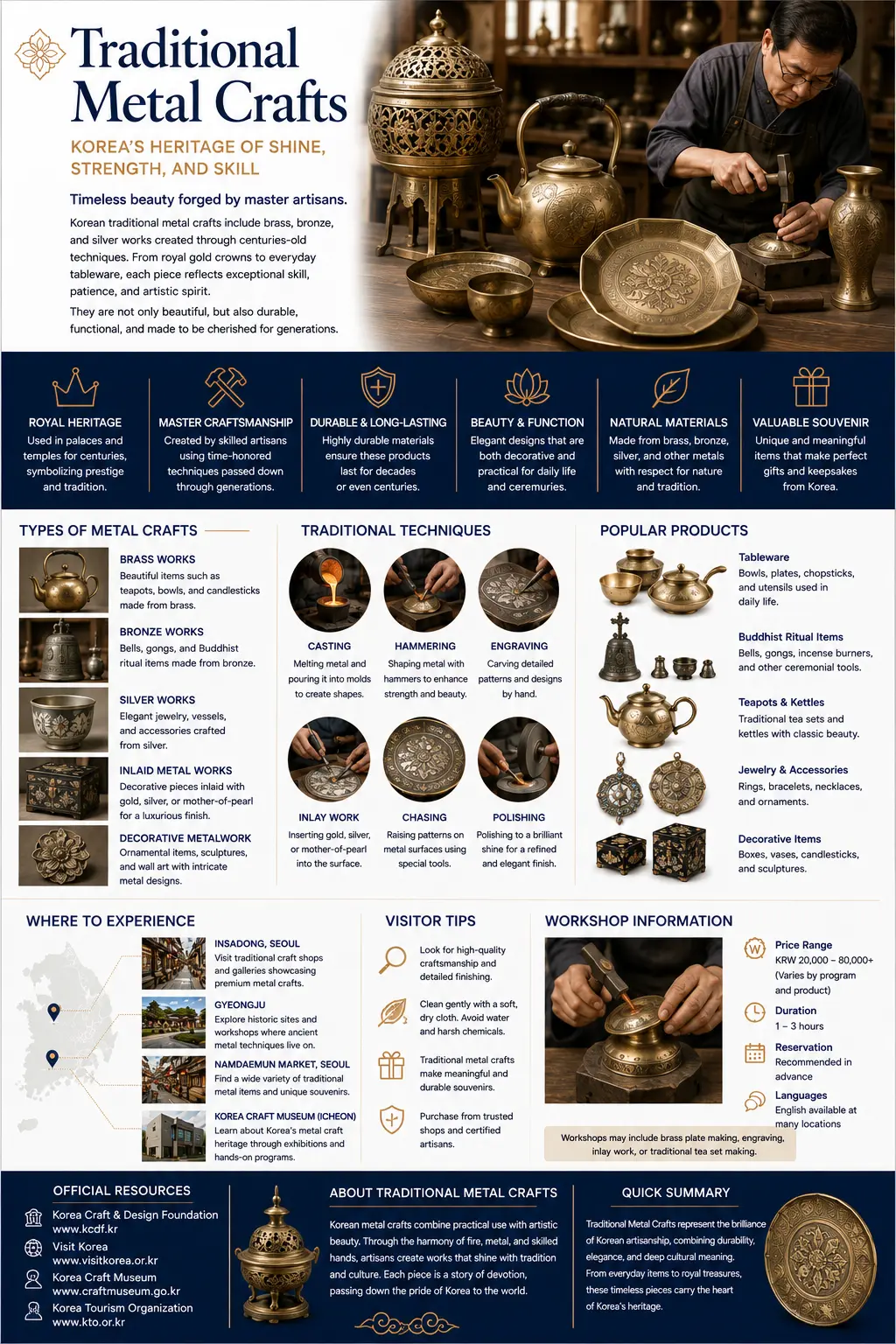
Traditional Korean metal crafts combine artistic beauty with practical function, using bronze, brass, iron, silver and gold in household, Buddhist and ceremonial objects.
Quick Summary
Key takeaways
- Traditional Korean metal crafts demonstrate remarkable technical skill and artistic excellence, preserving centuries of craftsmanship through beautiful and functional works that remain important cultural treasures today.
The Complete Guide
Traditional Korean metal crafts represent centuries of exceptional craftsmanship, combining artistic beauty with practical function. Skilled artisans have long worked with bronze, brass, iron, silver, and gold to create household items, Buddhist artifacts, ceremonial objects, and decorative works of art.
Many of these techniques were developed during the Three Kingdoms Period and refined throughout the Goryeo and Joseon Dynasties. Today, traditional metal crafts continue to preserve Korea's artistic heritage while inspiring contemporary designers and craftsmen.
Visitors can admire these remarkable works in museums, temples, royal palaces, and artisan workshops across the country.
Traditional Metal Craft Products
Buddhist Bells
Large bronze bells cast with intricate patterns and inscriptions, producing deep, resonant sounds used in Buddhist ceremonies.
Bronze Incense Burners
Beautifully crafted incense burners featuring dragons, lotus flowers, and other traditional symbols.
Brassware
Elegant bowls, cups, trays, and dining utensils traditionally used in Korean households.
Silver & Gold Crafts
Fine jewelry, ornaments, ceremonial objects, and decorative artwork created using precious metals.
Traditional Metal Mirrors
Highly polished bronze mirrors decorated with detailed geometric and symbolic patterns.
Characteristics
Precision Craftsmanship
Every piece is carefully handcrafted using techniques passed down through generations.
Cultural Symbolism
Designs often feature cranes, dragons, lotus flowers, phoenixes, bamboo, and clouds.
Functional Beauty
Traditional metal crafts combine artistic elegance with practical everyday use.
Historical Importance
Many masterpieces are preserved as Korea's National Treasures and cultural heritage.
Highlights
Ask AI About This Topic
Have a question about Metal Crafts?
Get instant, locally-checked answers from the ASK KOREA AI. Ask anything from specific edge cases to itinerary decisions.
"What are Korea's traditional metal crafts, and where can I see them?"
ASK KOREA Transit