Korean Traditional Ssireum
Ssireum is Korea's traditional wrestling: two competitors, a satba belt, a circular sand ring and centuries of community tradition inscribed by UNESCO in 2018.
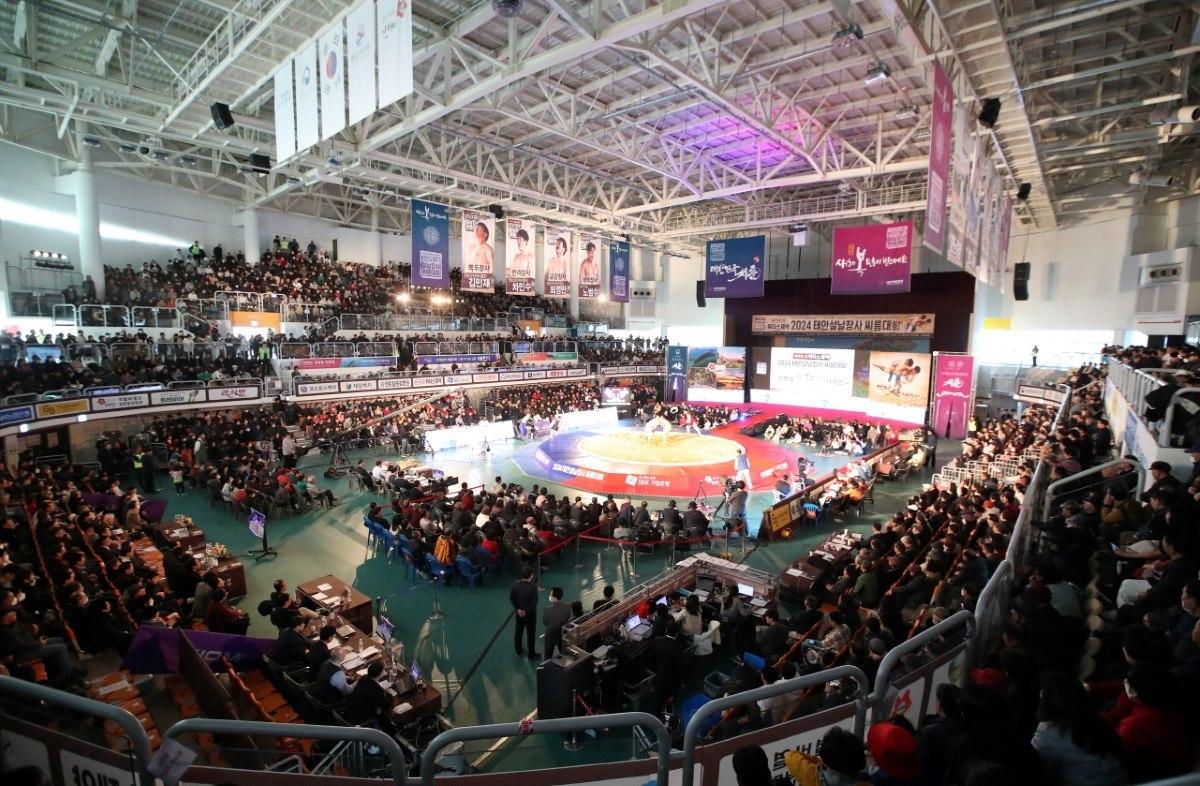
Quick Summary
Key takeaways
- Korean Name: 씨름 (Ssireum)
- Type: Traditional Korean wrestling
- Key Equipment: Satba (샅바), a fabric belt worn around the waist and thigh
- Competition Surface: Sand ring
- Champion Title: Jangsa (장사)
- UNESCO: Representative List of the Intangible Cultural Heritage of Humanity, 2018
- Best Places to Experience It: Professional competitions, traditional festivals and major holiday events
The Complete Guide
What Is Ssireum?
Ssireum is Korea's traditional form of wrestling and one of the country's best-known folk sports.
Two wrestlers face each other inside a circular sand ring while wearing a fabric belt called a satba around the waist and one thigh. Each wrestler grips the opponent's satba and uses strength, balance, timing and technique to throw or trip the opponent to the ground.
The basic idea is simple: make your opponent lose balance and touch the ground with the body.
But professional ssireum is highly technical. Wrestlers use their legs, hips, arms and entire body to attack, counter and reverse throws, and a match can change in an instant.
Unlike striking martial arts such as taekwondo, ssireum is a grappling sport. There are no punches or kicks. The contest is about controlling the opponent's balance and using leverage and technique.
The Satba — The Heart of Ssireum
The satba (샅바) is one of the easiest ways to recognize Korean ssireum.
It is a long fabric belt wrapped around a wrestler's waist and thigh. Before the action begins, both wrestlers establish their grip on each other's satba.
This grip creates the distinctive close starting position of a ssireum match.
Because both competitors begin already connected to each other, they can immediately feel changes in balance and body movement. A small shift of the hip, leg or shoulder can create an opportunity for a throw.
For visitors watching ssireum for the first time, watching how the wrestlers control the satba is one of the best ways to understand the sport.
How a Ssireum Match Works
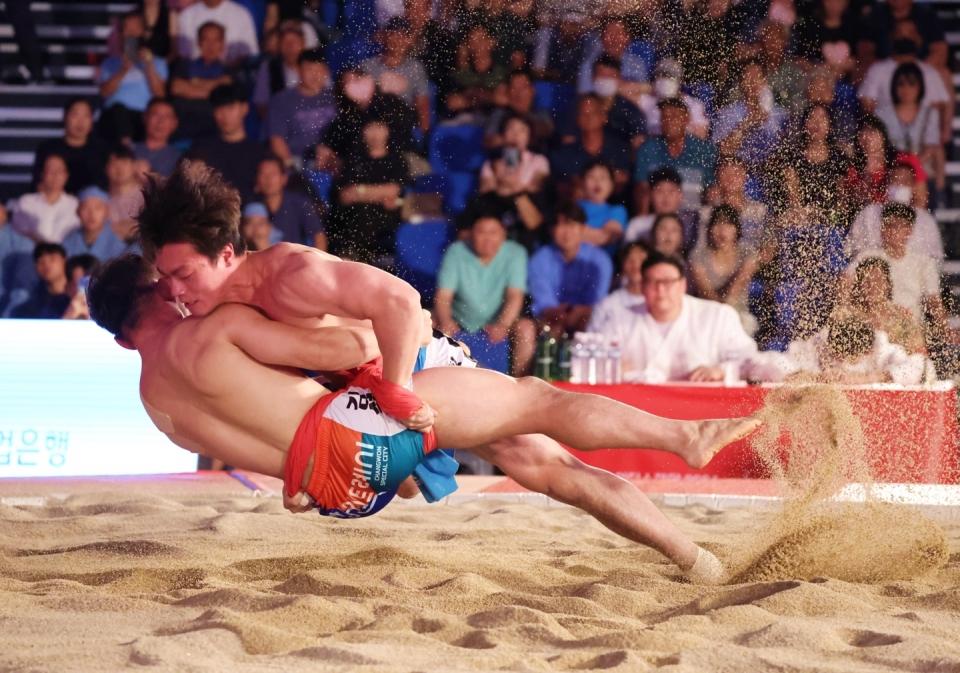
Ssireum traditionally takes place on sand.
The wrestlers enter the ring, secure their satba grips and begin from a low position before rising together to start the contest.
From there, each competitor attempts to destabilize the other using throws, trips, lifts, sweeps and counter-techniques.
Professional wrestlers may appear extremely powerful, but strength alone is not enough. Timing and balance are essential.
A smaller movement at exactly the right moment can defeat a much stronger-looking opponent.
This combination of explosive power and technique is one reason championship ssireum can be surprisingly exciting even for visitors who have never watched the sport before.
Famous Ssireum Techniques
Traditional ssireum contains numerous techniques and variations. Several names are commonly associated with the sport.
Baedjigi (배지기)
A powerful technique in which the wrestler uses the body and hips to lift and throw the opponent.
Deulbaejigi (들배지기)
A lifting technique that can produce some of the most dramatic moments in a match.
Andari (안다리)
An inside-leg technique used to disrupt the opponent's balance.
Batdari (밭다리)
An outside-leg attack used to trip or turn an opponent.
Homigeori (호미걸이)
A hooking technique involving the leg or foot.
Professional wrestlers frequently combine techniques or change attacks midway through a movement, making high-level matches much more tactical than they may initially appear.
What Is a Jangsa?
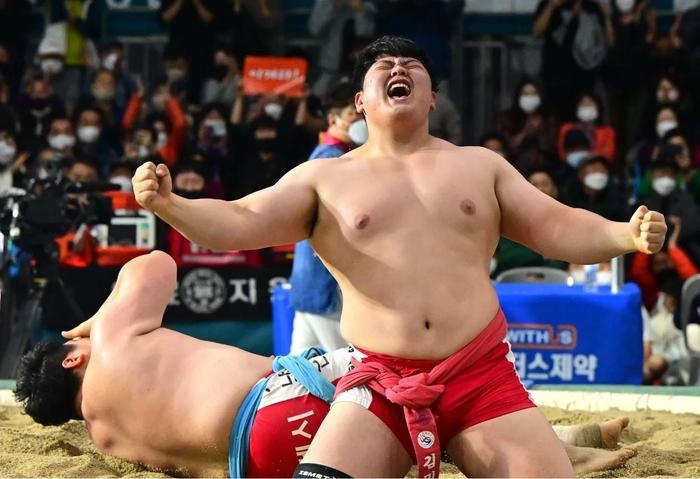
One Korean word worth remembering when watching ssireum is Jangsa (장사).
Traditionally, the winner of an important adult ssireum competition could receive the title of Jangsa, meaning a great or powerful champion.
Historically, winning a major village competition carried considerable prestige. UNESCO's documentation of the tradition also records the custom of awarding an ox to the winner, symbolizing agricultural abundance.
The champion could then celebrate by riding the ox through the community.
Modern professional ssireum has transformed this old village tradition into an organized competitive sport, but the prestigious Jangsa title remains closely associated with championship ssireum.
Cheonhajangsa — The Ultimate Champion
Perhaps the most famous expression connected with Korean ssireum is Cheonhajangsa (천하장사).
The term conveys the idea of a supreme champion — literally someone of extraordinary strength under heaven.
For many Koreans, particularly those who grew up watching televised ssireum competitions, the Cheonhajangsa championship represents the classic image of professional Korean wrestling: powerful athletes, a packed arena, dramatic throws and a champion celebrating victory.
Ssireum became particularly prominent as a televised spectator sport in modern Korea, helping famous champions become nationally recognized sports figures.
For an international visitor, a major championship provides a very different experience from seeing ssireum demonstrated at a folk village or cultural festival. It shows that ssireum is not simply a historical tradition preserved for tourists — it continues as a competitive Korean sport.
Ssireum and Korean Holidays
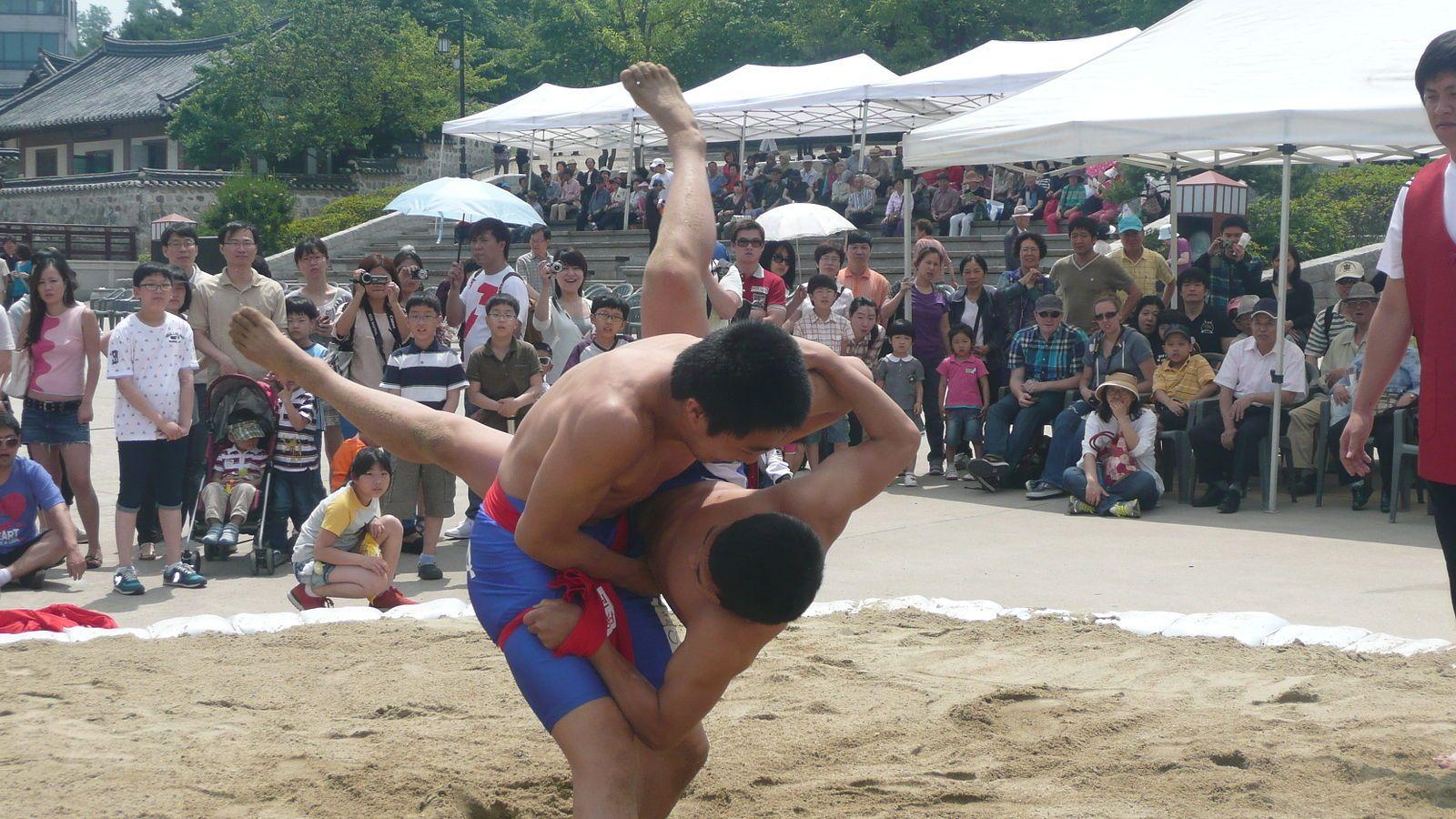
Ssireum has long been connected with community gatherings, traditional markets, festivals and important Korean holidays.
Historically, people gathered around temporary sand rings to watch local competitors demonstrate their strength and skill.
Major traditional holidays were particularly important occasions.
Ssireum competitions have long been associated with festive gatherings, and holiday tournaments helped turn the sport into a shared community event rather than simply a contest between two individuals.
Even today, visitors in Korea around major holidays may encounter ssireum through televised tournaments, cultural programs or festival activities.
A Sport with Deep Roots
Ssireum is not a recently invented national sport.
Evidence for Korean wrestling traditions can be found in historical records, artworks and other cultural materials stretching back centuries. Korean heritage authorities recognize its long historical continuity, including evidence extending back to the ancient Three Kingdoms period.
One of the most recognizable cultural images of ssireum is the famous wrestling scene painted by Kim Hong-do, one of Korea's best-known painters of everyday life during the Joseon period.
The painting shows wrestlers surrounded by spectators and demonstrates something important about ssireum: historically, it was not only about the competitors.
The audience, excitement and community surrounding the match were part of the tradition.
UNESCO Intangible Cultural Heritage
In 2018, Traditional Korean Wrestling — Ssirum/Ssireum — was inscribed on UNESCO's Representative List of the Intangible Cultural Heritage of Humanity.
The inscription is especially notable because it was made jointly for the Republic of Korea and the Democratic People's Republic of Korea.
The two Koreas had originally submitted separate nominations. They subsequently agreed to have them examined together, resulting in an unprecedented joint inscription.
UNESCO highlighted ssireum not simply as a wrestling technique but as a living cultural tradition connected with community identity, cooperation, holidays and social gatherings.
Ssireum Is More Than a Sport
Understanding ssireum only as “Korean wrestling” misses part of its significance.
Traditionally, a ssireum match brought together an entire community.
People of different ages gathered around the sand ring, supported competitors, celebrated winners and participated in the wider festival atmosphere.
Different regions developed variations of the tradition, but the shared social function remained important: ssireum brought people together.
This is one of the reasons the tradition has survived despite the enormous changes Korea has experienced over the centuries.
Can Foreigners Experience Ssireum?
Yes — but there is an important distinction between watching and trying ssireum.
Visitors can encounter ssireum through professional competitions, traditional festivals and cultural events.
Hands-on opportunities also occasionally appear at festivals and cultural programs. UNESCO documentation even includes examples of foreign visitors participating in ssireum activities at Korean cultural festivals.
However, hands-on programs are not permanently available everywhere and schedules can change.
For this reason, travelers who specifically want to try ssireum should check the current program of the festival or cultural venue before traveling.
What to Watch During a Match
If this is your first time watching ssireum, do not concentrate only on which wrestler appears stronger.
Watch the satba grip first.
Then look at the wrestlers' feet and hips.
A competitor may suddenly hook a leg, shift the hips underneath the opponent, lift from the satba or use the opponent's momentum to reverse an attack.
Some of the most impressive victories happen extremely quickly.
The crowd reaction is also part of the experience. A major ssireum competition can feel very different from a quiet martial-arts demonstration — particularly during championship rounds.
Useful Ssireum Words
| Korean | Romanization | Meaning |
| 씨름 | Ssireum | Traditional Korean wrestling. |
| 샅바 | Satba | The fabric belt worn around the waist and thigh. |
| 장사 | Jangsa | A prestigious title traditionally associated with a ssireum champion. |
| 천하장사 | Cheonhajangsa | A title associated with the supreme champion of major ssireum competition. |
| 씨름판 | Ssireumpan | The wrestling ring or competition area, traditionally covered with sand. |
Visitor Tips
Watch a major competition if possible.
A championship match with a large crowd gives visitors a much better sense of modern competitive ssireum than a simple demonstration.
Look for holiday and festival programs.
Traditional festivals and major Korean holidays can provide opportunities to see ssireum in a more cultural setting.
Do not expect it to look like Olympic wrestling or sumo.
The satba grip and Korean throwing techniques create a very different style of competition.
Check schedules before traveling.
Competition venues, festival programs and visitor experiences can change from year to year.
Try it when an official experience is available.
A supervised introductory session is one of the easiest ways to understand how much balance and technique are involved.
Why Experience Ssireum?
Korea is internationally famous for taekwondo, but ssireum reveals a very different side of Korean physical culture.
It combines sport, folk tradition, community celebration and centuries of history in a form that remains immediately understandable: two competitors, one sand ring and the challenge of staying on your feet.
Seeing ssireum in person — especially during a major tournament or traditional festival — offers visitors a chance to experience a Korean tradition that is still alive rather than simply displayed behind museum glass.
Official Resource
Travel Note: Competition schedules and hands-on experience programs should always be checked before visiting because dates, venues and programs may change.
Ask AI About This Topic
Have a question about Korean Traditional Ssireum?
Get instant, locally-checked answers from the ASK KOREA AI. Ask anything from specific edge cases to itinerary decisions.
"Where and when can I watch traditional Korean ssireum wrestling as a visitor?"
ASK KOREA Transit