Korean Pottery & Ceramics
From Goryeo Celadon to a Pottery Wheel Experience: Korea's three great ceramic traditions, the major pottery regions and how to make a piece yourself.
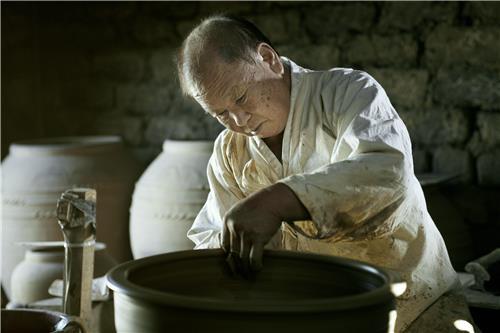
Quick Summary
Key takeaways
- Korean: 도자기 (Dojagi)
- Famous Styles: Goryeo Celadon, Buncheong Ware and Joseon White Porcelain
- Major Pottery Areas: Icheon, Yeoju, Gwangju (Gyeonggi), Gangjin and Mungyeong
- Popular Experiences: Pottery wheel, hand-building, painting and glazing
- What You Can Make: Cups, bowls, plates and small decorative objects
- Experience Price: Varies by studio and program
- Best For: Traditional culture, families, couples, craft lovers and hands-on travelers
- Important: Finished pottery may require firing and cannot always be taken home on the same day.
The Complete Guide
Why Korean Ceramics Are Special
Korean ceramics tell more than a thousand years of Korean history through clay, fire and glaze.
From the elegant green celadon of the Goryeo Dynasty to the expressive surfaces of buncheong ware and the restrained beauty of Joseon white porcelain, Korean pottery developed styles that are immediately recognizable yet remarkably different from one another.
These objects were not only works of art.
Bowls, jars, bottles, cups and dishes were part of everyday life, while exceptional ceramics were produced for royal courts, temples, scholars and important ceremonies.
Today, Korea's ceramic tradition remains alive.
Visitors can see historic masterpieces in museums, meet contemporary potters, visit traditional kiln areas and even sit at a pottery wheel to make their own piece.
Three Ceramic Styles to Know
If you remember only three types of Korean ceramics, remember these:
Together, they provide an excellent introduction to the changing aesthetics of Korean ceramics.
Goryeo Celadon — 고려청자
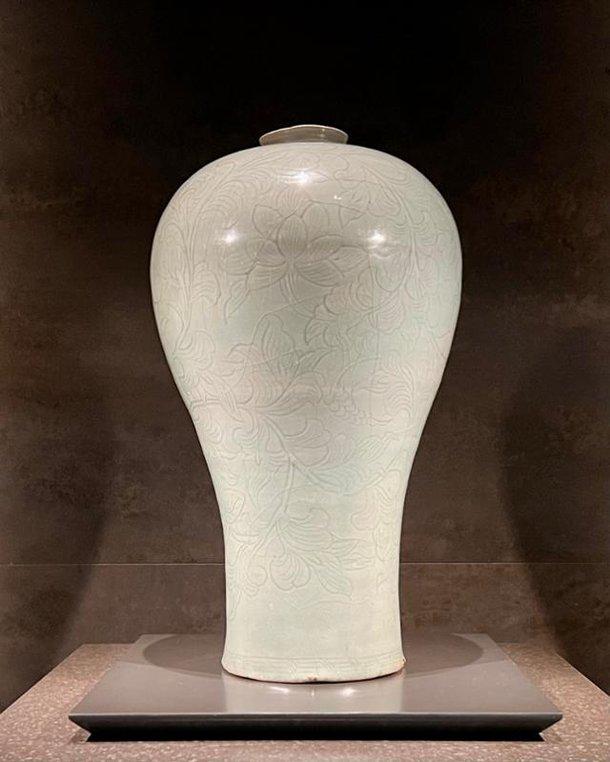
The Jade-Green Masterpiece
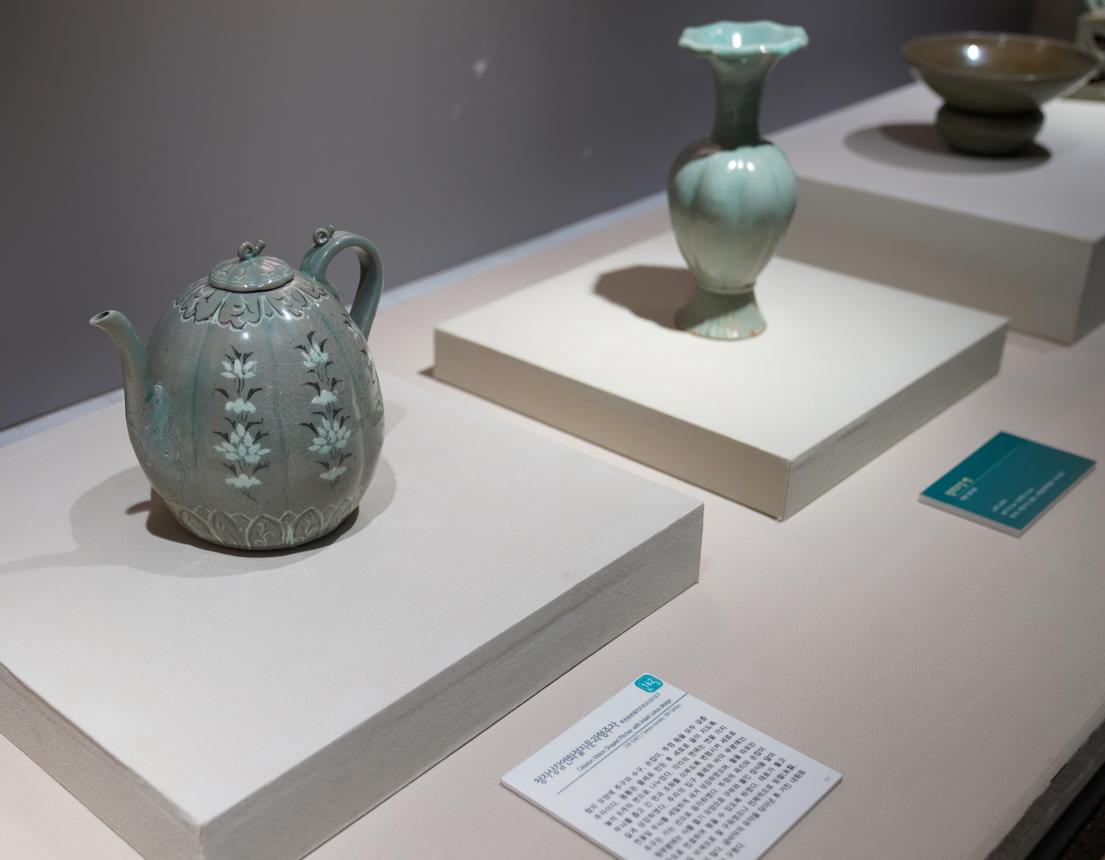
Goryeo celadon is one of Korea's most internationally recognized ceramic traditions.
It reached extraordinary refinement during the Goryeo Dynasty (918–1392).
The most famous characteristic is its subtle green glaze, often described as resembling the color of jade.
Rather than being a single bright green, fine celadon can display delicate blue-green, gray-green and translucent tones depending on the clay, glaze, kiln atmosphere and firing.
The color became so admired that Goryeo celadon came to represent some of the highest achievements of medieval Korean craftsmanship.
Sanggam — Korea's Inlaid Celadon Technique
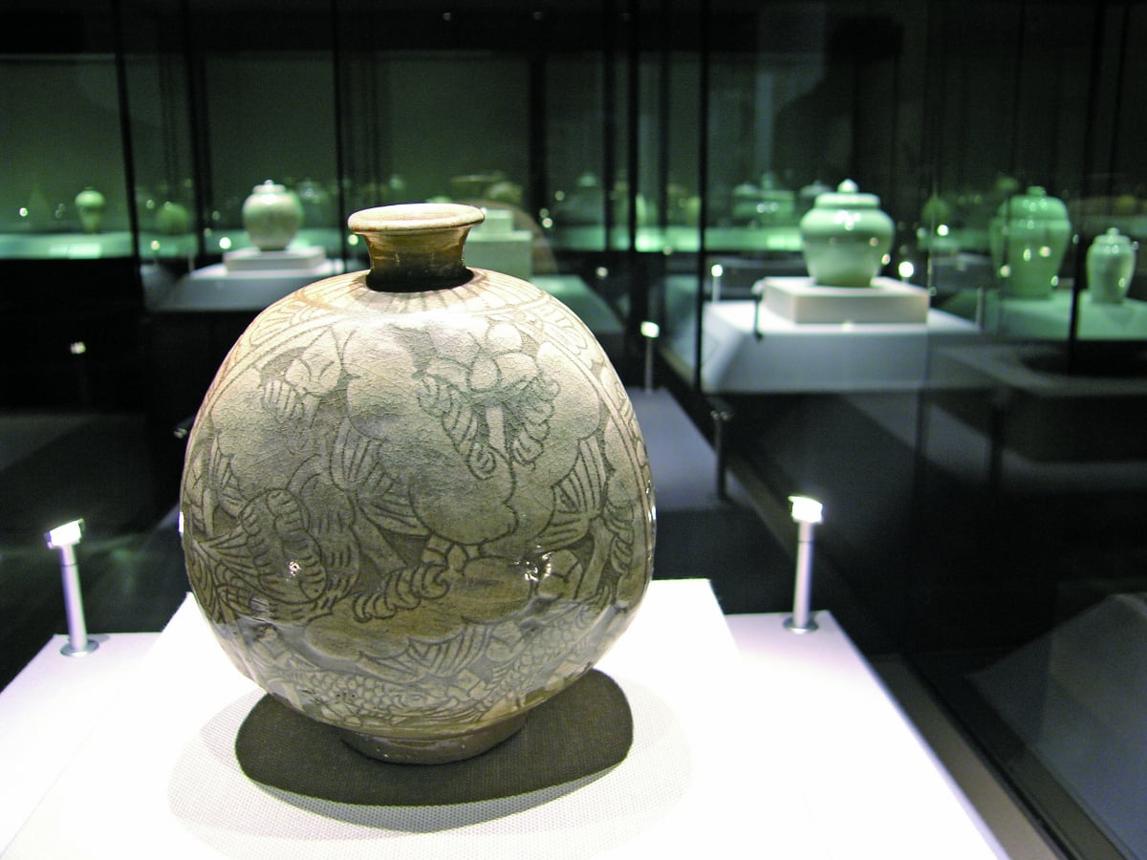
One particularly important decorative technique is sanggam (상감).
The potter carves a design into the surface of the clay and fills the carved lines with contrasting material before glazing and firing.
After firing, the decoration appears embedded within the ceramic surface.
Common motifs included:
Korean potters developed this technique to an exceptional level, and inlaid celadon became strongly associated with Goryeo ceramics.
Gangjin — The Home of Goryeo Celadon
For travelers interested in celadon, Gangjin in Jeollanam-do is particularly important.
Gangjin was one of the major production centers for high-quality Goryeo celadon.
Historic kiln sites remain in the area, providing archaeological evidence of large-scale ceramic production.
Today, Gangjin continues to celebrate this heritage through museums, cultural programs, ceramic workshops and events associated with celadon.
For a visitor who wants to understand where Goryeo celadon actually came from rather than simply seeing it inside a museum display case, Gangjin is one of Korea's most important ceramic destinations.
Buncheong Ware — 분청사기
After the elegance of Goryeo celadon came a ceramic style with a very different personality.
Buncheong ware became particularly prominent during the early Joseon period.
Buncheong pottery is generally made by applying a white slip over a darker clay body and then decorating the surface in various ways.
The results can feel spontaneous, energetic and surprisingly modern.
Rather than seeking perfect symmetry and refinement in every detail, buncheong often celebrates visible brushwork, carved lines, stamped patterns and natural irregularity.
This freedom is one reason many contemporary artists and designers continue to find buncheong inspiring.
Why Buncheong Can Look So Modern
Some buncheong pieces were decorated with broad white brushstrokes.
Others were stamped with repeated patterns.
Some were scratched, carved or painted.
The marks of the craftsman's hand often remain clearly visible.
To modern eyes, these surfaces can look almost contemporary.
For visitors accustomed to thinking of traditional ceramics as highly polished and formal, buncheong can be a surprise.
It demonstrates that Korean ceramic beauty has not always been about perfection.
Sometimes the irregularity itself is the beauty.
Joseon White Porcelain — 조선백자
Beauty Through Simplicity
During the Joseon Dynasty, white porcelain — baekja (백자) — became one of Korea's most characteristic ceramic traditions.
At first glance, a white porcelain jar can appear extremely simple.
But that simplicity is precisely the point.
Rather than relying on elaborate decoration, many Joseon pieces emphasize:
The white surface could range from bright white to warmer ivory or slightly bluish tones depending on materials and firing.
The restrained aesthetic reflected values associated with Joseon society and Confucian culture.
The Korean Moon Jar
One of the most recognizable forms of Korean white porcelain is the Moon Jar — Dalhangari (달항아리).
These large, rounded white jars were produced during the Joseon period.
Their form resembles a full moon.
A traditional Moon Jar is not necessarily perfectly symmetrical.
Large examples were difficult to produce as a single piece, and subtle irregularities could remain after joining and firing.
Those imperfections became part of their beauty.
Today, the Moon Jar has become an internationally recognizable symbol of Korean ceramic aesthetics and continues to influence contemporary artists and designers.
How Korean Pottery Is Made
Traditional ceramic production requires much more than simply shaping clay.
The basic process includes several stages.
Preparing the Clay
Clay must be cleaned, prepared and kneaded to achieve the proper consistency.
Shaping
The potter forms the object by hand, using molds or on a rotating pottery wheel.
Drying
The shaped piece must dry carefully. If moisture disappears unevenly or too quickly, cracks can develop.
Decorating
Depending on the ceramic style, the surface may be carved, stamped, painted, brushed or decorated with slip.
First Firing
Many ceramic processes include an initial firing before glazing.
Glazing
Glaze is applied to create the desired surface, color and finish.
Final Firing
The pottery returns to the kiln at high temperature.
Fire transforms the clay and glaze into the finished ceramic object.
The final result depends on materials, temperature, kiln conditions and the skill of the potter.
Traditional Korean Kilns
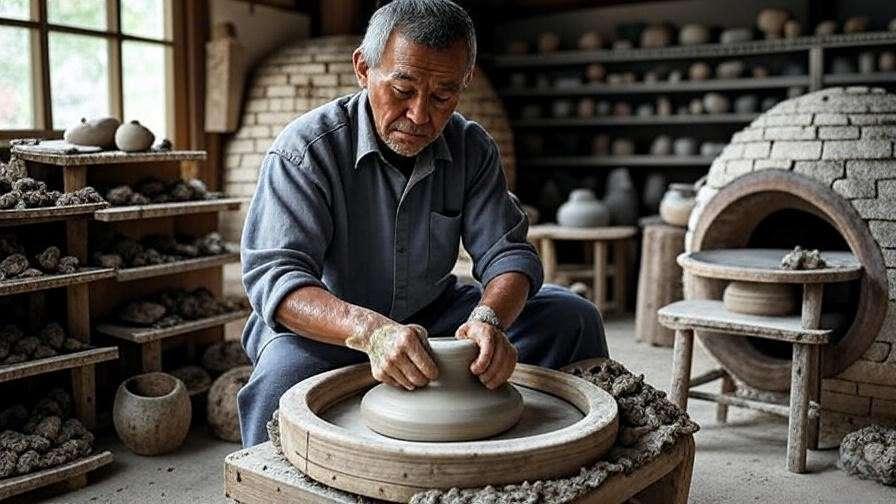
Traditional Korean pottery was fired in kilns capable of reaching very high temperatures.
One important traditional form is the climbing kiln, constructed along a slope.
Heat moves through connected chambers as the kiln rises uphill.
Controlling the fire inside a traditional kiln requires considerable experience.
Temperature, airflow, fuel and firing time can all affect the finished ceramics.
Even pieces fired together can emerge with subtle differences.
This unpredictability is part of the fascination of traditional wood firing.
Korea's Major Pottery Destinations
Visitors who want to go beyond museum displays can travel to several areas strongly associated with Korean ceramics.
Icheon — 이천
Icheon in Gyeonggi-do is probably the best-known modern ceramic destination close to Seoul.
The area is home to numerous ceramic studios, workshops, exhibitions and shops.
Icheon is particularly suitable for international travelers because pottery can be experienced as both heritage and contemporary craft.
Visitors may browse ceramic shops, watch craftspeople at work and participate in pottery programs depending on the studio.
Icheon is also associated with major ceramic events.
Yeoju — 여주
Yeoju is another important Gyeonggi ceramic center.
The region has a long relationship with ceramics and remains home to pottery production and ceramic culture.
Together with Icheon and Gwangju, Yeoju forms part of an important ceramic region southeast of Seoul.
It is a good destination for travelers who want to combine pottery shopping with regional sightseeing.
Gwangju, Gyeonggi — 광주
Gwangju in Gyeonggi-do should not be confused with Gwangju Metropolitan City in southwestern Korea.
Gyeonggi Gwangju has deep connections with Joseon royal ceramics and white porcelain.
Historic kiln sites in the region demonstrate its importance as a production area supplying ceramics associated with the royal court.
For travelers particularly interested in Joseon white porcelain, Gyeonggi Gwangju is an important location.
Gangjin — 강진
Gangjin in Jeollanam-do is strongly associated with Goryeo celadon.
Historic kiln sites and celadon-related museums make the area one of Korea's most important destinations for understanding medieval ceramic production.
Gangjin is farther from Seoul than Icheon, but it offers a deeper connection to the historical landscape of Goryeo celadon.
Mungyeong — 문경
Mungyeong in Gyeongsangbuk-do is known for its continuing traditional ceramic culture and craftspeople.
The area is particularly interesting for visitors who want to see ceramics in connection with traditional kiln techniques and living craftsmanship.
Mungyeong also holds cultural events connected with traditional pottery and tea bowls.
Korean Pottery Experience
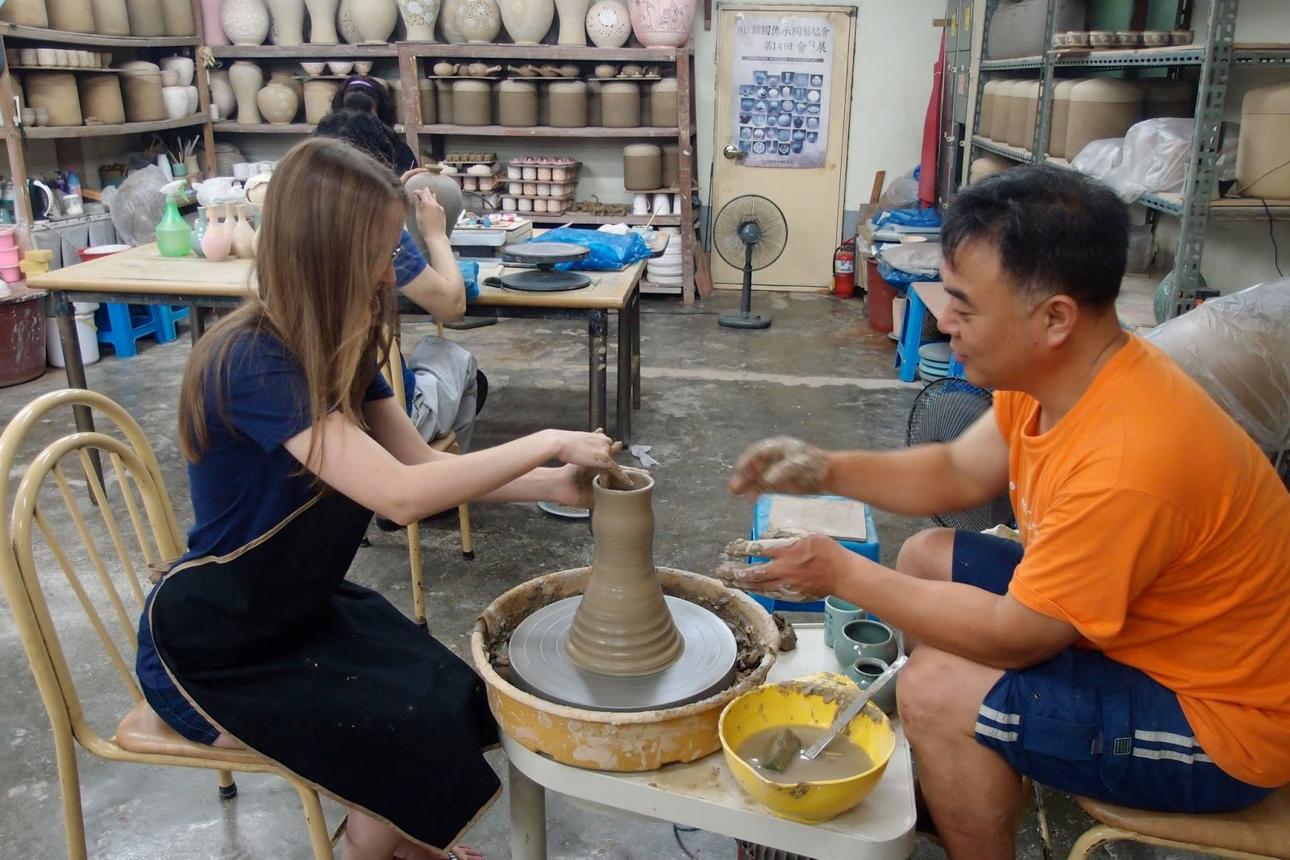
One of the easiest ways for a foreign visitor to understand Korean ceramics is to make something.
Pottery experiences are available at studios, ceramic centers and cultural facilities throughout Korea.
You do not normally need previous pottery experience.
An instructor guides participants through the basic process.
What Can You Make?
Depending on the workshop, visitors may be able to make:
Some studios allow visitors to choose the glaze or add names, patterns or drawings.
The exact options vary by workshop.
Pottery Wheel Experience
The classic pottery experience uses a rotating wheel.
A lump of clay is placed in the center.
As the wheel spins, the participant uses both hands to gradually raise and shape the clay.
It looks easy when performed by an experienced potter.
It is not.
Keeping the clay centered while controlling pressure with both hands requires concentration and practice.
This is also what makes the experience enjoyable.
Within a relatively short session, a beginner can see an ordinary lump of clay begin to become a cup or bowl.
Hand-Building
Visitors who do not want to use a pottery wheel can often choose hand-building.
Clay can be pinched, rolled or assembled into a simple object without using a wheel.
This method can be particularly suitable for:
Hand-building programs may allow participants to create dishes, cups, figures or decorative objects.
Ceramic Painting
Some studios offer an even easier experience. Instead of forming the pottery itself, visitors decorate a prepared ceramic object. Participants can paint:
The studio then fires the decorated piece. This is a good option for travelers who want a personalized Korean souvenir without learning pottery-wheel techniques.
How Much Does a Pottery Experience Cost?
There is no single nationwide price. The cost depends on the studio, location, project, amount of clay, firing and whether additional decoration or shipping is included.
As a general planning guide, simple pottery experiences in Korea can often fall around:
| Program | Typical Price Guide |
| Basic Painting / Simple Craft | approximately KRW 10,000–30,000+ |
| Hand-Building | approximately KRW 20,000–50,000+ |
| Pottery Wheel Experience | approximately KRW 30,000–60,000+ |
| Specialist / Longer Workshops | KRW 60,000+ depending on the project |
These figures should be treated only as general examples, not fixed prices.
Always check the current price directly with the studio before visiting.
Important — You May Not Take Your Pottery Home Today
This is something international travelers should know before booking. A freshly made ceramic piece normally cannot simply be placed in a bag and taken away.
The entire process can take days or even several weeks depending on the studio.
Therefore, ask these questions before starting:
For travelers staying in Korea only a few days, this can determine which pottery experience is most practical.
Korean Ceramic Festivals
Ceramic festivals are among the best opportunities to experience Korean pottery because many craftspeople, exhibitions, shops and activities are gathered in one location.
Major ceramic regions including Icheon, Yeoju, Gwangju, Gangjin and Mungyeong host pottery-related cultural events.
Programs can include:
Festival names, dates and programs can change each year.
Always check the official schedule before traveling.
Buying Korean Ceramics
Korean pottery can make an excellent souvenir because there is an enormous range between inexpensive everyday ceramics and museum-quality works by recognized artists.
Popular items include:
Visitors interested in functional ceramics should look beyond souvenir shops.
Pottery villages and ceramic studios often sell pieces directly from the makers.
Handmade or Mass-Produced?
Not every ceramic item sold in Korea is handmade.
If this matters to you, ask the shop or artist.
Look for information about:
A handmade cup may have slight differences in shape, glaze and surface.
These differences are not necessarily defects.
They can be evidence of the making and firing process.
Taking Ceramics Home
Ceramics are relatively easy souvenirs to transport if packed properly.
Ask the shop to wrap the item carefully.
For expensive pieces, professional packing is recommended.
Small ceramics can often be carried in hand luggage if airline size and weight rules permit.
Large pieces should be packed extremely carefully.
Some established studios and galleries may offer domestic or international shipping.
Ask about insurance for expensive ceramics.
Ceramics for Every Budget
You do not need to buy an expensive art object to enjoy Korean ceramics.
A small handmade cup or dish can provide the same connection to Korean craftsmanship at a much lower cost.
At the other end of the spectrum, works by recognized ceramic artists can cost hundreds, thousands or considerably more depending on the artist and piece.
For most travelers, the best purchase is not necessarily the most expensive one.
Choose something you genuinely want to use or display.
Ceramic Museums
Museums are the best place to understand the difference between historical Korean ceramic styles before visiting workshops or buying pottery.
Major national and regional museums hold important collections of:
The National Museum of Korea in Seoul is particularly useful for visitors who want an introduction to major Korean ceramic masterpieces without leaving the capital.
Regional ceramic museums in areas such as Icheon, Gwangju and Gangjin allow visitors to explore the traditions in greater depth.
Which Pottery Destination Should I Choose?
If You Are Staying in Seoul
Choose Icheon or the Gyeonggi ceramic region for a relatively convenient pottery-focused trip.
If You Love Goryeo Celadon
Choose Gangjin.
If You Love Joseon White Porcelain
Explore Gwangju, Gyeonggi-do and museum collections in Seoul.
If You Want Traditional Potters & Kiln Culture
Consider Mungyeong.
If You Want to Shop for Ceramics
Icheon and Yeoju provide numerous opportunities to explore contemporary pottery and ceramic products.
Useful Korean Words
| Korean | Romanization | Meaning |
| 도자기 | Dojagi | Ceramics / pottery |
| 도예 | Doye | Ceramic art / pottery craft |
| 도예가 | Doyega | Ceramic artist / potter |
| 청자 | Cheongja | Celadon |
| 분청사기 | Buncheong Sagi | Buncheong ware |
| 백자 | Baekja | White porcelain |
| 달항아리 | Dalhangari | Moon Jar |
| 상감 | Sanggam | Inlay technique |
| 가마 | Gama | Kiln |
| 물레 | Mulle | Pottery wheel |
Knowing the words cheongja, buncheong and baekja makes visiting a Korean ceramics museum much more interesting.
Visitor Tips
Try a pottery wheel at least once.
It provides a much better understanding of the skill required to make even a simple bowl.
Ask about firing time before starting.
Your pottery may not be ready before you leave Korea.
Check international shipping.
This is particularly important for short-term travelers.
Visit a museum before buying expensive ceramics.
Learning the basic styles will help you recognize what you are looking at.
Do not expect handmade pottery to be perfectly identical.
Small variations can be part of its character.
Check festival dates.
A pottery festival can combine workshops, demonstrations, shopping and cultural activities in one visit.
Pack carefully.
Ceramics and checked baggage are not always a good combination.
Why Experience Korean Pottery?
Korean ceramics allow travelers to experience Korean history through something remarkably simple: earth, hands and fire.
Goryeo potters transformed clay into luminous green celadon.
Joseon craftsmen found beauty in white porcelain and restrained forms.
Buncheong potters created surfaces that can still look strikingly modern centuries later.
Contemporary Korean potters continue to reinterpret these traditions today.
And unlike many historical arts, pottery is something a visitor can actually try.
You can sit at a wheel, place your hands around wet clay and discover how difficult it is to create even a simple cup.
Later, you may drink from that cup at home.
That is what makes Korean pottery more than something to see in a museum.
It can become a piece of Korea that you made yourself.
Official & Useful Resources
Festival dates, pottery experience prices, studio operating hours and reservation requirements can change.
Always confirm current information directly before visiting.
ASK KOREA Tip
If this is your first Korean pottery experience, combine three things in one trip:
You will understand Korean ceramics far better than by simply looking at finished pottery.
Ask AI About This Topic
Have a question about Korean Pottery & Ceramics?
Get instant, locally-checked answers from the ASK KOREA AI. Ask anything from specific edge cases to itinerary decisions.
"Where can I try a Korean pottery wheel experience and see historic celadon?"
ASK KOREA Transit