What Is Hanbok?
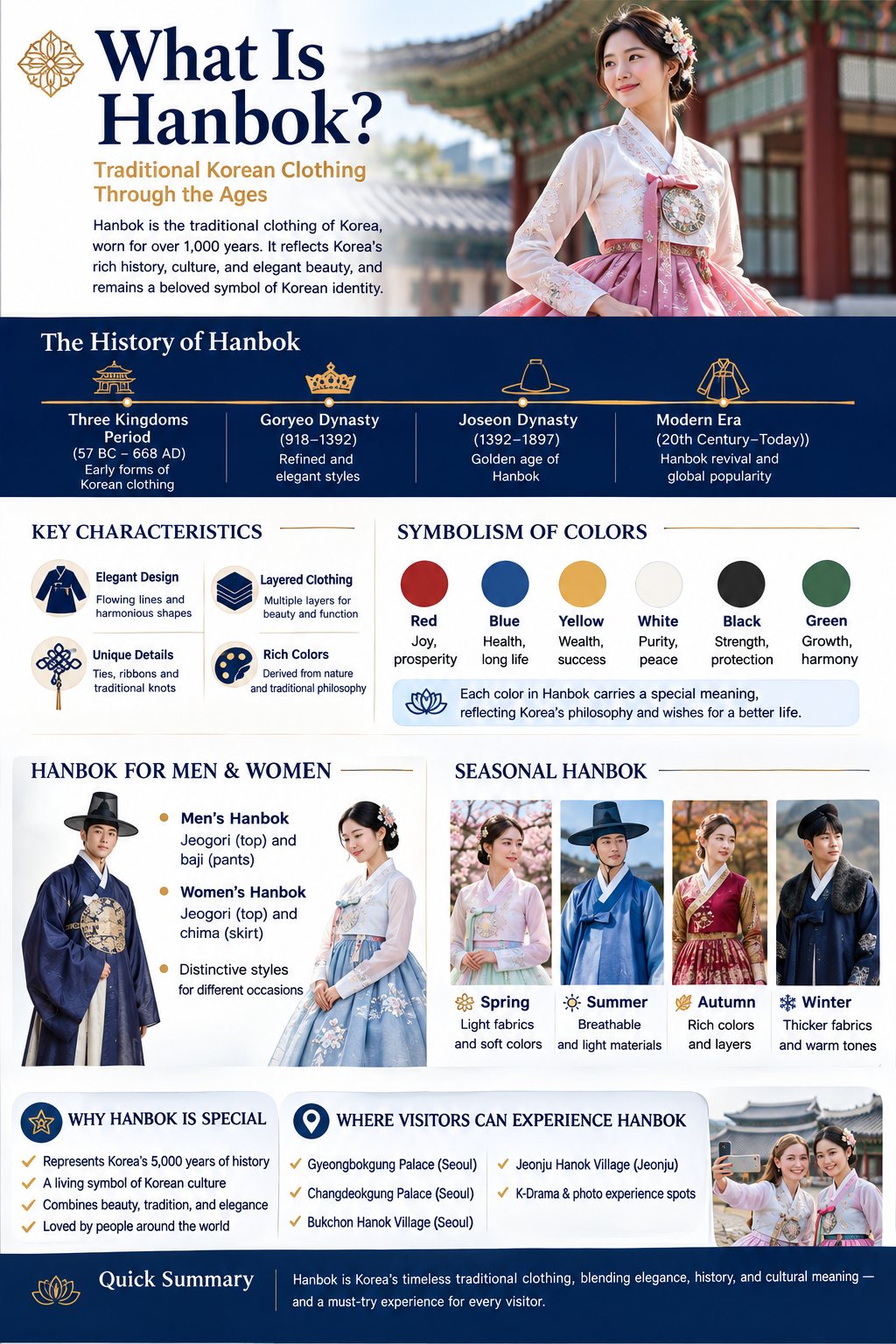
Hanbok is Korea's traditional clothing, celebrated for its graceful silhouette, elegant proportions and timeless beauty.
Quick Summary
Key takeaways
- Hanbok is Korea's traditional clothing, combining elegance, comfort, and cultural symbolism. Its timeless design continues to represent Korean identity and remains an important part of national heritage.
The Complete Guide
Hanbok is Korea's traditional clothing, celebrated for its graceful silhouette, elegant proportions, and timeless beauty. The word Hanbok literally means "Korean clothing," and it has been worn for centuries by people from all walks of life.
Traditional Hanbok was designed to provide both comfort and freedom of movement while reflecting Korean aesthetics that emphasize simplicity, balance, and harmony with nature. Flowing lines, vibrant colors, and carefully layered garments distinguish Hanbok from the traditional clothing of neighboring countries.
Although everyday clothing has become modernized, Hanbok continues to play an important role in Korean culture. It is commonly worn during national holidays, weddings, birthdays, coming-of-age ceremonies, cultural festivals, and special events. Today, visitors from around the world can also enjoy wearing Hanbok while exploring Korea's historic landmarks.
Main Components of Hanbok
Jeogori
The upper garment worn by both men and women.
Chima
The full-length skirt traditionally worn by women.
Baji
Loose-fitting trousers traditionally worn by men.
Durumagi
A traditional overcoat worn during colder weather or formal occasions.
Traditional Accessories
Hanbok is often complemented by traditional shoes, decorative hair accessories, belts, and handbags.
Characteristics
Elegant Silhouette
Flowing lines create graceful movement and timeless beauty.
Vibrant Colors
Traditional colors often symbolize wishes for prosperity, happiness, health, and longevity.
Comfortable Design
Loose-fitting garments allow natural movement and comfort.
Cultural Symbolism
Different colors, materials, and decorations traditionally reflected age, social status, and special occasions.
Highlights
Ask AI About This Topic
Have a question about What Is Hanbok??
Get instant, locally-checked answers from the ASK KOREA AI. Ask anything from specific edge cases to itinerary decisions.
"Explain what Hanbok is and what its main components mean."
ASK KOREA Transit