Traditional Hanbok
Traditional Hanbok reflects centuries of Korean history, craftsmanship and cultural values, with every colour and detail carrying meaning.
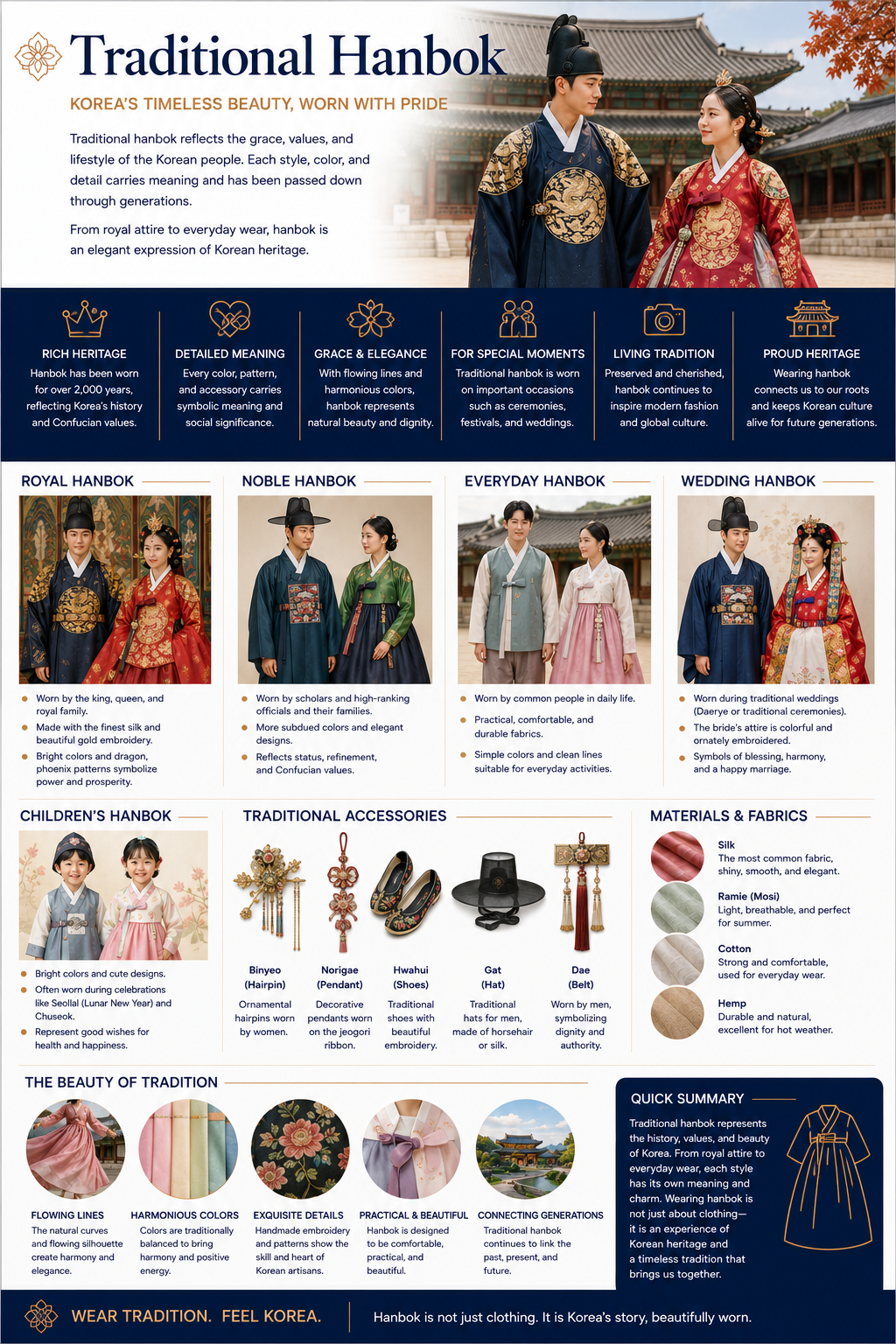
Quick Summary
Key takeaways
- Traditional Hanbok represents Korea's rich cultural heritage through elegant craftsmanship, symbolic colors, and beautifully designed garments that have been worn for centuries during important occasions.
The Complete Guide
Traditional Hanbok reflects centuries of Korean history, craftsmanship, and cultural values. Every design, color, fabric, and decorative element was carefully chosen according to the wearer's age, social status, season, and the occasion.
During the Joseon Dynasty, Hanbok became highly refined under the influence of Confucian culture. Royal families, government officials, scholars, and ordinary citizens all wore different styles of Hanbok appropriate to their roles in society.
Today, traditional Hanbok is preserved through museums, cultural performances, royal ceremonies, and national celebrations, allowing visitors to appreciate its historical significance and timeless elegance.
Types of Traditional Hanbok
Royal Hanbok
The most elaborate form of Hanbok, worn by kings, queens, princes, and members of the royal court. Rich embroidery, luxurious silk fabrics, and symbolic patterns represented authority and prosperity.
Noble Hanbok
Members of the aristocratic class wore elegant Hanbok made from high-quality fabrics with refined colors and sophisticated designs.
Commoner's Hanbok
Ordinary citizens wore simpler Hanbok made from cotton or hemp, designed for comfort and practicality while maintaining traditional beauty.
Ceremonial Hanbok
Special Hanbok worn during weddings, ancestral ceremonies, birthdays, coming-of-age celebrations, and important cultural events.
Traditional Colors
White
Purity, honesty, and simplicity.
Red
Good fortune, happiness, and celebration.
Blue
Hope, peace, and harmony.
Yellow
Prosperity and balance.
Black
Wisdom, dignity, and formality.
Highlights
Ask AI About This Topic
Have a question about Traditional Hanbok?
Get instant, locally-checked answers from the ASK KOREA AI. Ask anything from specific edge cases to itinerary decisions.
"What are the different types of traditional Hanbok and what do their colours mean?"
ASK KOREA Transit