What Is Korea's Cultural Heritage?
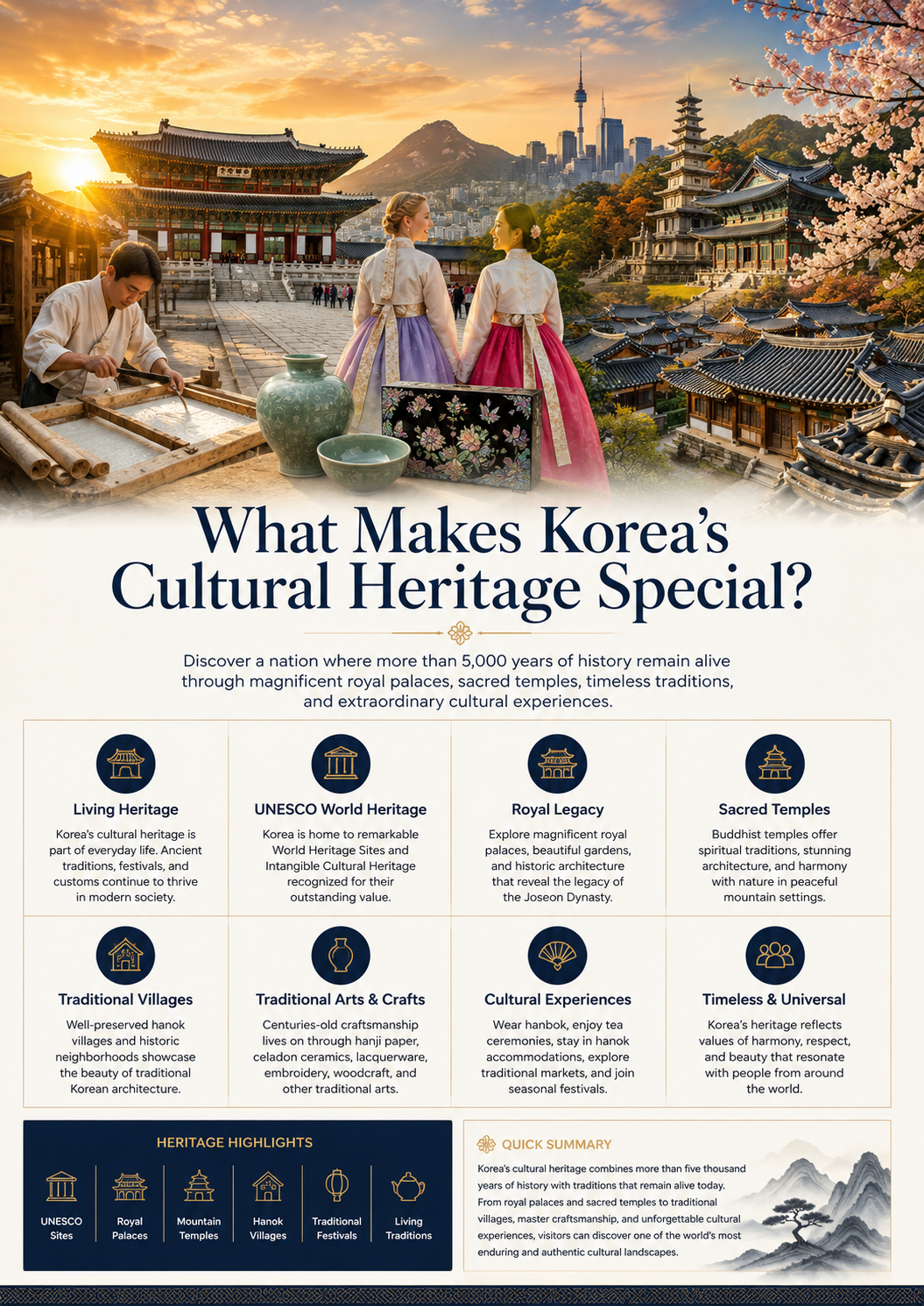
South Korea's cultural heritage is distinguished by its remarkable continuity, authenticity and accessibility, with ancient traditions still alive in modern society.
Quick Summary
Key takeaways
- Korea's cultural heritage is unique because it remains a living tradition, allowing visitors to experience history through architecture, customs, festivals, and everyday life rather than simply observing it from a distance.
The Complete Guide
South Korea's cultural heritage is distinguished by its remarkable continuity, authenticity, and accessibility. Rather than existing only as historical monuments, many Korean traditions continue to be practiced in daily life, allowing visitors to experience history as a living culture.
Royal palaces remain active cultural spaces where ceremonies and traditional performances take place. Buddhist temples continue to function as places of worship while welcoming visitors through Temple Stay programs. Traditional markets remain vibrant centers of local commerce, and Hanbok is still worn during important celebrations and cultural events.
Korea has also achieved international recognition through numerous UNESCO World Heritage Sites and Intangible Cultural Heritage traditions, demonstrating the global significance of its cultural legacy.
The combination of preserved history, living traditions, and modern convenience makes Korea one of the most rewarding destinations for cultural exploration.
Highlights
Ask AI About This Topic
Have a question about What Is Korea's Cultural Heritage??
Get instant, locally-checked answers from the ASK KOREA AI. Ask anything from specific edge cases to itinerary decisions.
"What makes Korea's cultural heritage unique compared to other countries in Asia?"
ASK KOREA Transit