Traditional Values & Daily Life
Traditional Korean values continue to influence everyday life, social relationships, education, family customs and the way visitors are welcomed across the country.
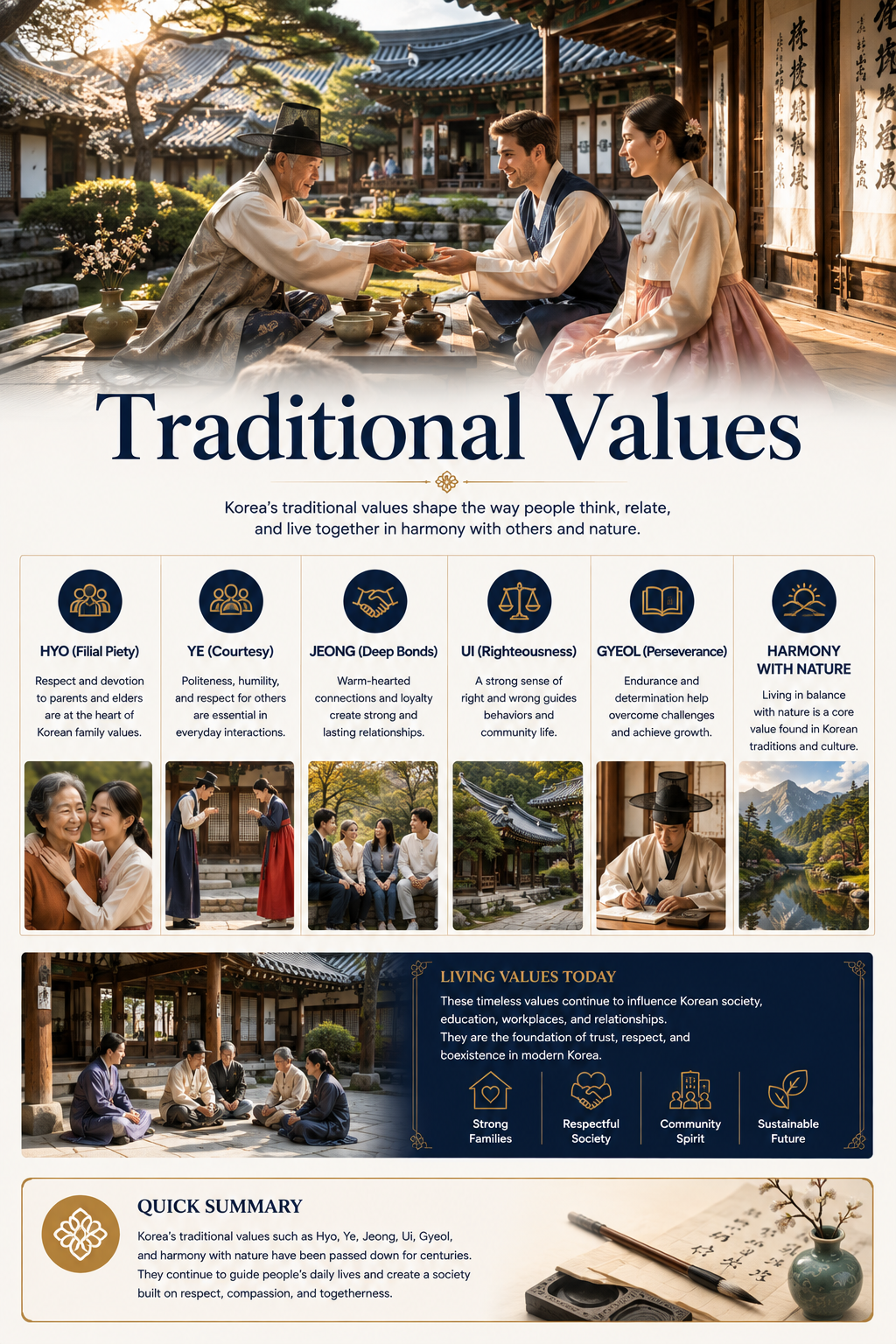
Quick Summary
Key takeaways
- Traditional Korean values continue to shape modern society through respect, family, education, hospitality, and community, providing visitors with a deeper understanding of Korean culture.
The Complete Guide
Traditional Korean values continue to influence everyday life, social relationships, education, family customs, and cultural etiquette. These values have been shaped primarily by Confucian philosophy, Buddhism, and centuries of community-centered living.
Understanding these traditions helps visitors better appreciate Korean society and interact respectfully with local people.
Respect for Others
Respect is one of the most important principles in Korean culture. Courtesy toward elders, teachers, and guests remains an essential part of daily life.
Family
Family relationships have traditionally been the foundation of Korean society. Family gatherings, ancestor remembrance, and mutual support remain important cultural values.
Community
Cooperation and consideration for others are deeply rooted in Korean culture. Many traditional customs emphasize harmony rather than individual achievement.
Education
Education has long been highly valued in Korea. Learning, self-improvement, and personal responsibility continue to play significant roles in society.
Hospitality
Visitors are often welcomed warmly. Sharing food, offering assistance, and showing kindness to guests are long-standing Korean traditions.
Harmony with Nature
Many traditional buildings, gardens, and temples were designed to exist in harmony with the surrounding landscape, reflecting respect for nature.
Highlights
Ask AI About This Topic
Have a question about Traditional Values & Daily Life?
Get instant, locally-checked answers from the ASK KOREA AI. Ask anything from specific edge cases to itinerary decisions.
"Which Korean traditional values should I understand before travelling, and how do they affect etiquette?"
ASK KOREA Transit