Korea Facts & Surprises · Guide 04

Why Are There So Many Cafes?

In Korea cafés are more than coffee shops — study rooms, meeting spots, dessert bars and design destinations.

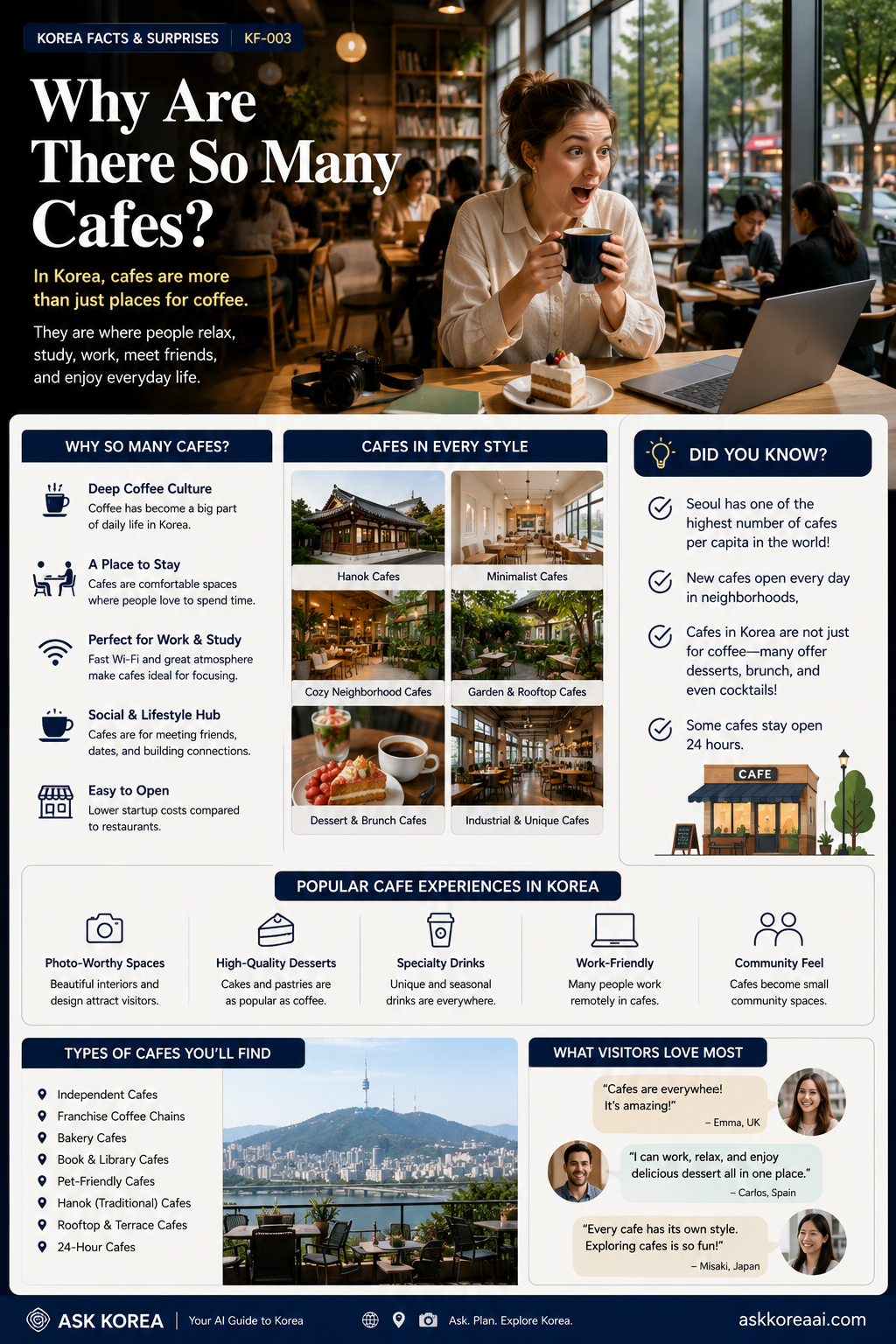
Why are there so many cafés in Korea — ASK KOREA infographic
01 — Overview

Quick Summary

In Korea, cafés are more than places for coffee. They are where people relax, study, work, meet friends and enjoy everyday life — which is why new ones open constantly.

Key takeaways

  • Seoul has one of the highest numbers of cafés per capita in the world.
  • Cafés double as workspaces thanks to fast Wi-Fi and long stays being accepted.
  • Styles range from hanok and minimalist to garden, rooftop, dessert and industrial.
  • Many cafés serve desserts, brunch and even cocktails.
  • Some cafés stay open 24 hours.
02 — Full Guide

The Complete Guide

Why so many cafés?

Café culture sits at the intersection of daily habit, social life and low startup cost.

  • Deep coffee culture — coffee is part of daily life
  • A place to stay — comfortable spaces where people linger
  • Perfect for work and study — fast Wi-Fi and good atmosphere
  • Social and lifestyle hub — meeting friends, dates, connections
  • Easy to open — lower startup costs than restaurants

Cafés in every style

Part of the fun is that no two neighbourhoods feel the same.

  • Hanok cafés inside traditional houses
  • Minimalist and design-led cafés
  • Cosy neighbourhood cafés
  • Garden and rooftop cafés
  • Dessert and brunch cafés
  • Industrial and unique concept cafés

Popular café experiences

What visitors love most is how much a café can be at once.

  • Photo-worthy spaces — interiors designed to be seen
  • High-quality desserts — cakes and pastries as popular as coffee
  • Specialty and seasonal drinks
  • Work-friendly settings for remote work
  • Community feel — cafés act as small neighbourhood hubs
  • Types you'll find: independent, franchise, bakery, book, pet-friendly, hanok, rooftop and 24-hour cafés

Frequently asked questions

  • Can I work in a café for hours? Generally yes, especially in study-friendly cafés; order again if you stay long.
  • Are there power outlets? Common in work-friendly cafés, less so in dessert-led ones.
  • Is tipping expected? No — tipping is not part of Korean café culture.
  • Where should I start? Ikseon-dong and Bukchon for hanok cafés, Seongsu for industrial, Yeonnam for neighbourhood cafés.
Pro Tips

Pro Tips

  • Weekday mornings are the quietest time in popular cafés.
  • Look for 'studying allowed' signage if you plan a long session with a laptop.
  • Try seasonal drinks — menus change with the weather.
  • Bring a card or mobile payment; many cafés are cashless.
Ask AI

Ask AI About This Topic

AI Assistant

Have a question about Why Are There So Many Cafes??

Get instant, locally-checked answers from the ASK KOREA AI. Ask anything from specific edge cases to itinerary decisions.

Ask this question
Suggested prompt

"Recommend the best café neighbourhoods in Seoul and what makes each one different."

ASK KOREA Transit