Korea Facts & Surprises
The details visitors notice first — safety, speed, cafés, seasons and a country that runs 24/7.
The first guides are live now. The remaining ones are being written and will appear here as they are published.
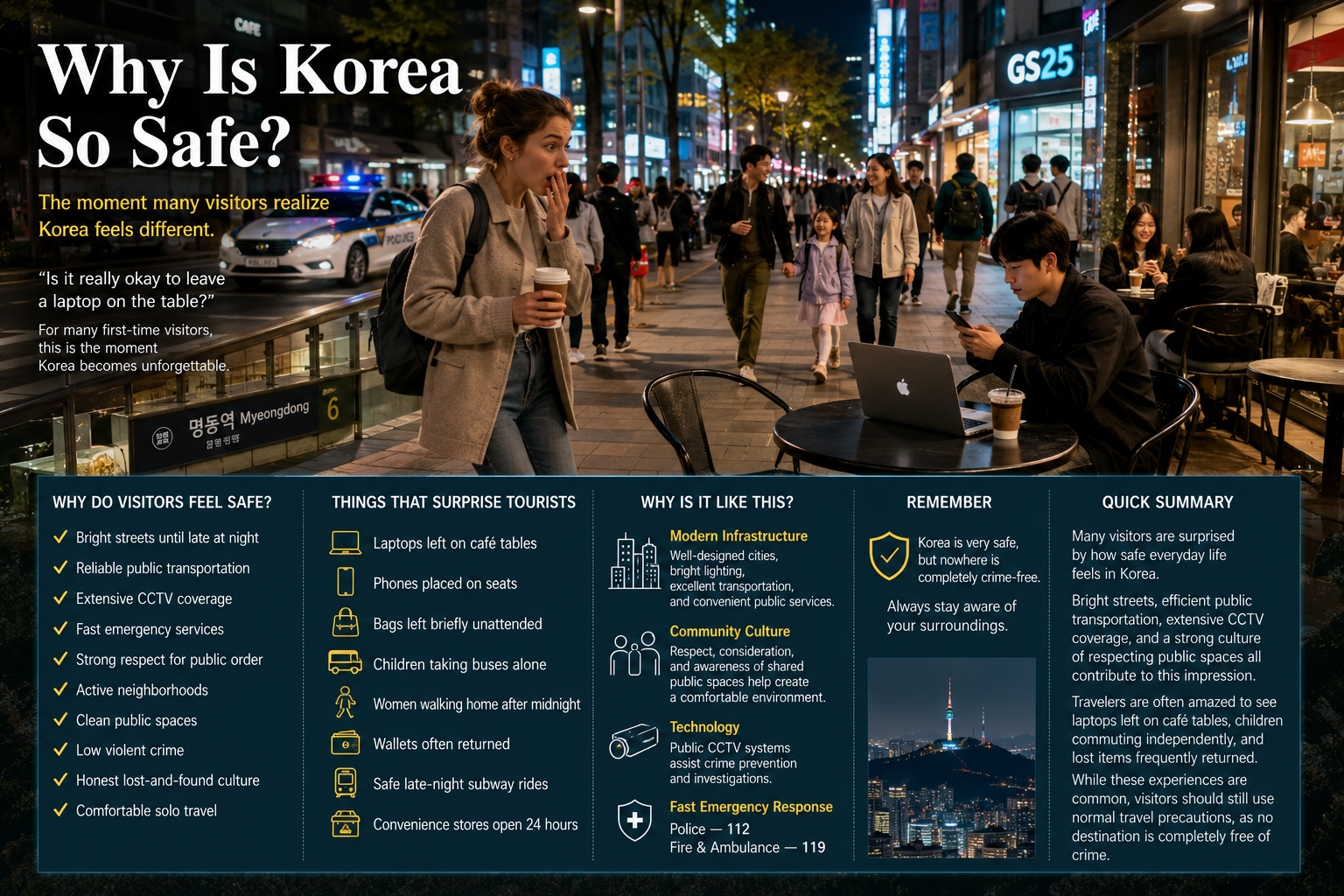
Why is Korea So Safe?
Bright streets, CCTV, fast emergency response and a strong lost-and-found culture — why visitors say Korea feels different.
Read the full guide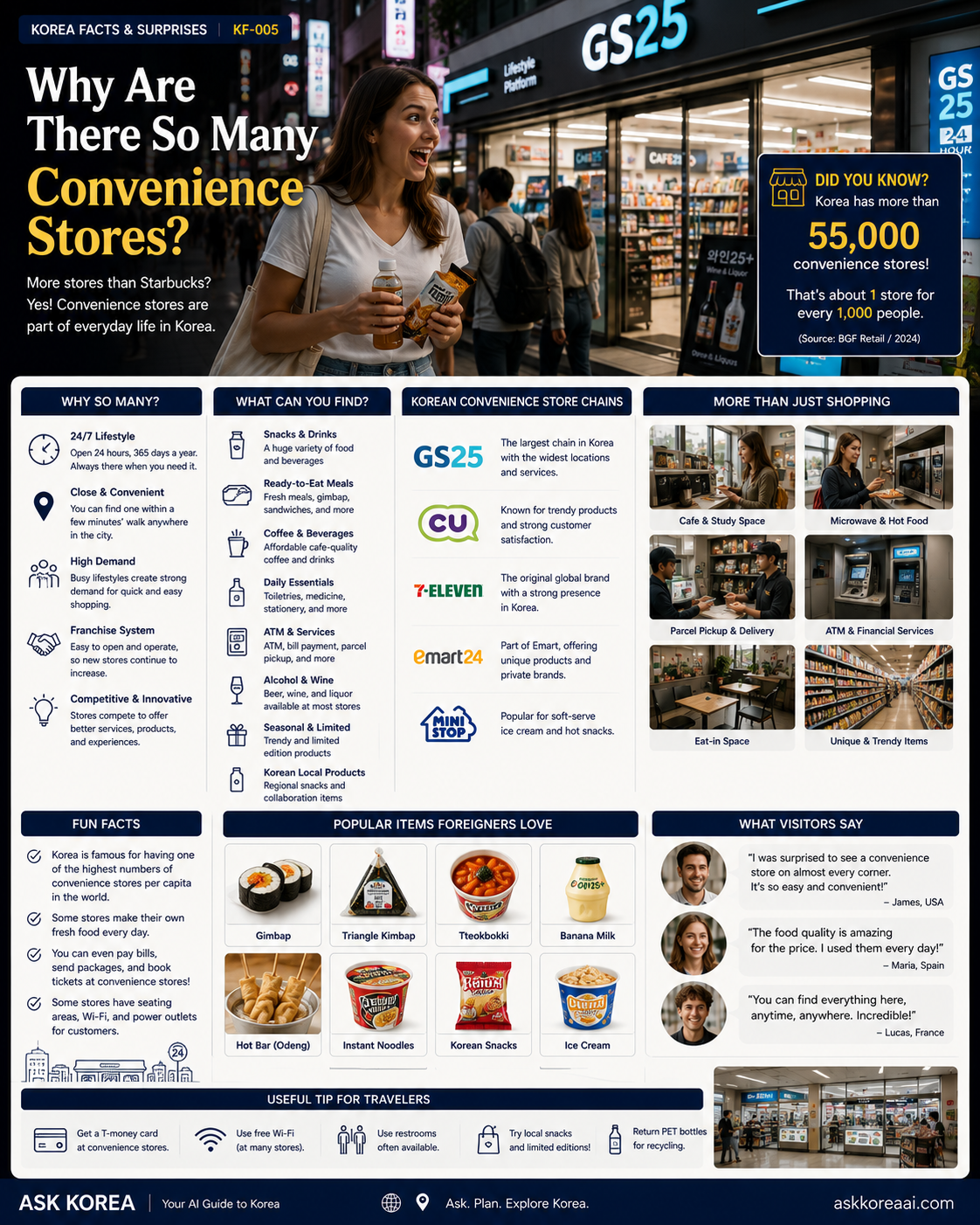
Why Are There So Many Convenience Stores?
Korea has more than 55,000 convenience stores — what they sell, which chains matter and why they anchor daily life.
Read the full guide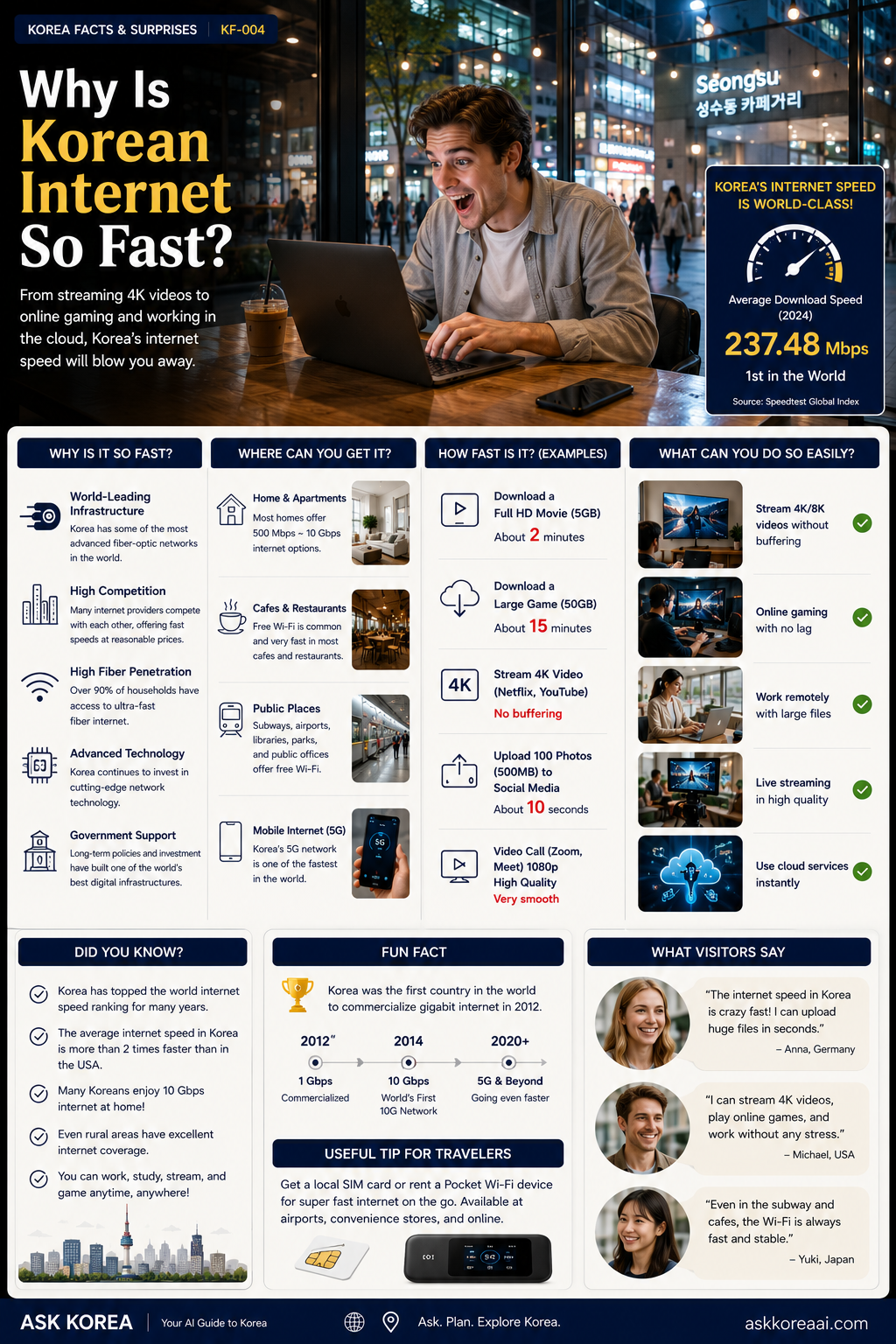
Why Is Korean Internet So Fast?
World-leading fibre, near-universal Wi-Fi and 5G — how fast Korean internet really is and how travellers get online.
Read the full guide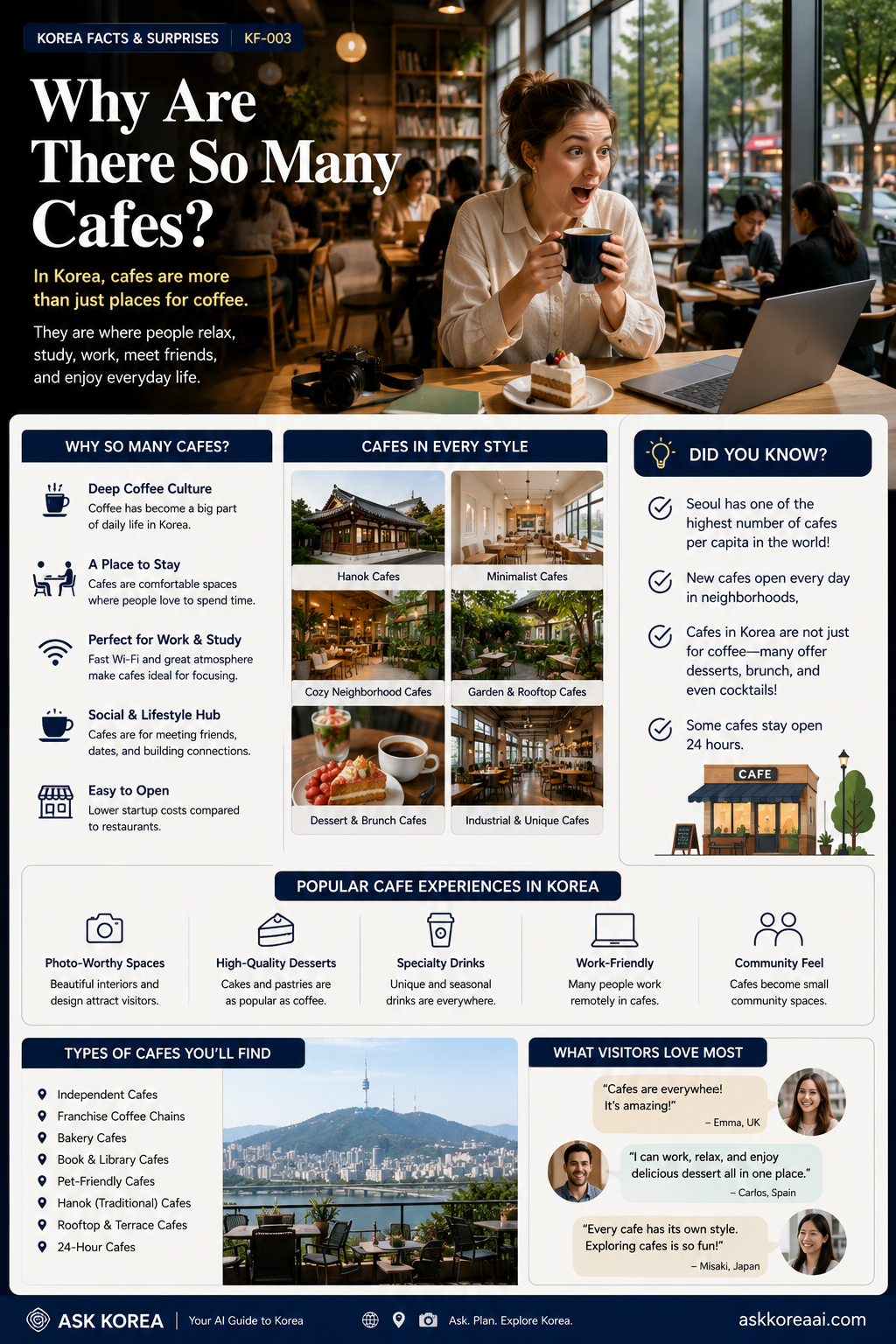
Why Are There So Many Cafes?
In Korea cafés are more than coffee shops — study rooms, meeting spots, dessert bars and design destinations.
Read the full guide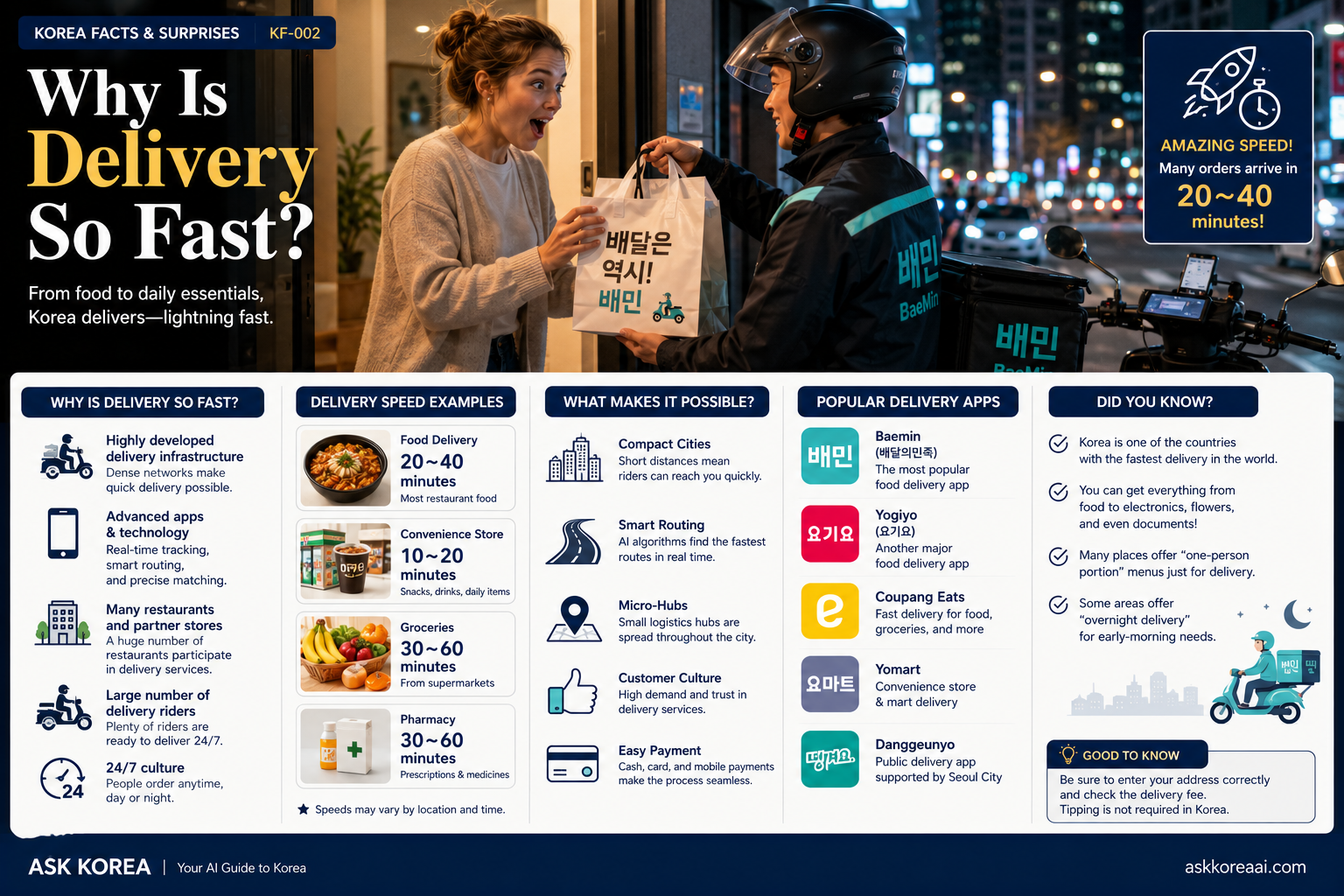
Why Is Delivery So Fast?
Food in 20–40 minutes, groceries at midnight — how Korea's delivery system works and which apps to use.
Read the full guide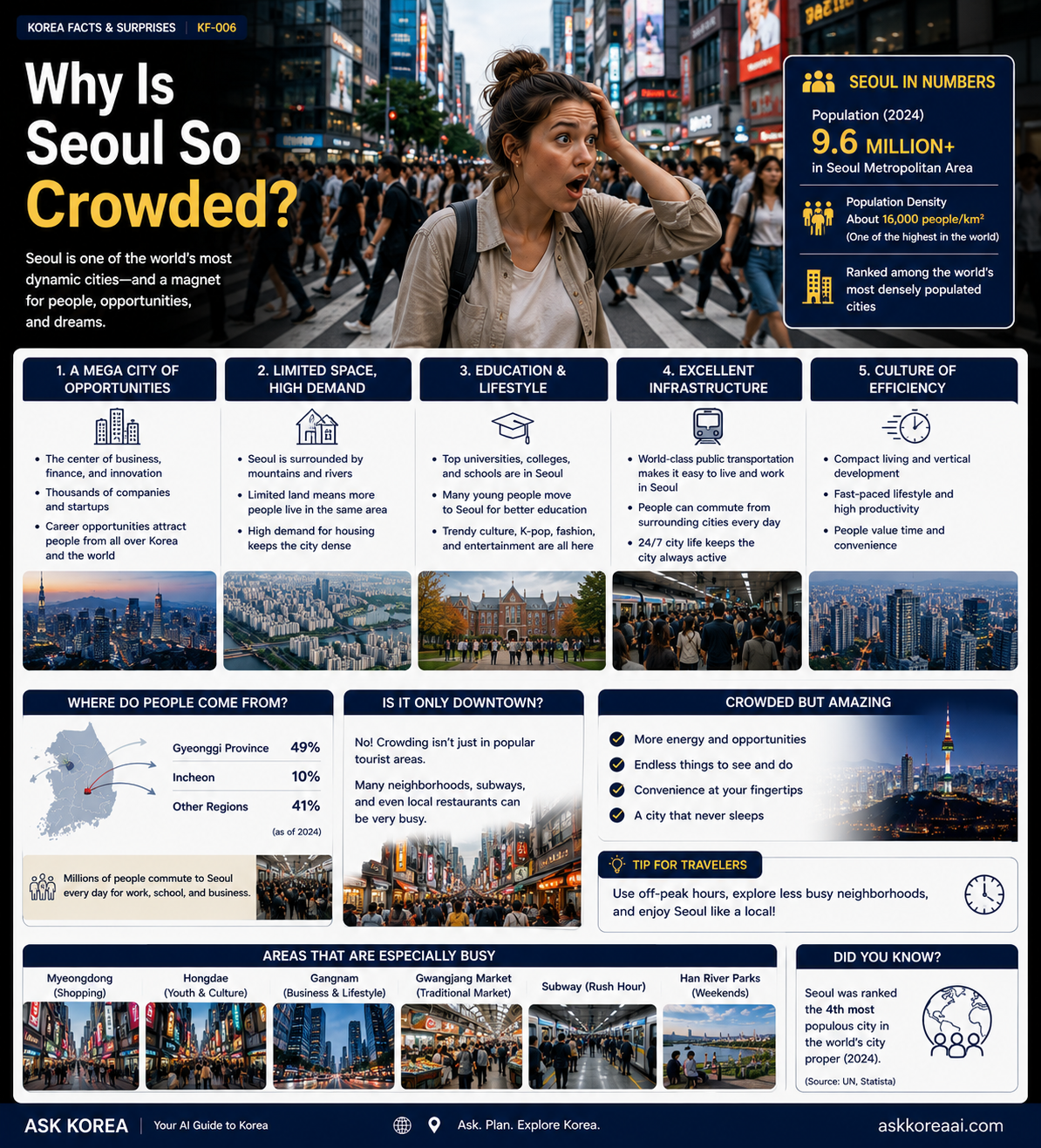
Why Is Seoul So Crowded?
9.6 million people, 16,000 per square kilometre — what draws everyone to Seoul and how to travel around the crowds.
Read the full guide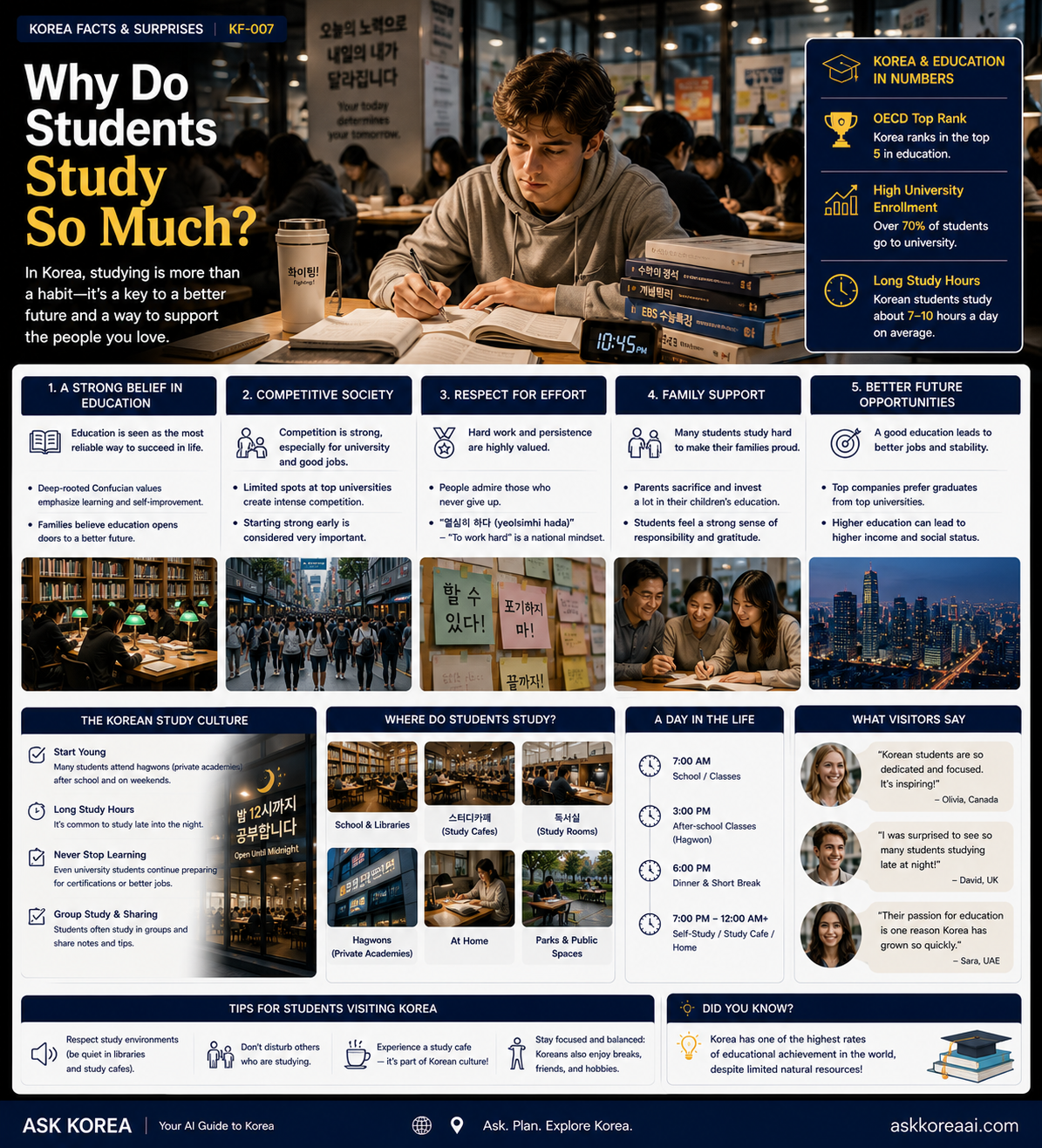
Why Do Students Study So Much?
Education as a path to opportunity — hagwons, study cafés and the long hours behind Korea's academic reputation.
Read the full guide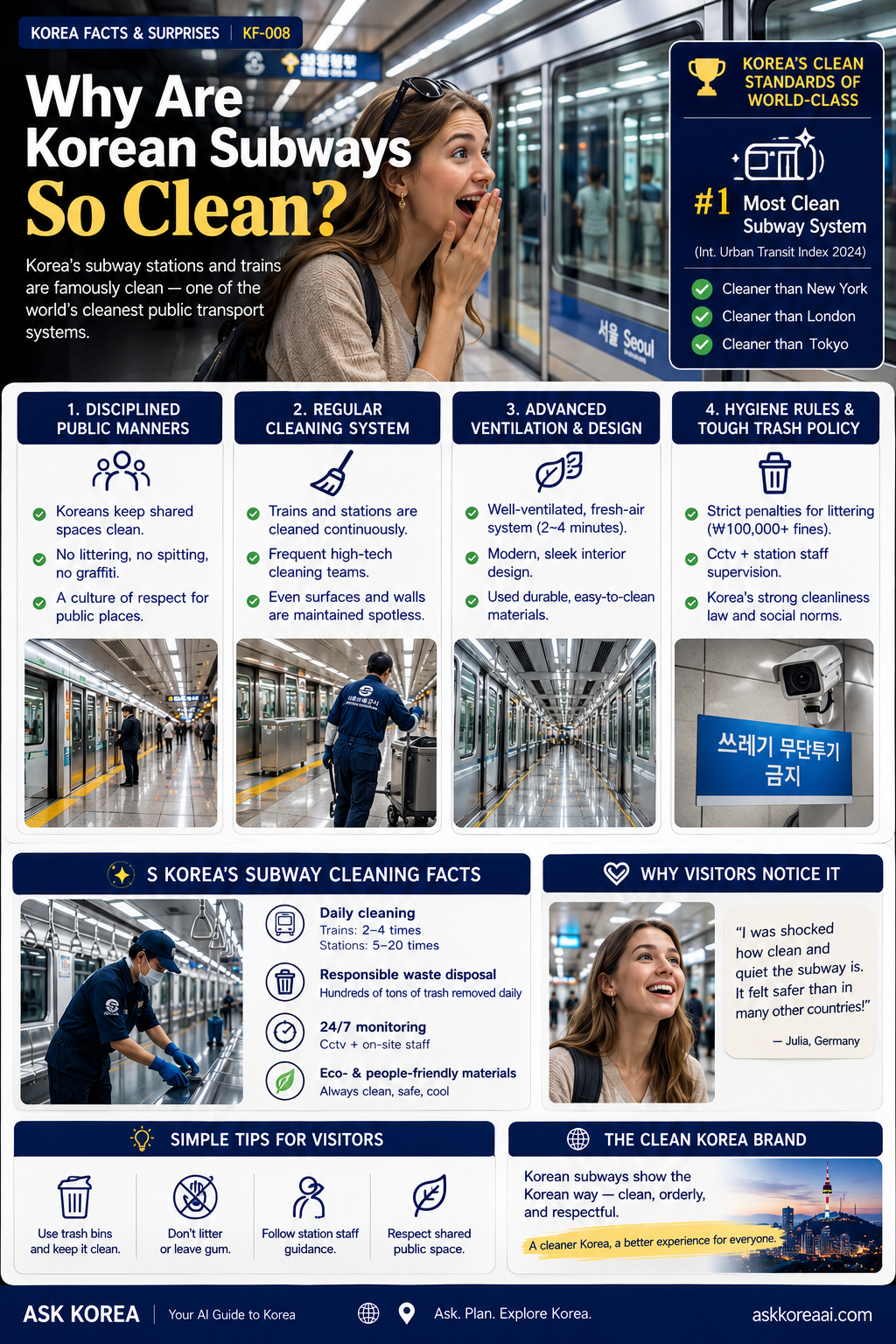
Why Are Korean Subways So Clean?
Continuous cleaning, strict littering rules and disciplined public manners keep Korea's subway among the world's cleanest.
Read the full guide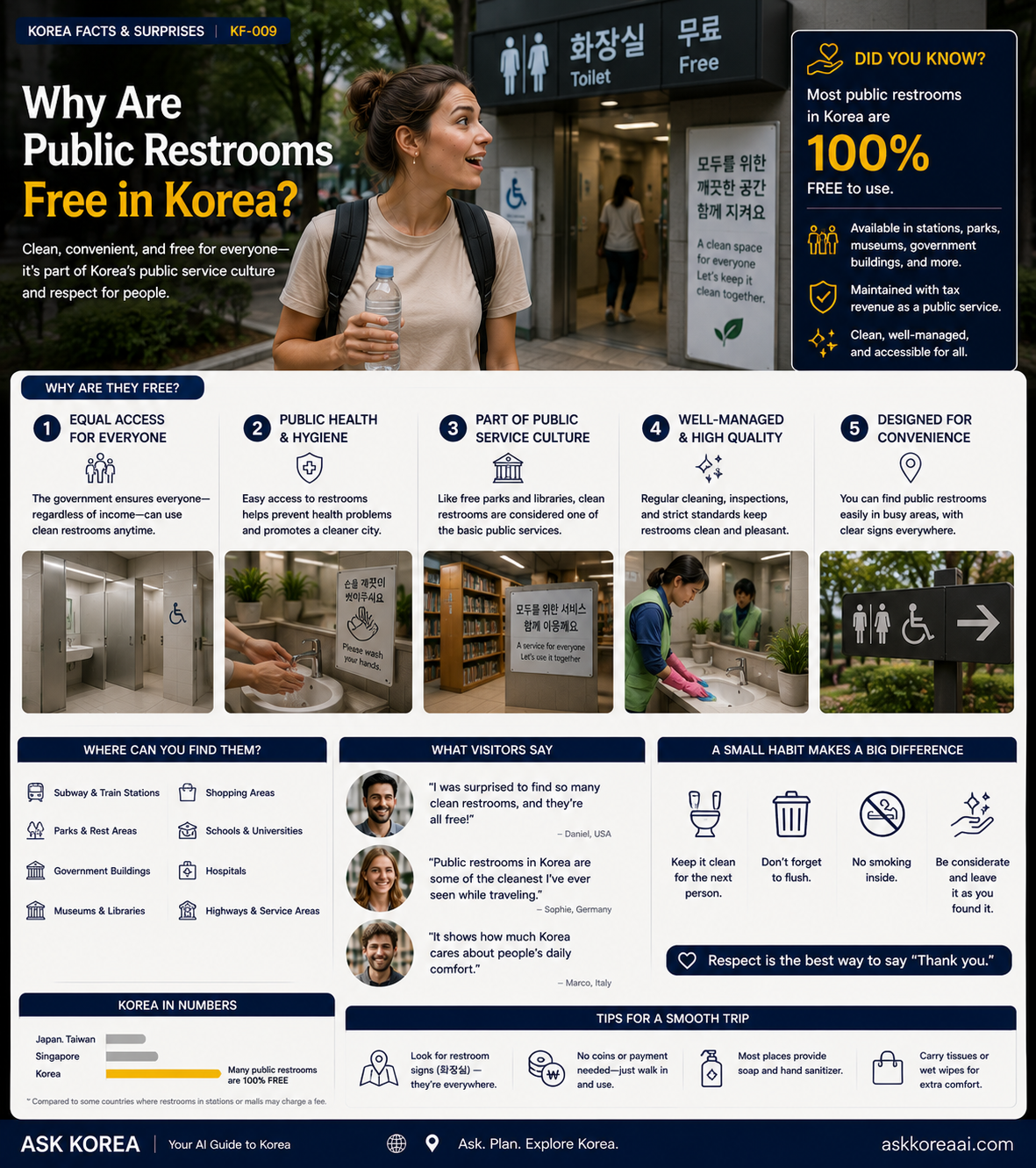
Why Are Public Restrooms Free in Korea?
Clean, free and everywhere — how Korea treats restrooms as a basic public service funded by taxes.
Read the full guide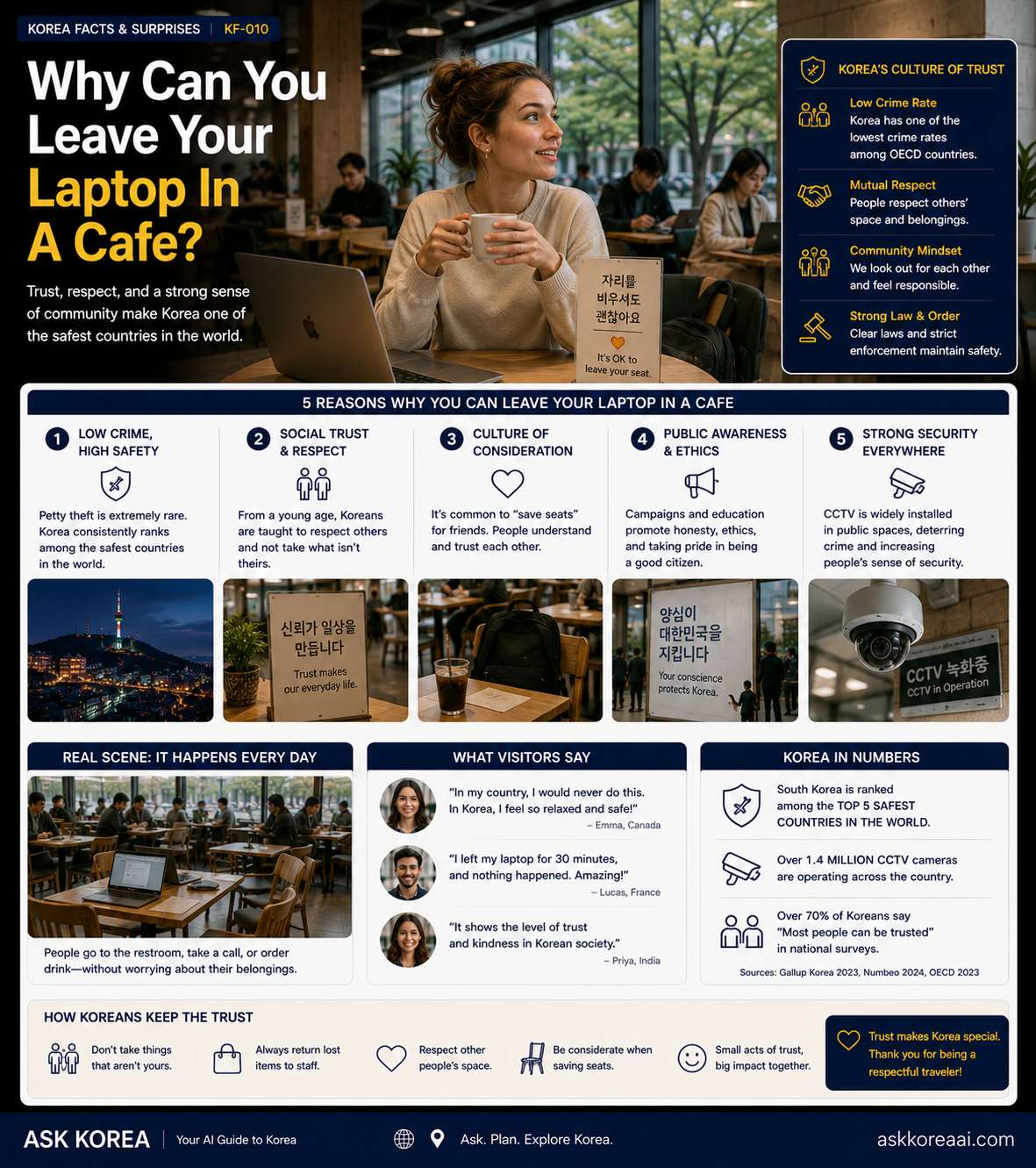
Why Can You Leave Your Laptop in a Café?
Low crime, social trust and widespread CCTV — the culture behind Korea's most surprising everyday scene.
Read the full guide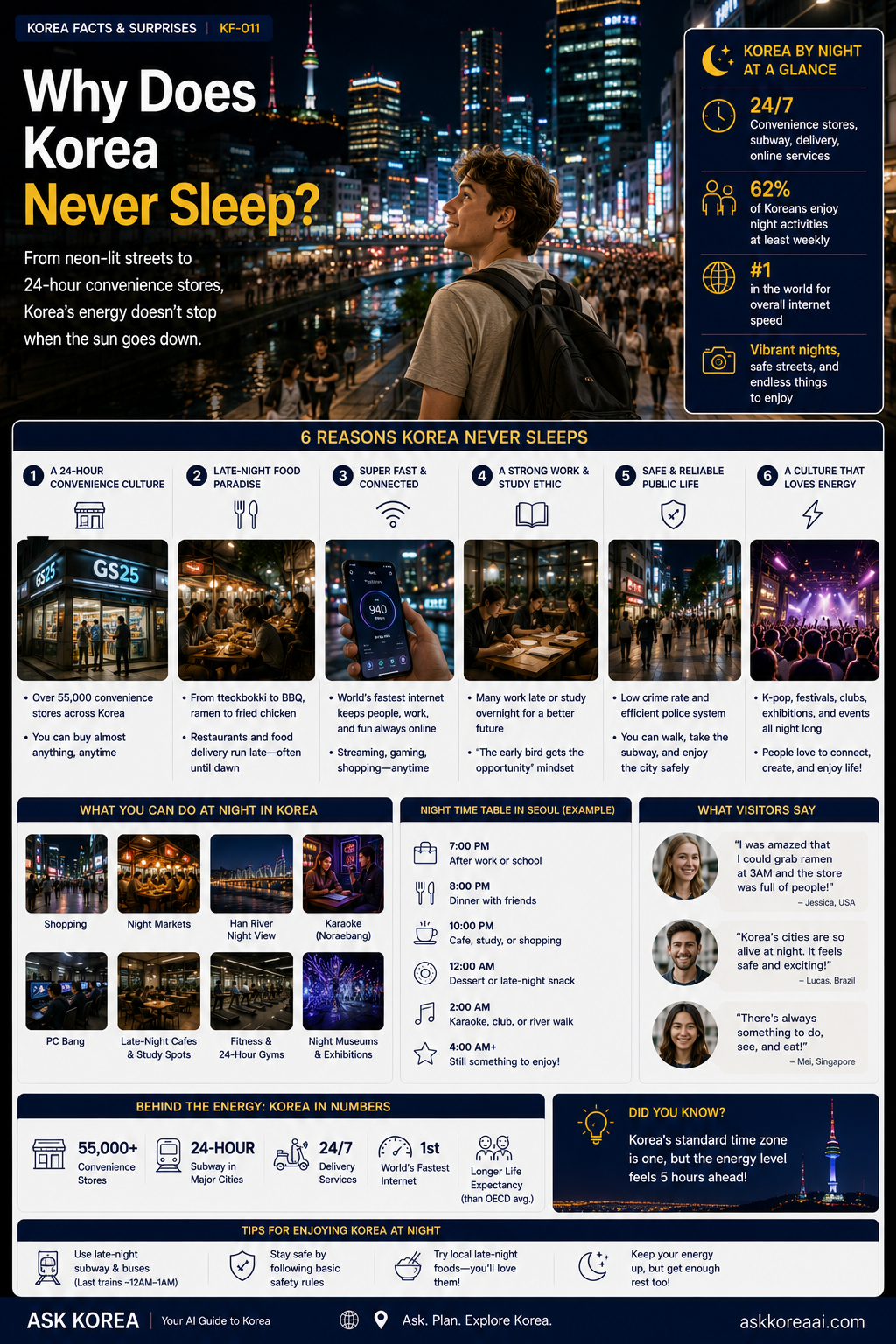
Why Does Korea Never Sleep?
24-hour stores, late-night food, all-night study spots and safe streets — inside Korea's after-dark energy.
Read the full guide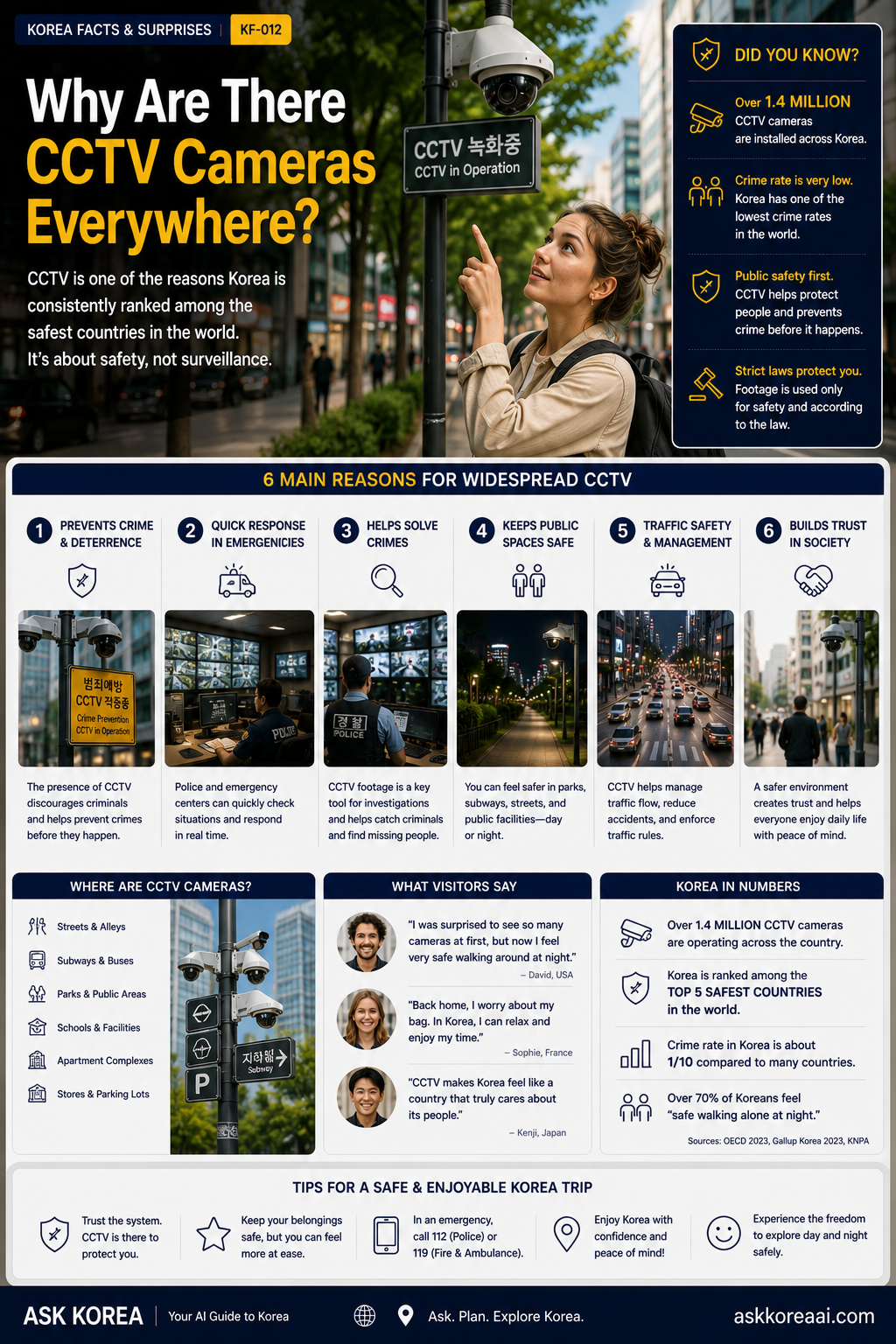
Why Are There CCTV Cameras Everywhere?
Over 1.4 million cameras nationwide — how CCTV supports public safety in Korea, and the laws that limit its use.
Read the full guideASK KOREA Transit