Korea Photo Stops
Where Korea photographs well, and why — a planning guide to the country's very different photographic environments, the light that suits each one, and the etiquette that keeps you welcome.
Quick Summary
Korea is not one photographic subject. Within a few hours you can move between wooden palace architecture, dense modern skylines, quiet traditional lanes, granite mountain ridges, volcanic coastline and covered markets. The result depends far less on the location than on when you arrive and what the light and weather are doing.
Key takeaways
- Historic architecture, modern skylines, traditional neighbourhoods, mountains, coastlines, markets, seasonal landscapes and night views are all easily reachable in one trip
- Timing usually matters more than the location — the same courtyard or beach looks completely different at sunrise, midday and blue hour
- Weather and season change the subject itself: mist in valleys, haze over the city, foliage, snow, rain-slick streets
- Many places have opening hours, ticketed entry, interior photography rules or tripod and drone restrictions — check before you plan a specific shot
- Build a photography day around one or two areas rather than crossing the city between famous spots
Official resources
- Visit Korea (english.visitkorea.or.kr) — official destination information and opening hours
- Korea Heritage Service — official palace and heritage site information and rules
- Korea Meteorological Administration — official forecasts, sunrise and sunset times
- Korea National Park Service — national park access, trail hours and seasonal closures
The Complete Guide
How to use this guide
Read the regional sections to decide where to spend your photography time, then use the by-type, season and time-of-day sections to decide when. Each destination named here has its own ASK KOREA guide with practical access details — this page is about photographic character, not about repeating that information.
Seoul photo stops
Seoul's strength is contrast. Wooden palace roofs sit against glass towers, granite mountains rise directly behind residential streets, and traditional lanes are minutes from expressway-scale riverfront. Almost every Seoul photograph benefits from including two of those layers rather than isolating one.
Palace and heritage areas
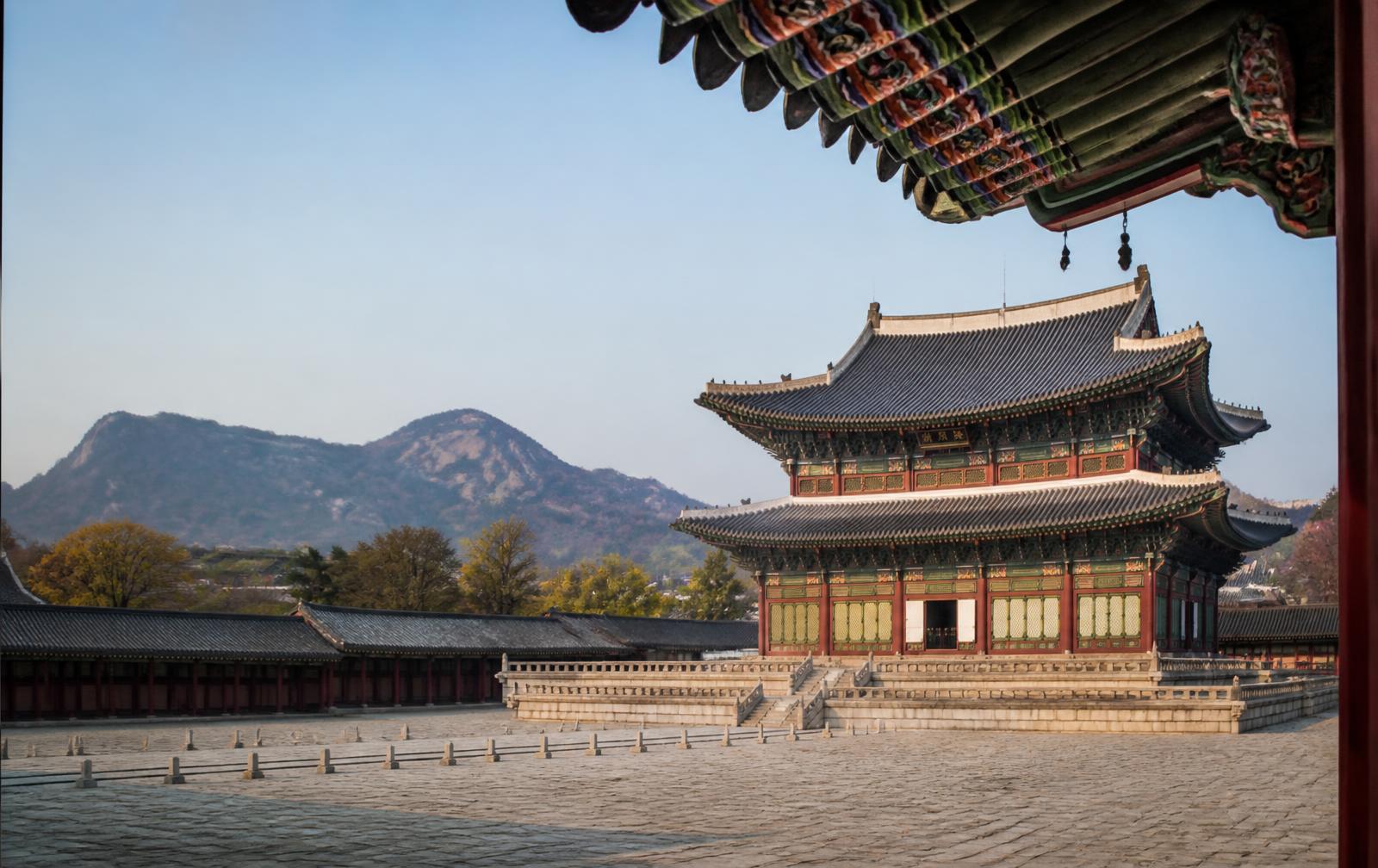
The central palaces offer symmetrical courtyards, deep painted eaves, wide stone plazas and mountain backdrops. Early opening hours are the calmest, and long lenses isolate roof detail while wide lenses work best from the courtyard corners. Interior halls and some restored buildings restrict photography, and tripods are frequently not permitted in busy courtyards.
Traditional neighbourhoods
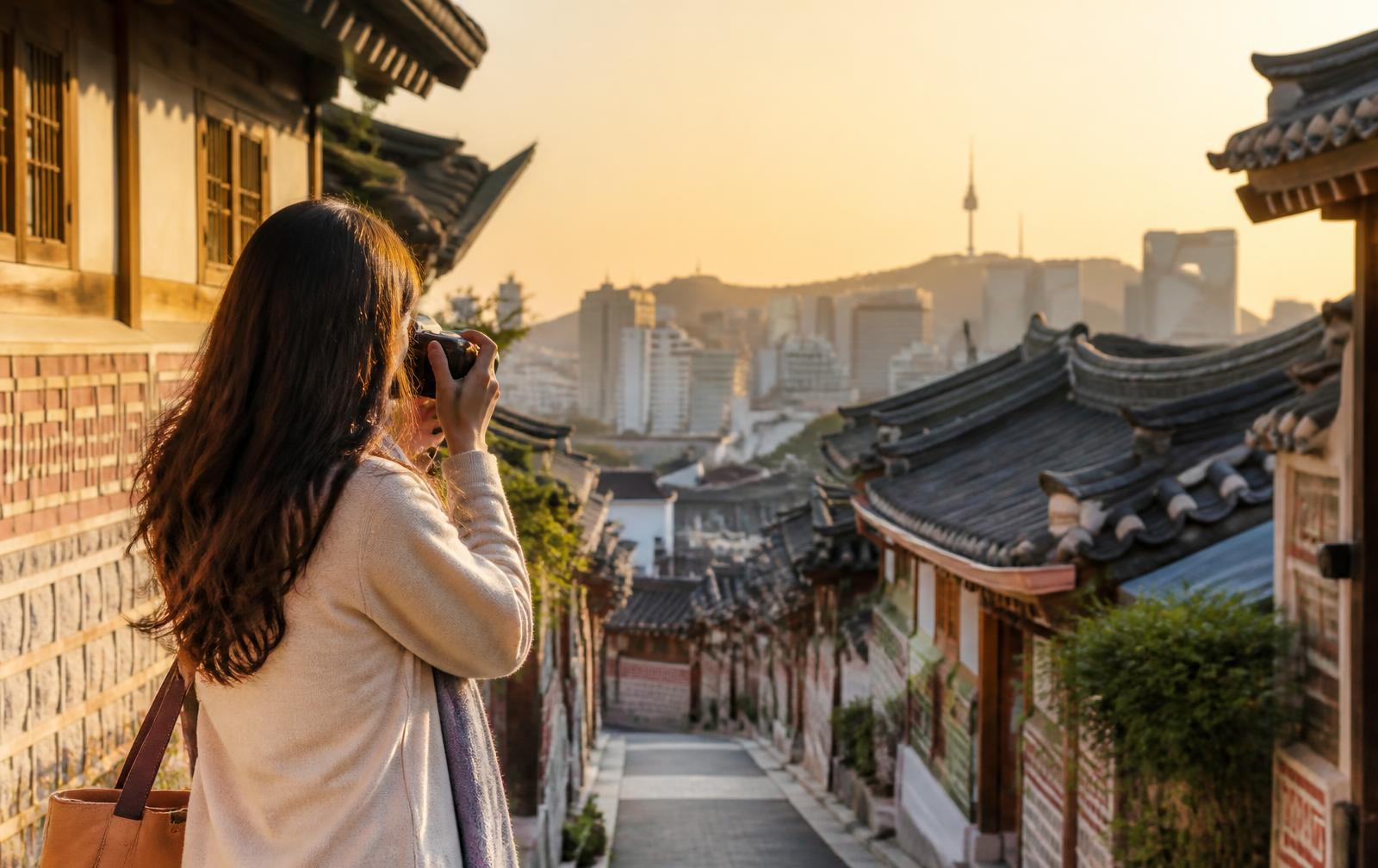
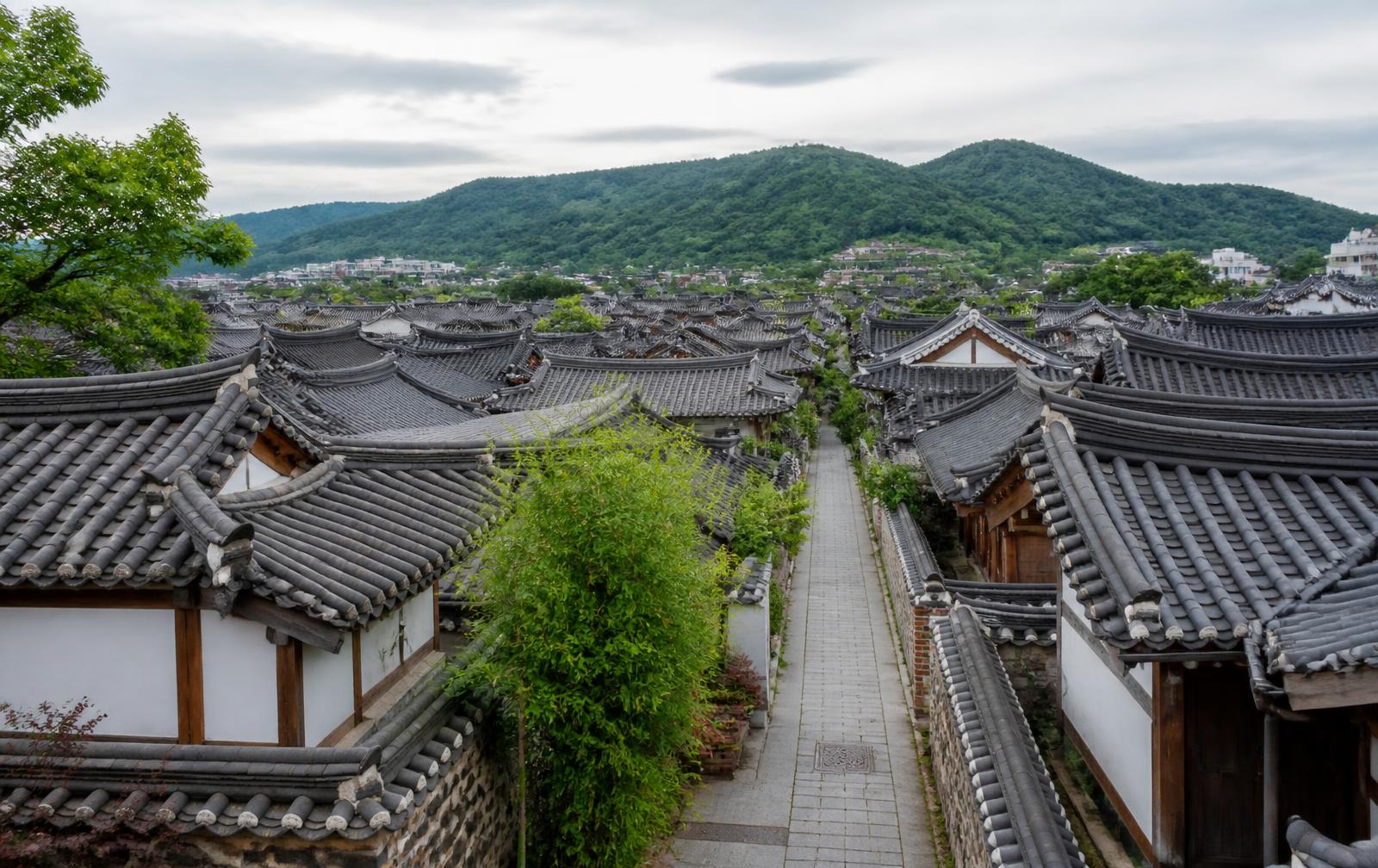
Hanok districts such as Bukchon are photographically rewarding and residential at the same time. Sloped lanes give you rooftop lines with the city beyond, but most of these houses are private homes with posted quiet hours. Keep to the lane, keep your voice down, and do not photograph into courtyards, windows or doorways.
Skyline viewpoints
Namsan and the observation decks give the classic compressed city view; mountain trails on the city's edge give a higher, wider and quieter version of the same scene. Haze is common, so clear days after rain or wind are noticeably better than a generically sunny afternoon.
Han River and bridges
The riverside parks are open, flat and easy to reach, which makes them ideal for sunset, reflections and long-exposure bridge photography. Wind off the water is stronger than it looks — bring a way to stabilise the camera.
Modern architecture and street scenes
Contemporary Seoul architecture rewards graphic, geometric framing: curves, staircases, glass reflections and repeating structure. In busy districts, the interesting photograph is usually the everyday one — commuters, shopfronts, alley kitchens, late-night lit signage — rather than the landmark itself.
Night views
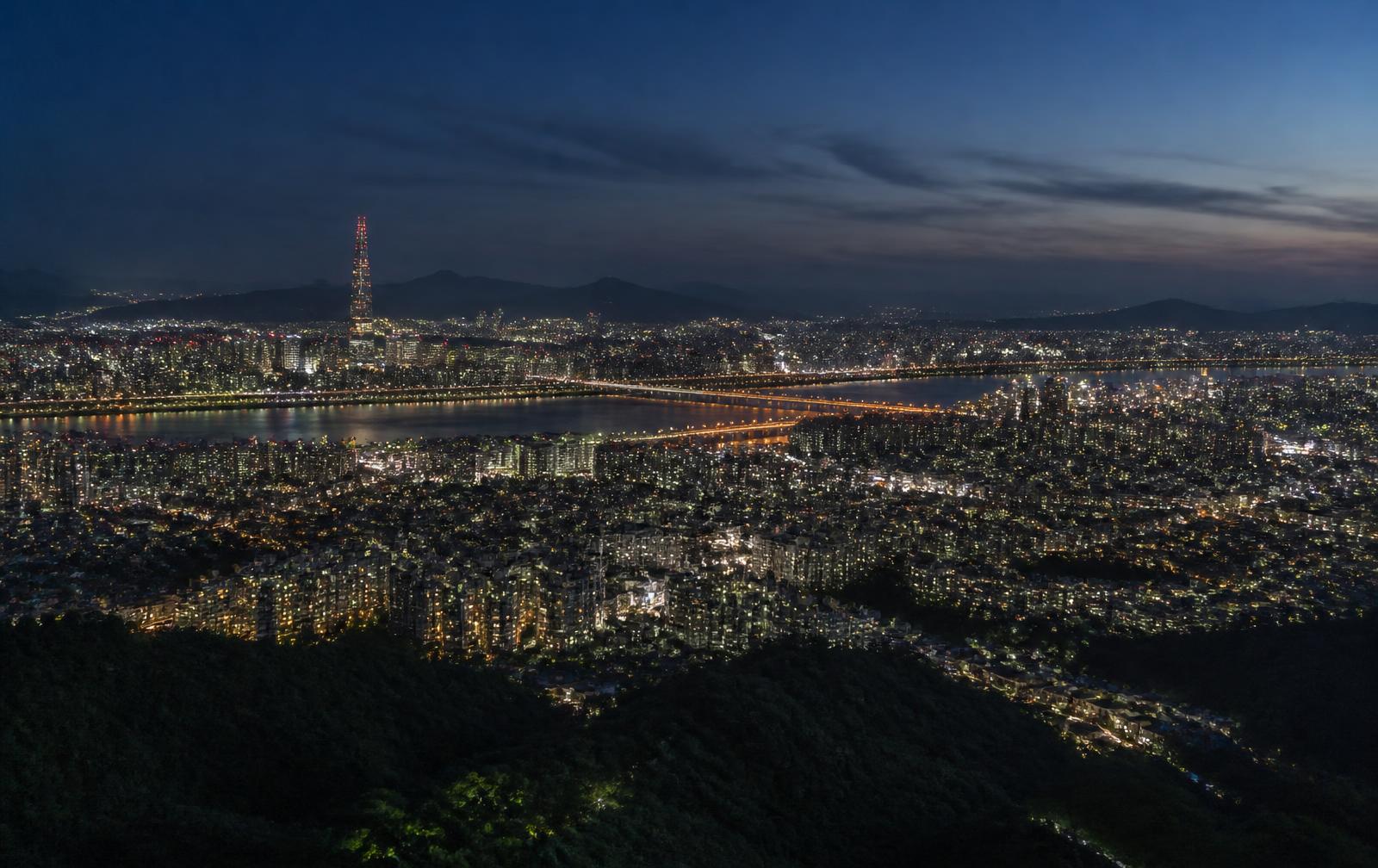
Seoul is a strong night city because the density of light is even and the river breaks it into layers. Blue hour, roughly the twenty to forty minutes after sunset, keeps sky detail while the lights are already on — a far better window than full darkness.
Busan photo stops
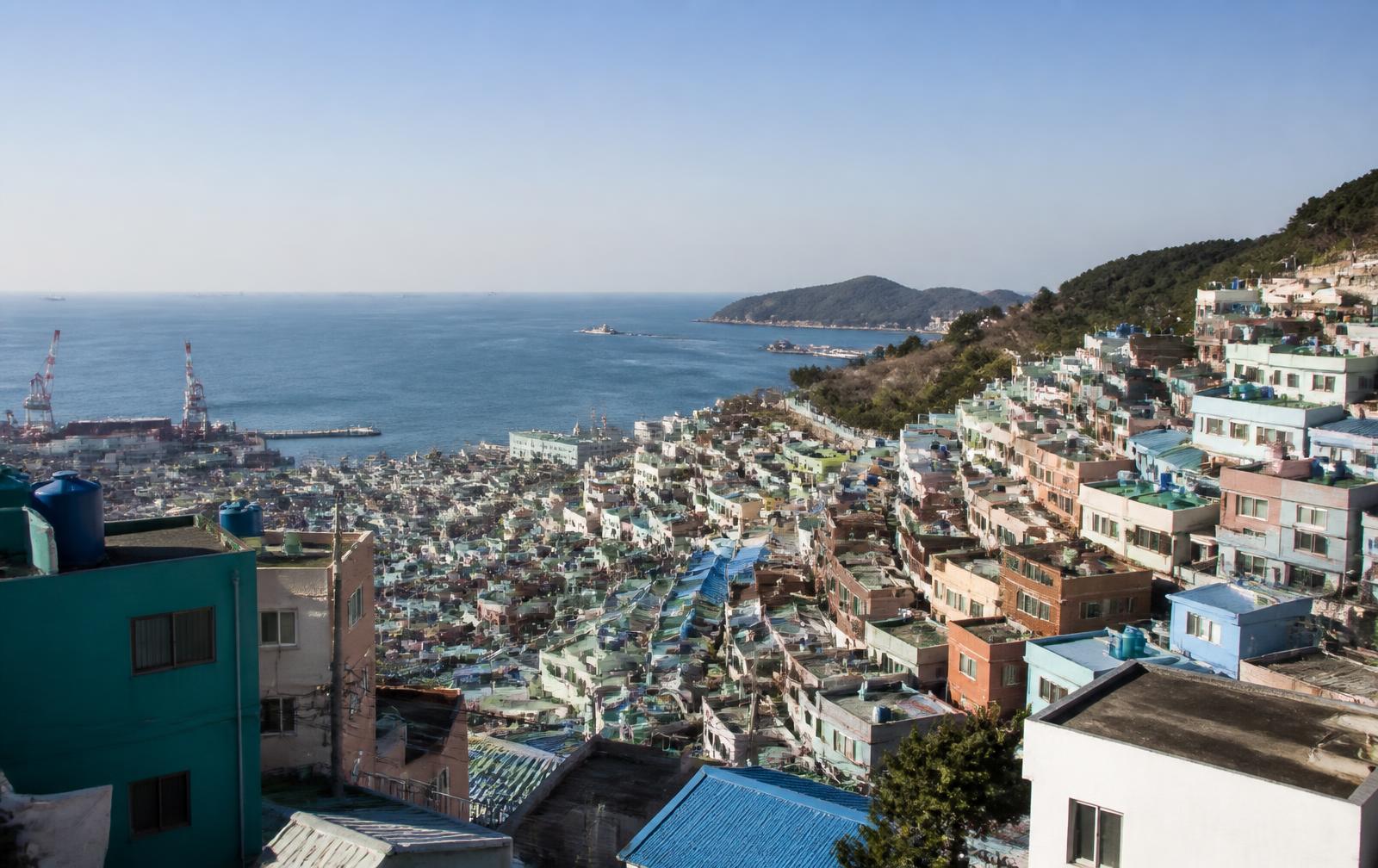
Busan is a city built into hills against the sea, so elevation and water appear in almost every frame. It photographs differently from Seoul: brighter, more open, more textured and much more dependent on coastal weather.
Jeju photo stops
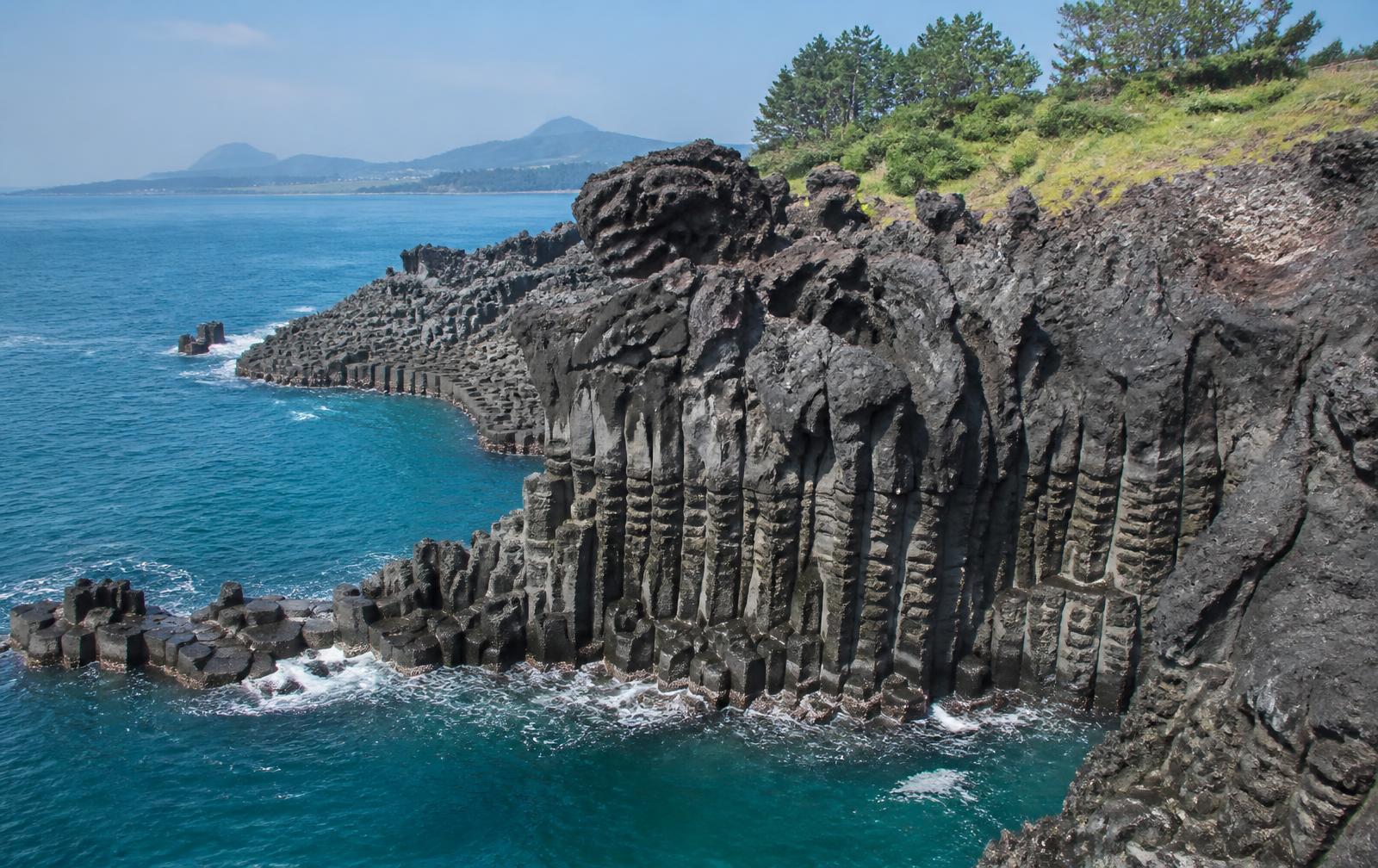
Jeju is a volcanic island, and the photography reflects that: black basalt, columnar cliffs, low stone walls, wind-shaped grass and a coastline that changes character every few kilometres. Weather moves fast, which is an advantage — dramatic light appears and disappears within an hour.
Regional Korea
Outside the three big destinations, Korea becomes calmer and easier to photograph, with fewer crowds in frame and more intact traditional environments. Where ASK KOREA has an existing destination guide, use it for access and timing details.
| Destination | Photographic character | Notes |
| Gyeongju | Ancient burial mounds, temple architecture, pavilions and reflective ponds | Open, low-rise and green; strong at sunrise and in autumn |
| Andong | Traditional village architecture, river bends and wooden halls | Quiet, rural light; overcast days suit the wood and earth tones |
| Jeonju | Dense hanok district, tiled roof layers, lanes and food streets | Elevated viewpoints give the rooftop layering; busy on weekends |
| Gangneung | East-coast beaches, pine forest, harbours and coastal cafés | Best at sunrise; the east coast faces the rising sun |
| Sokcho | Coast plus high granite mountains within a short distance | Autumn foliage and mountain mist; weather changes quickly |
| Yeosu | Island-and-bridge seascapes, harbour and cable-car views | Strong at sunset and blue hour over the water |
Best photo stops by type
If you would rather plan by subject than by city, use these groupings. Each one has a natural light window, which is the most useful thing to know before you go.
Traditional Korea
Palaces, hanok neighbourhoods, temples and heritage villages. Early morning gives soft light, empty courtyards and no crowds; late afternoon warms the wood. Interior and religious spaces often restrict photography entirely.
City and skyline
Observation decks, mountain viewpoints, riverfronts and modern architecture. Clear-air days matter more than sunny days. Shooting through observation-deck glass works best with the lens close to the glass and interior lights avoided.
Nature
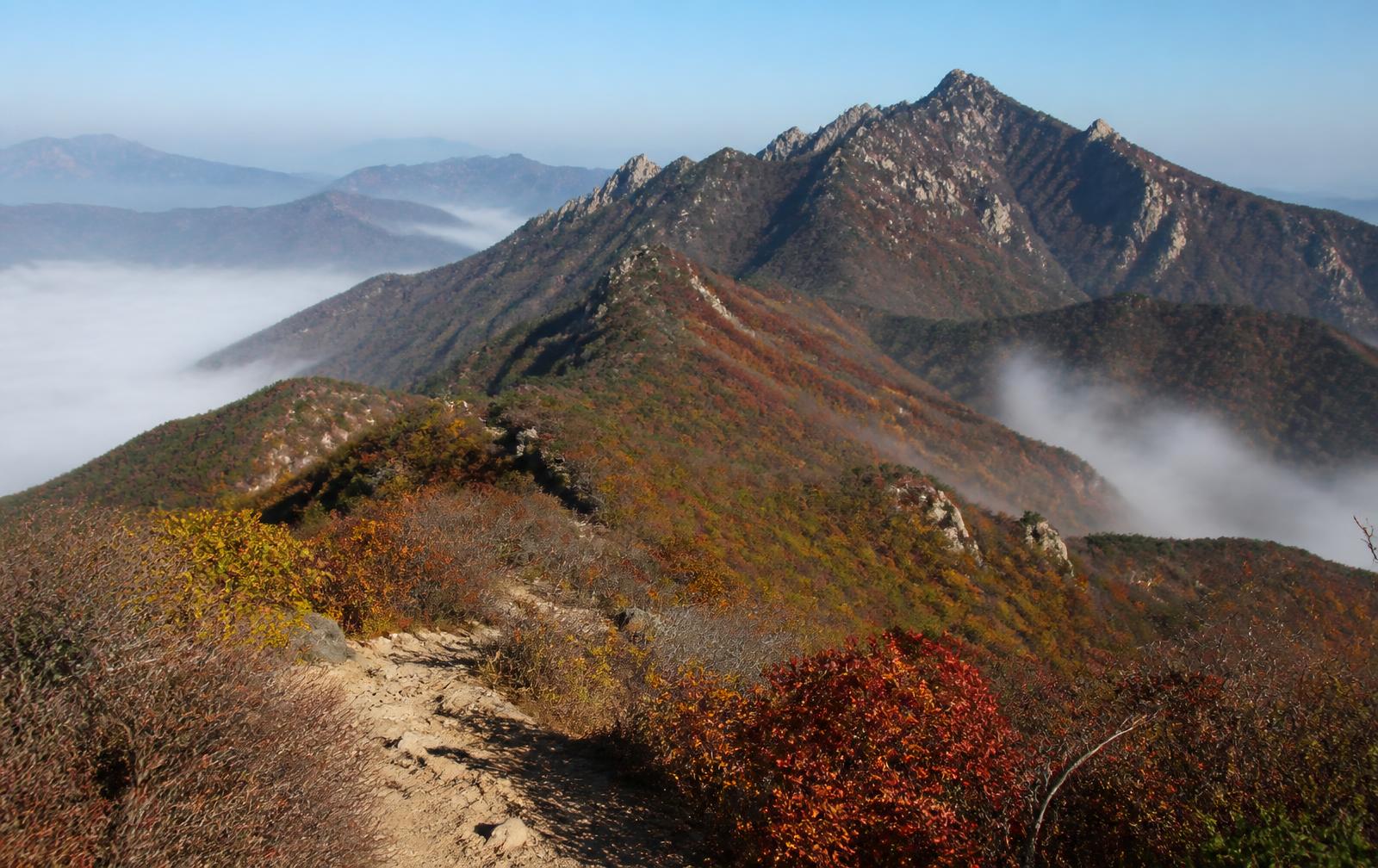
National parks, mountain ridges, forests and valleys. Early starts are essential — mist, clean air and directional light all belong to the first hours. Check park hours and seasonal trail closures before planning a summit photograph.
Coast and islands
Beaches, cliffs, harbours and island viewpoints. East coast for sunrise, west and south coasts for sunset. Tide state changes coastal foregrounds dramatically, so it is worth checking.
Street and markets
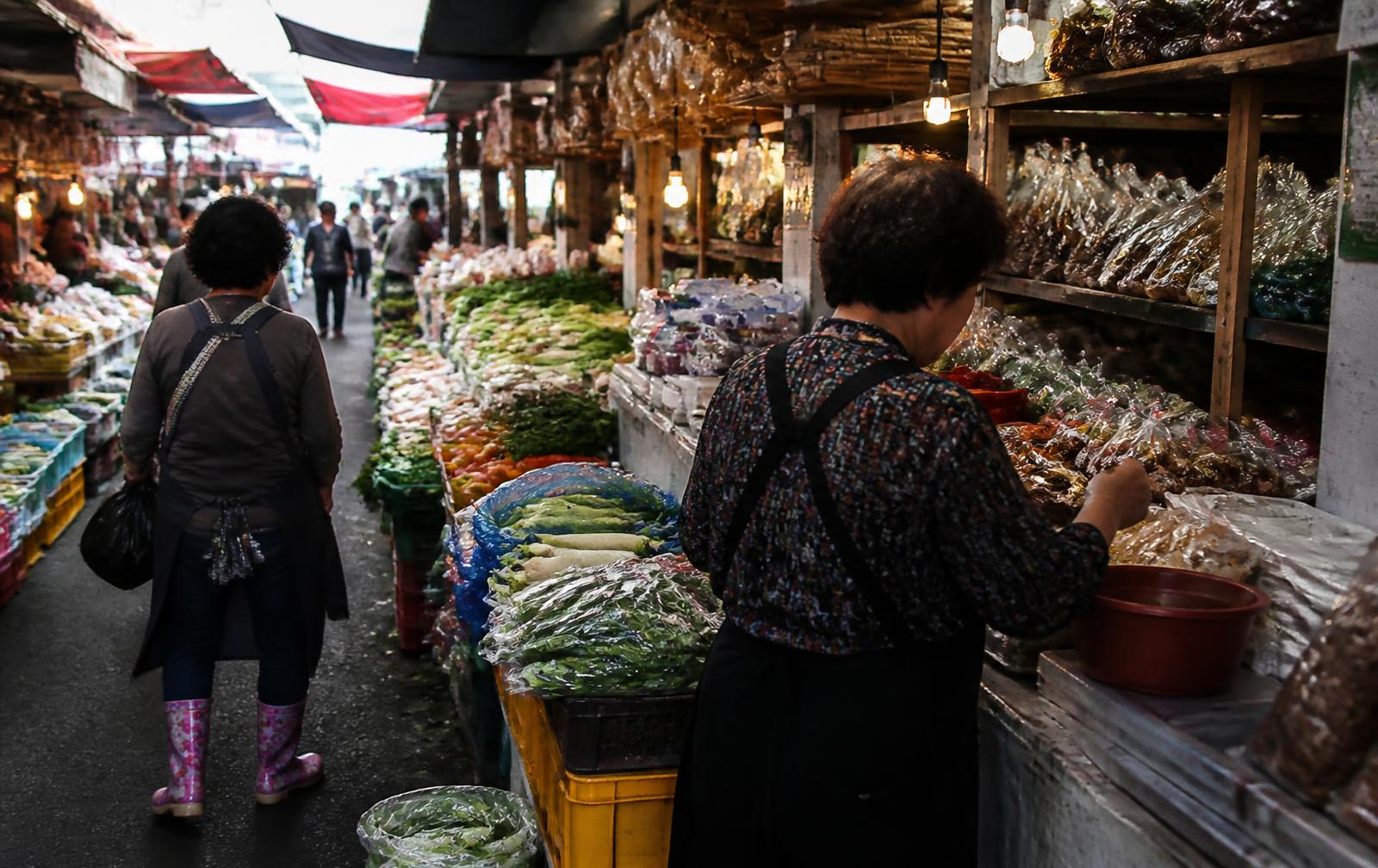
Traditional markets, alleys, food streets and neighbourhood life. These are working environments: stay out of the aisle, keep it brief, and ask before photographing a vendor or their face. A wide lens and existing light almost always beat a flash.
Night photography
Skylines, bridges, illuminated landmarks and rain-lit streets. Blue hour first, then full night. Bracing the camera against a railing or wall is usually enough where tripods are not allowed.
Seasonal photography
Korea has four clearly separated seasons, and each one changes the subject rather than just the light. Exact timing shifts every year and varies by region and altitude, so plan for a season, not for a date.
| Season | Photographic character | Practical notes |
| Spring | Blossom, fresh green, pale soft light | Blossom windows are short and vary yearly by region; popular spots are crowded |
| Summer | Deep green mountains, dramatic skies, monsoon rain, strong coastal colour | Humidity and haze; rain can be an asset for street and reflection work |
| Autumn | Foliage, clear air, long golden light — generally the strongest season overall | Colour moves from north and high ground southward and downward over weeks |
| Winter | Bare graphic landscapes, snow on mountains and temples, very clean air | Short days and cold; snow at low elevation is not guaranteed anywhere |
For weather patterns, seasonal nature highlights and when to visit, see the ASK KOREA Seasons & Timing guide.
Best time of day
| Window | What it gives you | Best for |
| Sunrise | Empty streets, mist, warm low light | East coast, mountains, heritage villages |
| Morning | Soft light, calm sites, most sites just opened | Palaces, hanok lanes, markets |
| Golden hour | Warm directional light, long shadows | Skylines, coastlines, architecture |
| Sunset | Colour in sky and water | West and south coasts, riverfronts, oreum |
| Blue hour | Sky detail with city lights on | Night skylines, bridges, illuminated landmarks |
| Night | Pure light-and-dark graphics | Neon streets, reflections, long exposures |
Opening hours are the limiting factor more often than light. Many palaces, museums, gardens and observation decks close before or shortly after sunset, and some parks restrict access before sunrise — confirm hours before building a plan around a specific window.
Photography etiquette
Phone photography tips
Common mistakes
FAQ
Where are the best photo stops in Seoul?
Group them: a palace and heritage area, a traditional neighbourhood, one elevated skyline viewpoint, the Han River, and one contemporary district. Two of those in a day is a realistic pace.
Where can I photograph traditional Korea?
Central Seoul palaces and hanok districts for accessibility; Gyeongju, Andong and Jeonju for larger, quieter traditional environments with fewer crowds in frame.
Where are the good night views?
Seoul's mountain viewpoints, observation decks and riverfront bridges; Busan's bridges and beachfront skyline; Yeosu's harbour. Start at blue hour rather than after dark.
When is the best season for photography?
Autumn is generally the strongest for clear air, light and colour, with spring close behind. Timing varies each year by region and altitude, so treat all seasonal dates as approximate.
Can I use a tripod?
It depends entirely on the location. Riverside parks and open coastal areas are usually fine; palaces, museums, observation decks and crowded areas often prohibit tripods. Check on site and follow staff instructions.
Can I fly a drone?
Not freely. Drone use in Korea is regulated, with extensive no-fly zones including much of Seoul and many heritage and national-park areas, and it generally requires advance permission. Confirm the rules for the specific area before travelling with a drone.
Is photography allowed inside palaces, temples and museums?
Rules vary by site and even by room. Outdoor courtyards are usually fine; interiors, treasures, active worship spaces and special exhibitions are frequently restricted, and flash and tripods more so. Follow posted signage at each location.
Useful resources
Pro Tips
- Plan one photography area per half-day and let the light decide the order, not the map.
- Check sunrise and sunset times on arrival — they shift by well over an hour across the Korean year.
- Save the bad-weather day for markets, alleys, cafés and night reflections rather than viewpoints.
- Where a viral location is crowded, walk two streets out; the quieter version usually photographs better.
Related Guides
Attraction Guide
Palaces, museums, districts and landmarks with practical visiting details.
Neighborhoods
Seoul, Busan, Gyeongju and Jeju areas by character and mood.
Korea Nature Guide
Mountains, national parks, coastlines and scenic landscapes.
Korea Heritage Guide
Palaces, temples, traditional villages and historic sites.
Seasons & Timing
Weather, seasons and seasonal nature highlights across Korea.
Korea Explorer
Explore destinations, regions and routes on the interactive map.
Ask AI About This Topic
Have a question about Korea Photo Stops?
Get instant, locally-checked answers from the ASK KOREA AI. Ask anything from specific edge cases to itinerary decisions.
ASK KOREA Transit