Permanent Residency (F-5) in Korea
A Practical Guide for Foreign Residents
Korea's F-5 Permanent Resident status is designed for foreign nationals who meet specific immigration requirements and wish to live in Korea on a permanent basis.
Unlike temporary visas, F-5 status provides much greater stability of residence. However, there is no single F-5 route for everyone. Eligibility depends on factors such as your current visa, length of residence in Korea, family relationship, professional qualifications, investment, income and other requirements.
Korean immigration law provides numerous F-5 categories, so applicants should first determine which permanent-residency category applies to them before preparing an application.
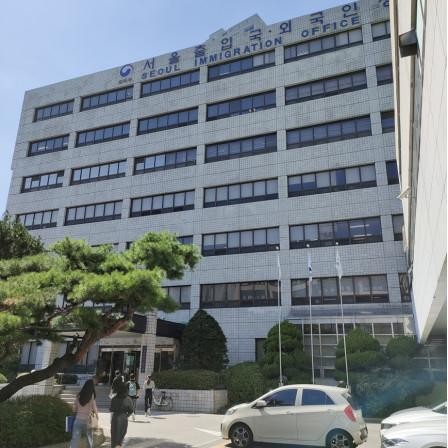
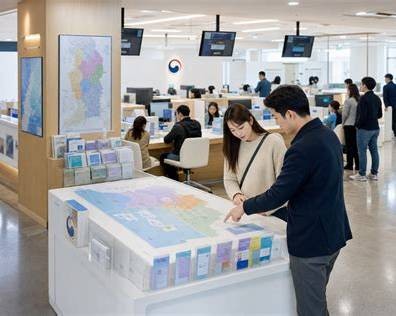
Major Routes to Permanent Residency
1. Long-Term Residence Route
One of the standard routes applies to adults who have lived in Korea for five years or more under specified eligible statuses.
The Immigration Act Enforcement Decree specifically includes certain holders of:
- D-7 → E-7 status
- F-2 Resident status
who have resided in Korea for the required period and satisfy the applicable permanent-residency requirements.
Important: Living in Korea for five years does not automatically give someone permanent residency. The applicant must qualify under the applicable F-5 category and meet its additional requirements.
2. Korean Spouse or Family Route
Korean immigration law also provides an F-5 route for certain:
- Spouses of Korean nationals
- Minor children of Korean nationals
- Spouses or minor children of F-5 permanent residents
For one statutory category, a spouse or minor child of a Korean citizen or F-5 holder must have resided in Korea for at least two years, together with the other applicable requirements.
The exact conditions depend on the applicant's circumstances, so marriage alone should never be presented as automatically resulting in permanent residency.
3. Overseas Korean Route
Certain foreign nationals of Korean heritage may progress from F-4 Overseas Korean status to F-5 permanent residence.
The Korea Immigration Service publishes a dedicated settlement guide explaining pathways from F-4 to F-5 and notes requirements involving residence, income and basic behavioral/integration qualifications depending on the route.
4. Professional & Skilled Routes
Permanent-residency categories also exist for certain foreigners with professional qualifications, academic backgrounds or other qualifications specified by immigration regulations. These routes should be checked individually because degree, employment, income, residence and qualification requirements differ by F-5 category.
5. Investment Route
Korea also operates permanent-residency pathways connected with qualifying investment. For example, under the Immigrant Investor Scheme for Public Business, qualifying foreign investors can initially receive F-2 Resident status and may change to F-5 Permanent Resident status after maintaining the qualifying investment for at least five years, subject to the program's requirements. This is a specialized immigration route and should not be confused with the ordinary long-term-residence route.
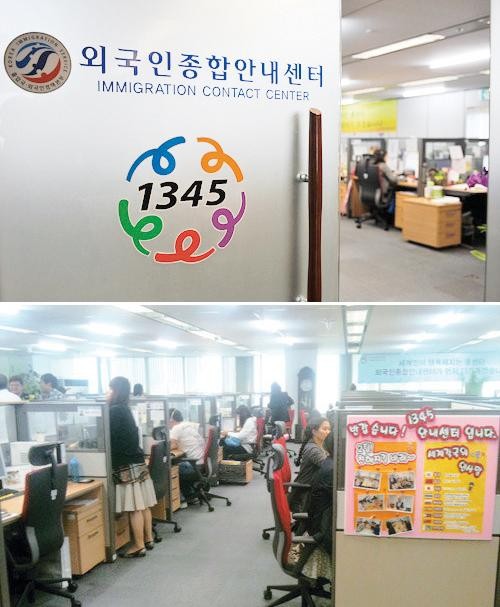
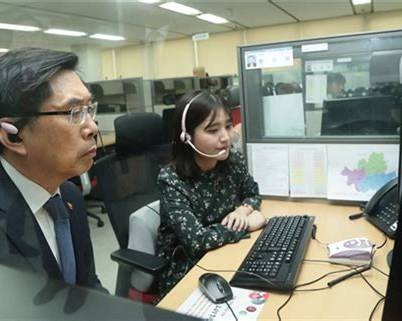
What Immigration Generally Checks
Depending on the particular F-5 category, immigration authorities may examine several areas.
Good Conduct
Certain permanent-residency routes require the applicant to satisfy good-conduct requirements.
Serious criminal history, immigration violations or other legal issues may therefore affect an application.
Ability to Maintain a Living
Certain categories require evidence that the applicant can maintain a stable livelihood in Korea.
The exact financial standard is not the same for every F-5 category, so applicants should not rely on one universal income figure found online. The applicable requirement should be checked for the applicant's specific F-5 category.
Basic Knowledge & Integration
Certain F-5 categories also require evidence of basic knowledge needed for life in Korean society.
The Korea Immigration & Integration Program (KIIP) can be relevant to this requirement in applicable categories. Some categories have different requirements or exemptions.
Documents You May Need
The exact document list varies by F-5 category. Common categories of evidence can include:
- Passport
- Residence Card
- Application form
- Proof of residence in Korea
- Employment or career documents
- Income or financial documents
- Family relationship documents, when applicable
- Documents proving Korean-language or social-integration requirements, when applicable
- Documents specific to the applicant's F-5 category
Do not prepare an F-5 application using a generic internet checklist alone. Requirements differ considerably between permanent-residency categories.
Confirm the current checklist with Hi Korea or the Immigration Contact Center before applying.
How to Apply
STEP 1 — Identify your F-5 category
Determine which permanent-residency route applies to your current status and circumstances.
STEP 2 — Check current requirements
Confirm residence, income, integration, family, employment or other requirements applicable to that category.
STEP 3 — Prepare supporting documents
Prepare the documents specifically required for your F-5 category.
STEP 4 — Check your immigration office
Confirm the competent immigration office and whether an appointment is required.
STEP 5 — Submit the application
Submit the application and supporting documents according to Korea Immigration Service procedures.
STEP 6 — Immigration review
Immigration authorities review eligibility and supporting evidence. Additional documents may be requested.
STEP 7 — Decision
If approved, the applicant's residence status is changed to Permanent Resident (F-5).
After Receiving F-5
F-5 provides significantly more stable residence in Korea, but it is important to understand that:
F-5 is permanent residency — it is NOT Korean citizenship.
An F-5 holder remains a foreign national unless Korean nationality is separately acquired through the nationality/naturalization process.
There are also rules concerning leaving and returning to Korea. Under the current Immigration Act Enforcement Rule, an F-5 holder seeking to return to Korea within two years after departure falls within the specified re-entry-permit exemption, subject to the legal exceptions.
That is exactly the kind of detail we should include because many foreigners may incorrectly assume that “permanent” means there are no immigration rules after receiving F-5.
Permanent Residency vs. Korean Citizenship
| F-5 Permanent Residency | Korean Citizenship | |
|---|---|---|
| Status | Foreign national with permanent residence | Korean national |
| Korean nationality | No | Yes |
| Naturalization required | No | Yes, to obtain citizenship through naturalization |
| Immigration status | F-5 | No foreign residence status required as a Korean citizen |
| Separate process | Immigration | Nationality / naturalization |
We will explain citizenship and naturalization separately in Guide 2 — Korean Citizenship & Naturalization.
Official Resources
- Korea Immigration Service
- www.immigration.go.kr
- Hi Korea — Immigration Services for Foreigners
- www.hikorea.go.kr
- Immigration Contact Center
- 1345 — within Korea, no area code required. The Korea Immigration Service continues to identify 1345 as its comprehensive information center for foreigners.
- Investor Program Contact
- For the public-business investor program, the Immigration Service also lists +82-2-1345 and +82-2-6908-1345~6 for international contact.
ASK KOREA NOTE
Permanent-residency requirements can change and differ substantially according to an applicant's visa and personal circumstances.
Always confirm current requirements with Korea Immigration Service or Hi Korea before applying.
Korean Citizenship & Naturalization
How Foreign Residents Can Become Korean Citizens
Foreign nationals can acquire Republic of Korea nationality through naturalization if they meet the requirements prescribed by Korea's Nationality Act.
Naturalization is different from permanent residency.
- F-5 = You remain a foreign national with permanent residence in Korea.
- Naturalization = You acquire Korean nationality and become a Korean citizen.
Korea broadly provides three naturalization routes:
- General Naturalization
- Simplified Naturalization
- Special Naturalization
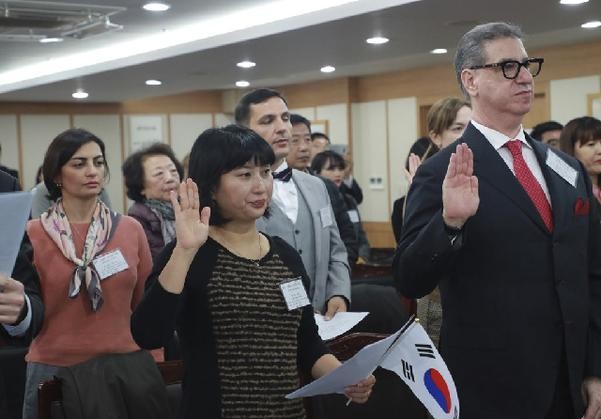
1. General Naturalization
This is the standard route for a foreign national who does not qualify for simplified or special naturalization.
Under Korea's Nationality Act, an applicant for general naturalization must satisfy requirements including:
- 5 or more consecutive years of domicile in Korea
- Permanent-residence eligibility/status in Korea
- Being an adult under Korean civil law
- Good conduct and compliance with Korean law
- Ability to support oneself, either through personal assets or abilities or through family with whom the applicant lives
- Basic knowledge required as a Korean citizen, including Korean-language ability and understanding of Korean customs
The Minister of Justice must also determine that granting naturalization would not harm national security, public order or public welfare.
Important for Foreign Residents
Since December 20, 2018, F-5 permanent-resident status is required to apply through the general naturalization route.
So for many ordinary foreign residents, the broad progression is:
Temporary/Long-Term Visa → F-5 Permanent Residency → General Naturalization → Korean Citizenship
But this should not be presented as the route for everyone because simplified and special naturalization have different requirements.
2. Simplified Naturalization
Some foreigners with particular connections to Korea can qualify under less restrictive residence requirements.
For example, the Nationality Act provides a simplified route for certain people who have maintained a domicile in Korea for three consecutive years or more, including qualifying cases involving a parent who was a Korean national or certain Korea-born family circumstances.
There are also separate simplified-naturalization provisions involving marriage to a Korean national.
Because marriage, family history and residence circumstances differ significantly between applicants, these cases should be checked individually with the Korea Immigration Service.
Important
Marriage to a Korean citizen does not automatically make a foreign spouse a Korean citizen.
The foreign spouse must still qualify and complete the nationality/naturalization procedure.
3. Special Naturalization
Special naturalization is available in specific circumstances.
The Nationality Act includes categories such as:
- A person whose father or mother is currently a Korean national
- A person who has made a special contribution to the Republic of Korea
- A person with outstanding ability in fields such as science, economics, culture or sports who is recognized as contributing to Korea's national interest.
This is not an ordinary immigration shortcut.
It is intended for applicants who satisfy the particular statutory criteria.
Korea revised its outstanding-talent special-naturalization criteria again in February 2026, including changes intended to attract highly qualified overseas Korean talent and expand recommendation channels for outstanding professionals.
Korean Language & Understanding of Korea
Naturalization is not based only on the number of years a person has lived in Korea.
For general naturalization, the Nationality Act expressly requires basic qualifications including:
- Korean-language ability
- understanding of Korean customs and society.
This is why KIIP — Korea Immigration & Integration Program becomes important for many foreign residents.
We should explain KIIP separately in this guide rather than telling users that everyone has exactly the same test or requirement.
Naturalization Application — Basic Process
STEP 1 — Determine Your Naturalization Route
First determine whether you fall under:
- General
- Simplified
- Special Naturalization
This is important because the requirements are different.
STEP 2 — Check Eligibility
Confirm your:
- Residence history
- Current immigration status
- Family relationship, if applicable
- Financial/livelihood requirements
- Korean-language and basic-knowledge requirements
- Other requirements applicable to your route.
STEP 3 — Prepare Required Documents
| F-5 Permanent Resident | Korean Citizen | |
|---|---|---|
| Korean nationality | No | Yes |
| Status in Korea | Foreign permanent resident | Korean national |
| Residence visa required | F-5 | No |
Documents vary according to the naturalization category.
Applicants may need identity, residence, family relationship, livelihood and other supporting documentation.
Foreign-issued documents may also require additional authentication or translation depending on the document and procedure.
STEP 4 — Submit the Naturalization Application
Applications are handled through the Korean immigration/nationality system.
Before visiting, confirm the current procedure and required documents through Hi Korea or 1345.
STEP 5 — Naturalization Review
The Ministry of Justice determines whether the applicant satisfies the applicable requirements under the Nationality Act.
STEP 6 — Approval & Citizenship Procedure
Approved applicants complete the required nationality procedure.
Korea introduced the Pledge of Allegiance and Certificate of Naturalization ceremony in 2018. The Korea Immigration Service explains that naturalized citizens take the national pledge and receive a naturalization certificate as part of the citizenship process.
What About Dual Citizenship?
This part needs particular care.
Do not tell ASK KOREA users that everyone can keep both nationalities.
Korean nationality law has specific rules concerning loss/renunciation of foreign nationality and exceptions.
For example, Korea Immigration Service specifically states that qualifying outstanding talents who acquire nationality through special naturalization can retain their original nationality subject to the applicable pledge and requirements.
Therefore:
- Dual citizenship eligibility depends on the individual case and legal category.
- Applicants should verify their own situation with the Korea Immigration Service before making decisions regarding their existing nationality.
Permanent Residency vs Citizenship
| F-5 Permanent Resident | Korean Citizen | |
|---|---|---|
| Korean nationality | No | Yes |
| Status in Korea | Foreign permanent resident | Korean national |
| Residence visa | F-5 | No |
| Korean passport | No | Eligible as Korean national |
| Naturalization required | No | Yes, if acquiring nationality by naturalization |
| Nationality law applies | Foreign nationality retained | Korean nationality acquired |
Official Resources
- Korea Immigration Service
- www.immigration.go.kr
Information on nationality, immigration and naturalization. - Hi Korea
- www.hikorea.go.kr
Immigration and residence services for foreign nationals. - Immigration Contact Center
- 1345 — within Korea. Use 1345 to confirm the current naturalization category, application requirements and competent immigration office.
- Ministry of Justice — Nationality Division
- 02-2110-4121 is listed by the Nationality Act information page as the responsible Ministry of Justice contact.
ASK KOREA NOTE
Naturalization requirements depend on the applicant's residence history, family circumstances, immigration status and naturalization category.
Always verify the latest requirements with the Korea Immigration Service before applying.
From Visa to Permanent Residency
Common Pathways to Long-Term Settlement in Korea
For many foreigners, permanent residency in Korea is the result of a multi-stage immigration pathway rather than a direct change from a student or temporary work visa.
A common pathway may look like:
- Study → Job Seeking → Employment → Residence → Permanent Residence
- D-2 → D-10 → E-series → F-2 → F-5
However, this is an example pathway, not a rule for every foreign resident. Korea has multiple F-2 and F-5 categories, and the correct route depends on education, employment, income, Korean-language ability, length of residence and other qualifications. The Korea Immigration Service itself presents pathways such as “Job Seeker → Professional → Resident → Permanent Resident.”
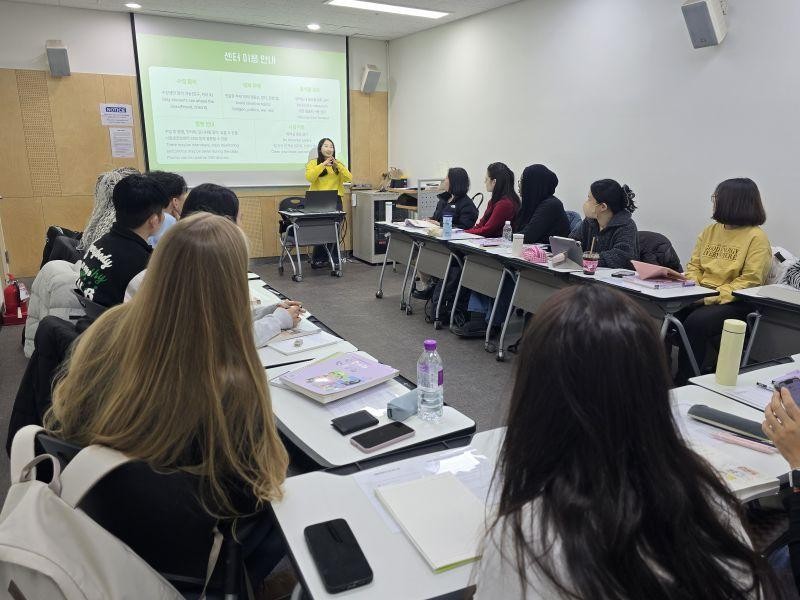
Route 1 — International Student
D-2 Student
D-2 is used by international students enrolled in eligible higher-education programs in Korea. Graduating from a Korean university does not automatically provide permanent residency. Instead, eligible graduates who want to remain in Korea may move to another appropriate status.
D-2 → D-10 Job Seeker
One important option is D-10 General Job-Seeking status.
The Korea Immigration Service's foreign-resident guide specifically describes international students changing from D-2/D-4 to D-10 after graduation when the applicable requirements are satisfied.
Korean-language ability can be particularly useful. The official guide states that qualifying recent graduates from Korean universities can be exempted from the D-10 points requirement when they meet specified Korean-language conditions, such as TOPIK Level 4 or higher or specified KIIP achievements.
D-10 → Professional Employment
After finding qualifying employment, the foreign resident may change to an appropriate professional employment status, depending on the job and qualifications.
This can include statuses from E-1 Professor through E-7 Specially Designated Activities, depending on the occupation.
Route 2 — Professional Worker
For many foreign professionals, employment in Korea can form part of a longer settlement pathway.
A simplified example is:
Professional Employment → F-2 Residence → F-5 Permanent Residence
But the requirements differ according to the person's employment status and the particular F-2/F-5 category.
Applicants may need to demonstrate factors such as:
- Period of legal residence
- Employment and professional qualifications
- Income or financial stability
- Korean-language/social-integration qualifications
- Good conduct
Not every E-series visa automatically progresses to F-2 or F-5.
Route 3 — F-2 Resident → F-5 Permanent Resident
F-2 Residence is especially important because several Korean immigration pathways use F-2 as an intermediate status before F-5.
The official foreign-resident guide explicitly shows pathways ending:
Professional → Resident → Permanent Resident
and, for certain international entrepreneurs:
D-2/D-4 → D-8/D-9 → F-2 → F-5.
Again, an F-2 visa does not automatically become F-5 after a fixed period in every case.
The specific F-5 category determines the requirements.
Route 4 — Start-up & Business
International students and other eligible foreigners may also have entrepreneurship-related pathways.
The Immigration Service's settlement guide provides a route for qualifying international students progressing through:
- Student / Trainee
- Start-up / International Trade
- Resident
- Permanent Resident
or:
D-2 / D-4 → D-8 / D-9 → F-2 → F-5.
This route has its own business, investment and immigration requirements and should not be confused with ordinary employment immigration.
Route 5 — Special Talent & Science/Technology
Korea also has special settlement pathways for highly qualified foreign talent.
As of 2026, the Ministry of Justice operates Top-Tier and K-STAR pathways for specified high-level talent.
For example, qualifying Top-Tier professionals can receive F-2 residence status and become eligible to apply for F-5 after three years.
The expanded K-STAR track allows qualifying foreign talent recommended by designated universities to receive F-2 after graduation without first obtaining employment and to apply for F-5 after three years. These are special programs with strict eligibility requirements, not general routes for all international students.
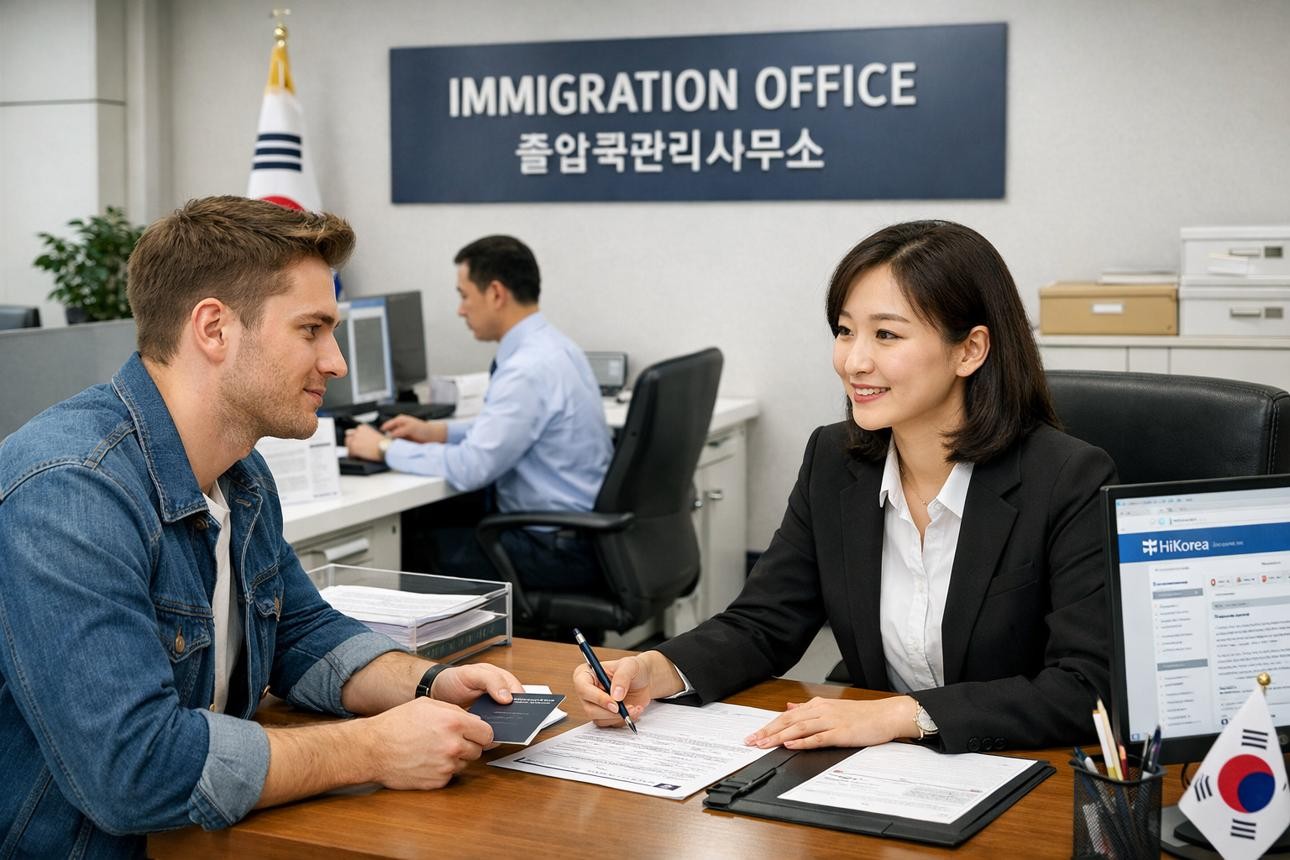
Do You Need F-2 Before F-5?
Not always.
This is an important point.
Korea has numerous F-5 categories, and some applicants can qualify under routes that do not follow the simple:
E-7 → F-2 → F-5
sequence.
Therefore, foreigners should first identify the specific F-5 category for which they may qualify rather than changing visas simply because they believe F-2 is always mandatory.
A Simple Way to Think About It
| Your Situation | Possible General Direction |
|---|---|
| International student | D-2 → D-10 → qualifying employment |
| Graduate seeking work | D-10 → qualifying employment |
| Foreign professional | E-series → eligible residence/permanent-residence route |
| Eligible resident | F-2 → qualifying F-5 category |
| Entrepreneur | D-8/D-9 → possible F-2 → F-5 route |
| Certain top science/technology talent | Special F-2 → possible F-5 route |
| Korean spouse/family | Separate family-based route |
These are pathway examples, not guarantees of eligibility.
Before Planning Your Route
Do not choose a visa simply because someone online followed that route.
Before changing status, check:
- What visa do I currently hold?
- How long have I legally lived in Korea?
- Does my education qualify?
- Does my employment qualify?
- Do I meet the applicable income requirement?
- Do I need TOPIK or KIIP?
- Which F-5 category am I ultimately targeting?
This last question is particularly important.
Instead of asking only:
“How do I get F-5?”
a foreign resident should ask:
“Which F-5 category can I qualify for, and what status should I maintain before applying?”
Official Resources
- Korea Immigration Service
- www.immigration.go.kr
- Hi Korea
- www.hikorea.go.kr
- Immigration Contact Center
- 1345 — within Korea. For someone unsure about their pathway, 1345 is particularly useful before changing visa status.
ASK KOREA NOTE
Visa and permanent-residency requirements depend on individual circumstances and can change.
A visa pathway shown on this page does not guarantee eligibility for F-5. Always verify your specific route with Korea Immigration Service or Hi Korea before applying.
Marriage, Family & KIIP
Residency, Permanent Residence and Integration in Korea

Foreign nationals who are married to Korean citizens or have qualifying family relationships may have different residence and permanent-residency pathways from ordinary workers or international students.
The Korea Immigration & Integration Program (KIIP) is also important for many foreign residents preparing for long-term settlement, permanent residence or naturalization.
Quick Summary
Korean Spouse: F-6 marriage-migrant status may apply
Permanent Residence: Eligible spouses may later qualify for an F-5 route if the applicable requirements are met
Citizenship: Marriage does not automatically grant Korean citizenship
KIIP: Can be relevant to Korean-language and basic-knowledge requirements for certain residence, permanent-residence and naturalization procedures
Marriage to a Korean Citizen
A foreign national legally married to a Korean citizen may qualify for F-6 Marriage Migrant status, subject to immigration requirements.
Marriage itself does not automatically provide:
- F-5 Permanent Residency
- Korean Citizenship
These require separate applications and their own eligibility requirements.
For naturalization, Korea's Nationality Act provides a simplified route for qualifying spouses of Korean nationals. One statutory route applies where the applicant has maintained a domicile in Korea for at least two consecutive years while married to the Korean spouse. Another applies after three years have passed since marriage with at least one consecutive year of domicile in Korea while married, subject to the other requirements.
Children & Other Family Situations
Different immigration and nationality rules may apply when the applicant:
- Has a Korean-national child
- Is a minor child of a Korean national
- Is the spouse or minor child of an F-5 permanent resident
- Experiences divorce or the death/disappearance of a Korean spouse
Because these cases depend heavily on the individual family situation, ASK KOREA should direct users to 1345 or the competent immigration office rather than present one rule as applying to everyone.
KIIP — Korea Immigration & Integration Program
KIIP (사회통합프로그램) is operated for immigrants who want to acquire Korean-language skills and an understanding of Korean society needed for settlement.
The program includes:
- Korean Language and Culture
- Understanding Korean Society
Completion or specified KIIP results can be relevant to certain immigration and naturalization requirements or evaluations. The exact benefit depends on the immigration procedure involved.
Applications and KIIP information are handled through Socinet.
Official Contact
- Korea Immigration Service
- www.immigration.go.kr
- Hi Korea
- www.hikorea.go.kr
- KIIP / Socinet
- www.socinet.go.kr
- Immigration Contact Center
- 1345
Important
Marriage, family-based residence, F-5 and naturalization have different requirements. Always confirm the applicant's specific circumstances with Korea Immigration Service before applying.
Application & After Approval Guide
Documents, Application and What to Do After F-5 or Korean Citizenship
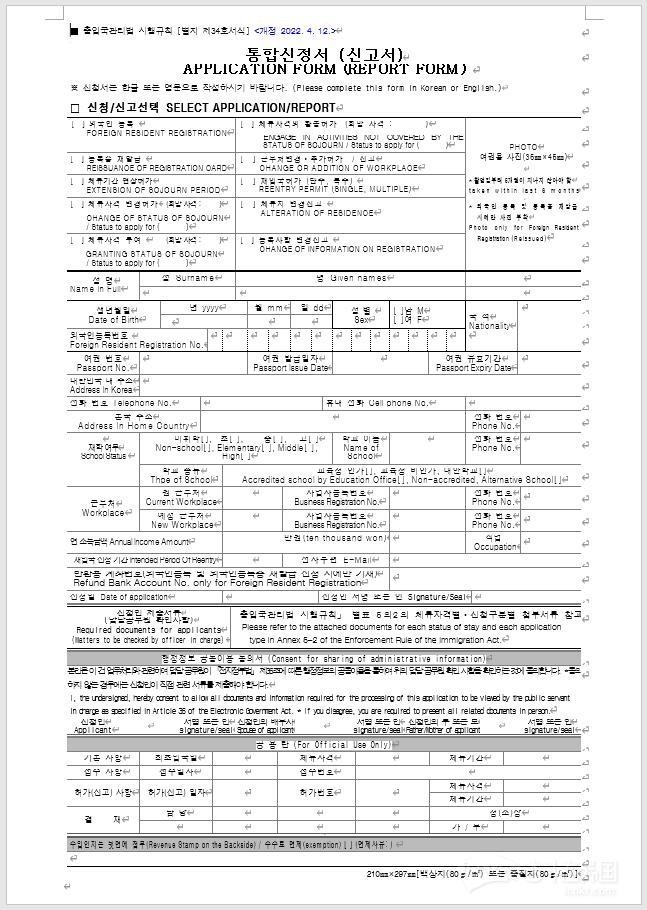
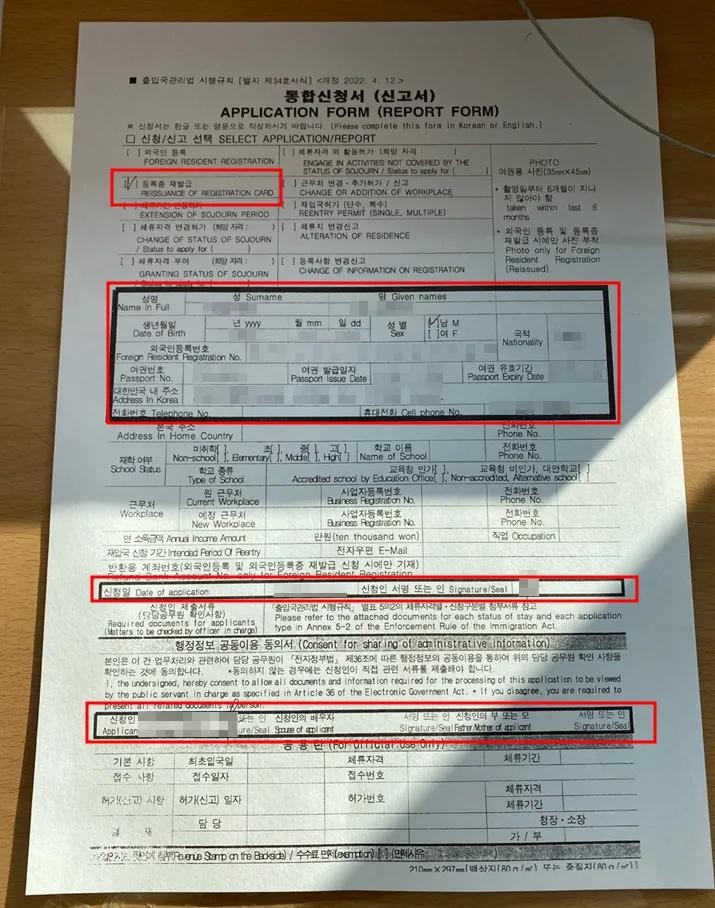
This final guide brings together the practical steps foreigners should know when preparing an F-5 permanent-residence or naturalization application, and what happens after approval.
The exact requirements depend on the applicant's immigration or naturalization category, so there is no single document checklist that applies to everyone.
Quick Summary
F-5 Application: Immigration procedure
Naturalization: Nationality procedure
Documents: Depend on the applicant's specific category
Where to Check: Hi Korea / Korea Immigration Service
Foreign-language Documents: Translation or authentication requirements may apply
Help Line: 1345
Documents You May Need
Depending on the application, commonly required categories of documents can include:
- Passport
- Residence Card
- Application form
- Proof of residence
- Employment or career documents
- Income and financial documents
- Family or marriage documents, when applicable
- Korean-language or KIIP-related documents, when applicable
- Documents proving the requirements of the specific F-5 or naturalization category
Foreign-issued documents may require translation and/or authentication depending on the document and procedure.
Do not prepare an application using a generic online checklist alone. Confirm the current checklist for your exact category before submitting.
Before You Apply
1 — Identify your exact category
Do not apply simply for “F-5” or “citizenship” without first determining the applicable route.
2 — Check the latest requirements
Requirements can change. Check Hi Korea or contact 1345.
3 — Prepare supporting documents
Make sure names, dates and personal information are consistent across documents.
4 — Confirm where and how to apply
Check the competent immigration office and whether an appointment or other procedure is required.
5 — Keep copies
Keep copies of the application and important supporting documents.
After Receiving F-5
F-5 gives the holder permanent-resident status, but the person remains a foreign national.
After approval, keep your residence information current and follow immigration requirements concerning matters such as address changes and international travel.
Remember
F-5 ≠ Korean Citizenship
Permanent residency does not by itself give you Korean nationality or a Korean passport.
After Naturalization
Naturalization is different because the applicant acquires Korean nationality after completing the legally required procedure.
After nationality acquisition, additional administrative steps can be necessary, including matters connected with:
- Nationality records
- Resident registration
- Identification documents
- Korean passport application
- Existing foreign nationality, where applicable
Rules concerning retention or renunciation of another nationality depend on the person's legal circumstances. Do not assume dual nationality is automatically permitted.
Five Mistakes to Avoid
- “I lived in Korea for five years, so F-5 is automatic.” → No. Residence period alone does not guarantee F-5.
- “I married a Korean, so I automatically get citizenship.” → No. A separate naturalization process is required.
- “F-5 means I am a Korean citizen.” → No. An F-5 holder remains a foreign national.
- “Everyone needs exactly the same F-5 documents.” → No. Requirements differ by category.
- “Everyone can keep dual nationality after naturalization.” → No. Nationality rules depend on the applicant's circumstances and applicable legal category.
Official Contact
- Korea Immigration Service
- www.immigration.go.kr
- Hi Korea
- www.hikorea.go.kr
- KIIP / Socinet
- www.socinet.go.kr
- Immigration Contact Center
- 1345 — within Korea. From overseas: +82-2-1345
For individual cases, contact 1345 before submitting an application because the required documents and procedures depend on the applicant's status.
ASK KOREA NOTE
Immigration and nationality requirements can change. ASK KOREA provides general guidance; applicants should verify current requirements with the Korea Immigration Service before making an application.