Jeju Region
Jeju's Hallasan National Park preserves Korea's highest mountain, its volcanic crater landscapes and rare alpine ecosystems.
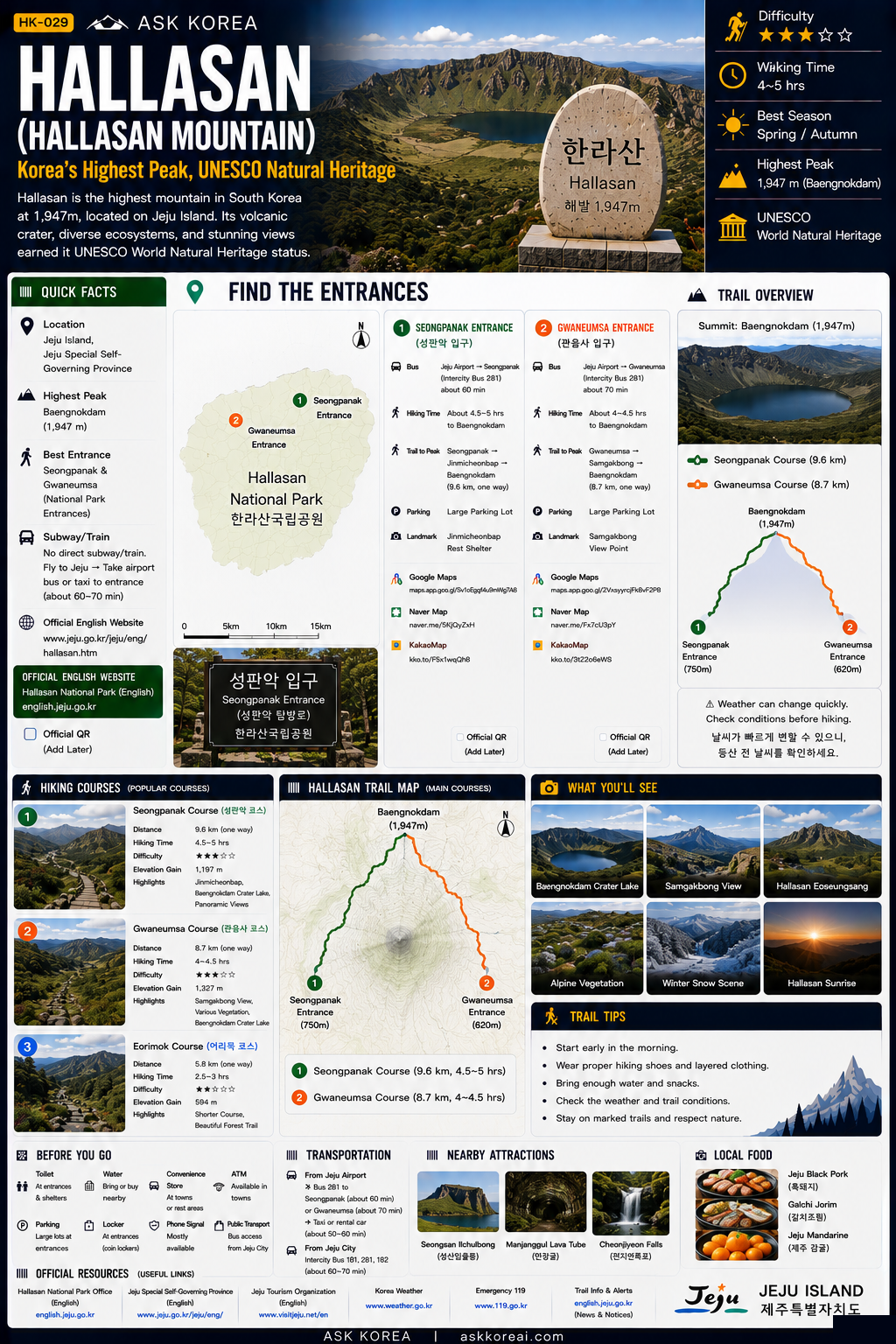
Quick Summary
Hallasan National Park represents the pinnacle of Korea's volcanic landscape. Combining UNESCO-recognized natural heritage, spectacular mountain scenery, and exceptional hiking opportunities, it is one of the country's most rewarding destinations for outdoor exploration.
Key takeaways
- South Korea's highest mountain
- UNESCO World Natural Heritage
- Volcanic landscapes
- Crater lake
- Alpine vegetation
- Four-season scenery
Official resources
- Korea National Park Service — Official Website — Official authority for all Korean national parks, trails and closures.
- Korea National Park Service — Official Reservations for Foreign Visitors — English reservations for shelters, campsites and restricted trails.
- Korea Meteorological Administration — Official Weather — Official forecasts, typhoon and severe-weather warnings.
The Complete Guide
Jeju Region is home to Hallasan National Park, one of Korea's most extraordinary natural treasures. Dominated by Hallasan, the country's highest mountain, the park preserves unique volcanic landscapes, alpine ecosystems, crater lakes, and rare plant species found nowhere else in Korea.
National Parks in the Jeju Region
Hallasan National Park
Hallasan National Park surrounds Hallasan, a dormant volcano rising 1,947 meters above sea level. Designated as part of the UNESCO World Natural Heritage Site, the park offers spectacular hiking trails, volcanic rock formations, alpine forests, seasonal wildflowers, and breathtaking panoramic views across Jeju Island.
Visitors can choose from several hiking routes leading toward the summit, while shorter nature trails allow visitors of all fitness levels to enjoy the mountain's unique environment.
Highlights
Quick Summary
Hallasan National Park represents the pinnacle of Korea's volcanic landscape. Combining UNESCO-recognized natural heritage, spectacular mountain scenery, and exceptional hiking opportunities, it is one of the country's most rewarding destinations for outdoor exploration.
Official Resources
Related Guides
What Are Korea's National Parks?
Korea's 22 national parks — what they protect, when to visit and what to do.
Seoul Metropolitan Region
Bukhansan National Park — granite peaks, fortress walls and temples minutes from Seoul.
Gangwon Region
Seoraksan, Odaesan, Chiaksan and Taebaeksan — Korea's premier mountain parks.
Ask AI About This Topic
Have a question about Jeju Region?
Get instant, locally-checked answers from the ASK KOREA AI. Ask anything from specific edge cases to itinerary decisions.
"How should I prepare for hiking Hallasan on Jeju Island?"
ASK KOREA Transit