Gyeongsang Region
Gyeongsang holds Korea's most iconic mountain landscapes — towering peaks, ancient forests, historic temples and Silla-era heritage.
Quick Summary
The Gyeongsang Region combines magnificent mountain scenery with Korea's rich cultural heritage. Jirisan, Gayasan, Juwangsan, and Gyeongju National Park provide unforgettable experiences for hikers, history enthusiasts, and nature lovers alike.
Key takeaways
- Korea's largest mountain national park
- UNESCO World Heritage treasures
- Ancient Buddhist temples
- Dramatic valleys and waterfalls
- Outstanding hiking routes
- Rich biodiversity
Official resources
- Korea National Park Service — Official Website — Official authority for all Korean national parks, trails and closures.
- Korea National Park Service — Official Reservations for Foreign Visitors — English reservations for shelters, campsites and restricted trails.
- Korea Meteorological Administration — Official Weather — Official forecasts, typhoon and severe-weather warnings.
The Complete Guide
The Gyeongsang Region is home to some of Korea's most iconic mountain landscapes, combining towering peaks, ancient forests, historic temples, and remarkable biodiversity. These national parks are among the country's most popular destinations for hiking, cultural exploration, and nature photography.
National Parks in the Gyeongsang Region
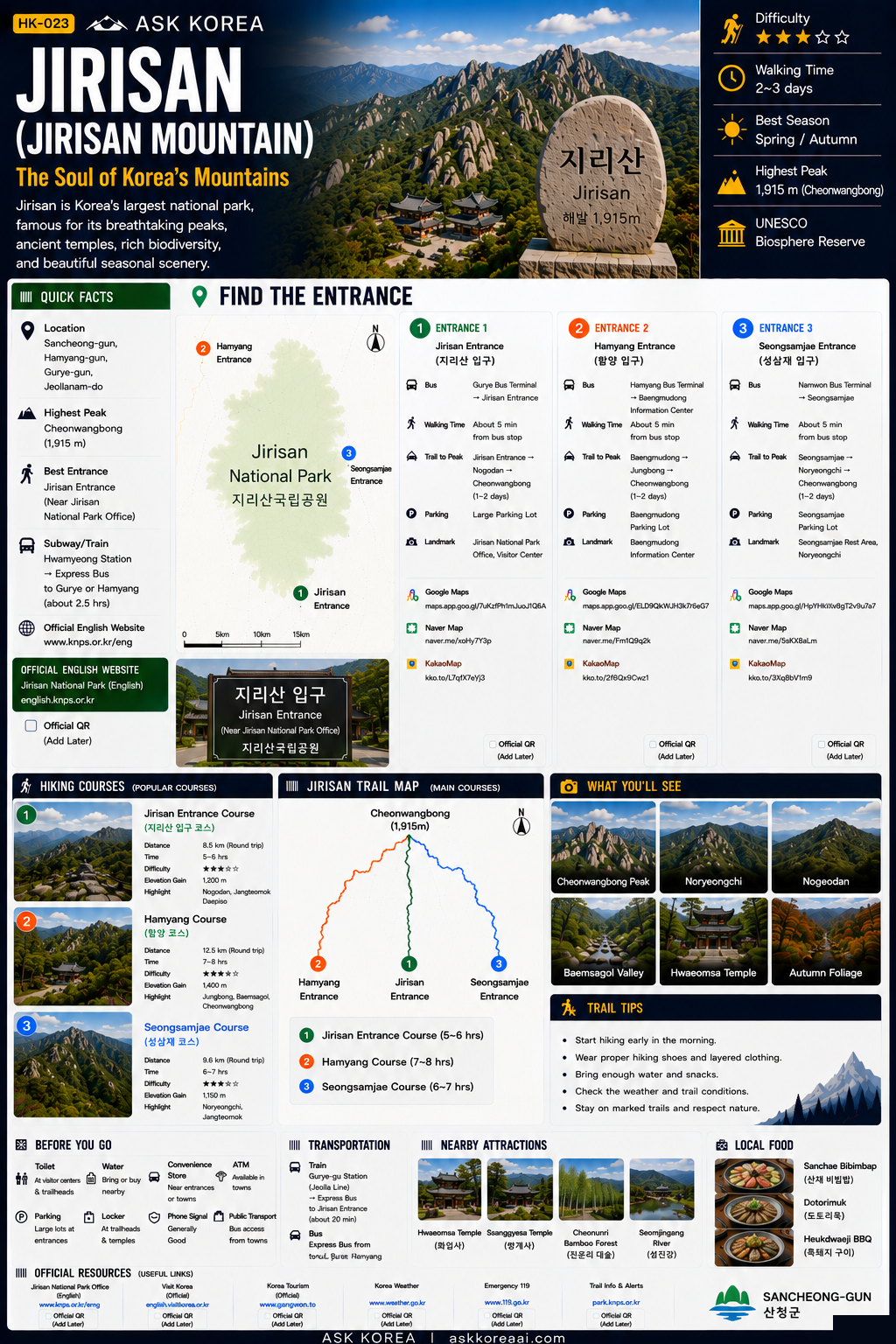
Jirisan National Park
Jirisan National Park is Korea's first and largest mountain national park. It is renowned for its extensive mountain range, diverse wildlife, ancient temples, and some of the country's most challenging hiking routes. Cheonwangbong Peak, the park's highest summit, is a favorite destination for experienced hikers seeking spectacular sunrise views.
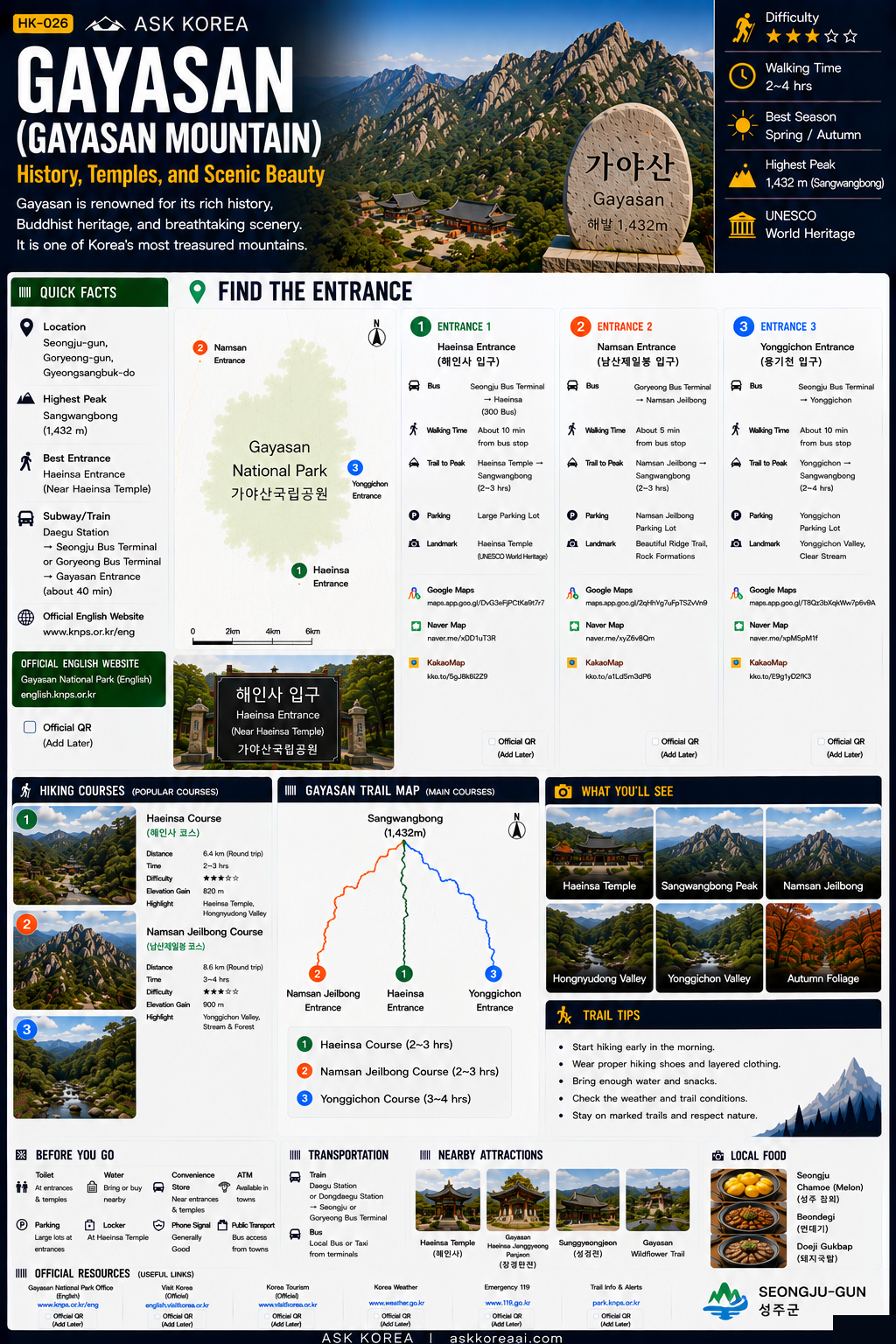
Gayasan National Park
Gayasan National Park is famous for its beautiful mountain scenery and Haeinsa Temple, home to the UNESCO-listed Tripitaka Koreana. Visitors can enjoy peaceful forest trails, scenic valleys, and one of Korea's most significant cultural heritage sites.
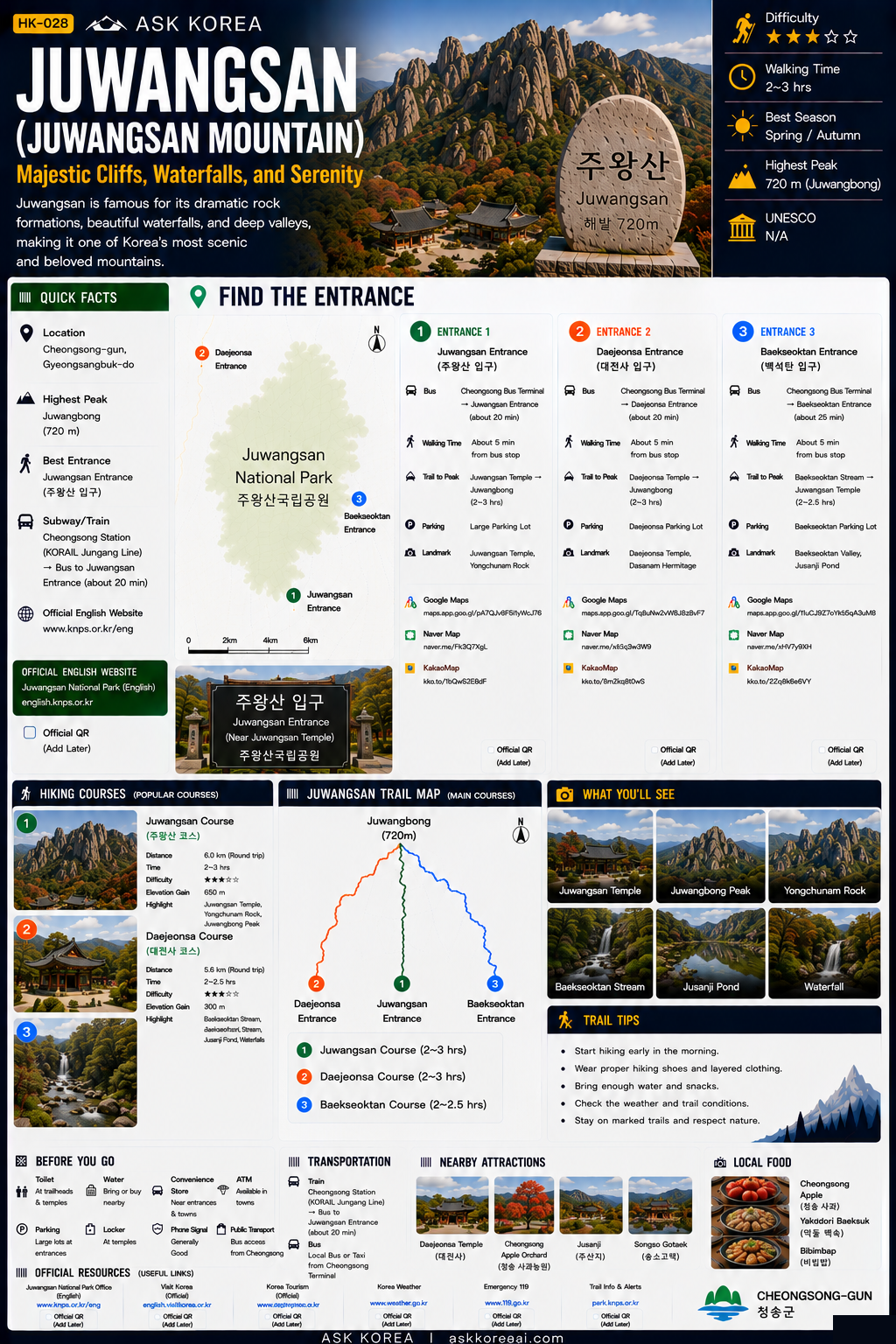
Juwangsan National Park
Juwangsan National Park is celebrated for its dramatic rock formations, waterfalls, deep valleys, and colorful autumn landscapes. Although smaller than many other national parks, it offers some of Korea's most picturesque hiking trails.
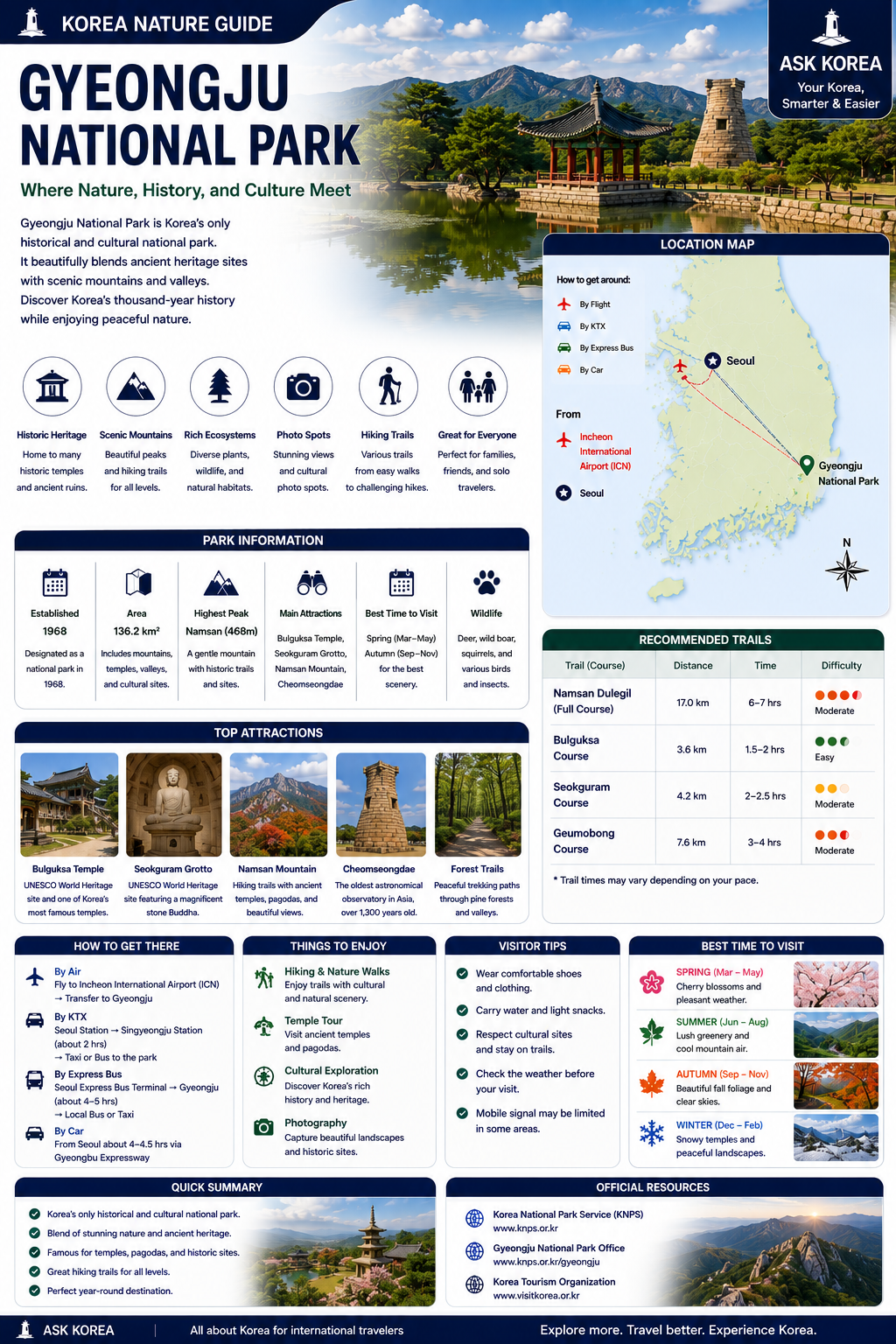
Gyeongju National Park
Gyeongju National Park is unique because it combines natural landscapes with Korea's most important historical and archaeological sites. Visitors can explore mountains, forests, royal tombs, ancient temples, and cultural landmarks dating back to the Silla Kingdom.
Highlights
Quick Summary
The Gyeongsang Region combines magnificent mountain scenery with Korea's rich cultural heritage. Jirisan, Gayasan, Juwangsan, and Gyeongju National Park provide unforgettable experiences for hikers, history enthusiasts, and nature lovers alike.
Official Resources
Related Guides
What Are Korea's National Parks?
Korea's 22 national parks — what they protect, when to visit and what to do.
Seoul Metropolitan Region
Bukhansan National Park — granite peaks, fortress walls and temples minutes from Seoul.
Gangwon Region
Seoraksan, Odaesan, Chiaksan and Taebaeksan — Korea's premier mountain parks.
Ask AI About This Topic
Have a question about Gyeongsang Region?
Get instant, locally-checked answers from the ASK KOREA AI. Ask anything from specific edge cases to itinerary decisions.
"Which Gyeongsang national park fits my hiking level, and how do I get there?"
ASK KOREA Transit