What Makes Korea's Mountains Special?
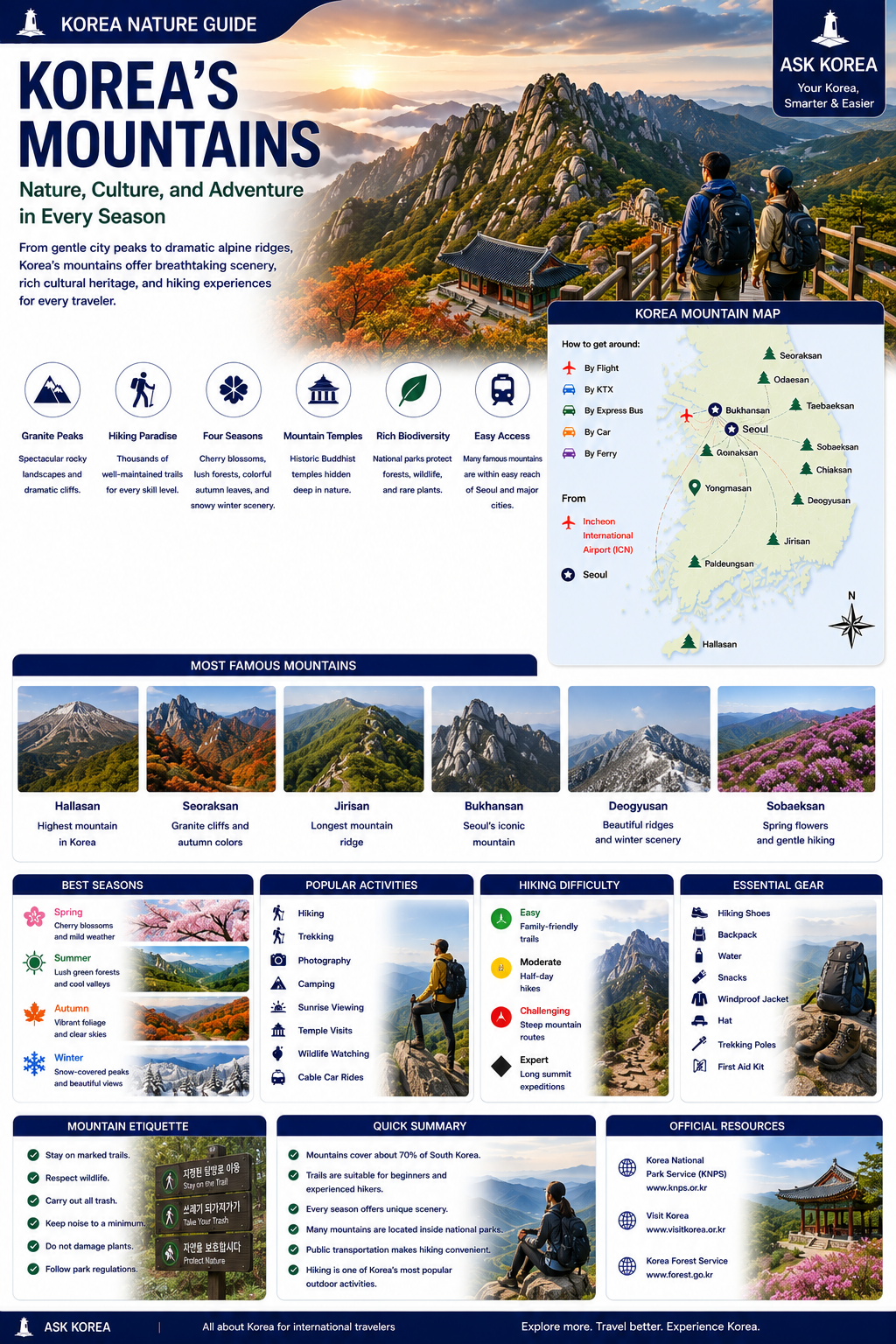
From gentle city peaks to dramatic alpine ridges, Korea's mountains offer breathtaking scenery, rich cultural heritage, and hiking experiences for every traveler.
Quick Summary
South Korea's mountains offer an exceptional combination of natural beauty, cultural heritage, and outdoor recreation. With excellent hiking trails, stunning seasonal scenery, historic temples, and convenient accessibility, they are among the country's greatest natural attractions.
Key takeaways
- Mountains cover nearly 70% of South Korea.
- Trails are suitable for beginners and experienced hikers.
- Every season offers unique scenery.
- Many mountains are located inside national parks.
- Public transportation makes hiking convenient.
The Complete Guide
South Korea is one of the world's most mountainous countries, with nearly 70 percent of its land covered by mountains. Although most peaks are moderate in elevation, they offer remarkable natural beauty, well-maintained hiking trails, rich biodiversity, and breathtaking panoramic views.
Korean mountains are deeply connected to the country's history, culture, and daily life. Many are home to centuries-old Buddhist temples, traditional hermitages, historic fortresses, and protected national parks. Throughout the year, visitors can experience vibrant spring flowers, lush summer forests, brilliant autumn foliage, and peaceful snow-covered landscapes during winter.
Unlike many mountain destinations around the world, Korea's mountains are easily accessible by public transportation and feature an extensive network of clearly marked hiking trails suitable for beginners, families, and experienced hikers alike.
Whether you are looking for a short morning hike near the city or a challenging summit adventure, Korea's mountains provide unforgettable outdoor experiences for every traveler.
Highlights
Best Time to Visit
Spring (March–May)
Summer (June–August)
Autumn (September–November)
Winter (December–February)
Popular Activities
Ask AI About This Topic
Have a question about What Makes Korea's Mountains Special??
Get instant, locally-checked answers from the ASK KOREA AI. Ask anything from specific edge cases to itinerary decisions.
"Which Korean mountain should I hike first, and what season is best?"
ASK KOREA Transit