Jeju Region
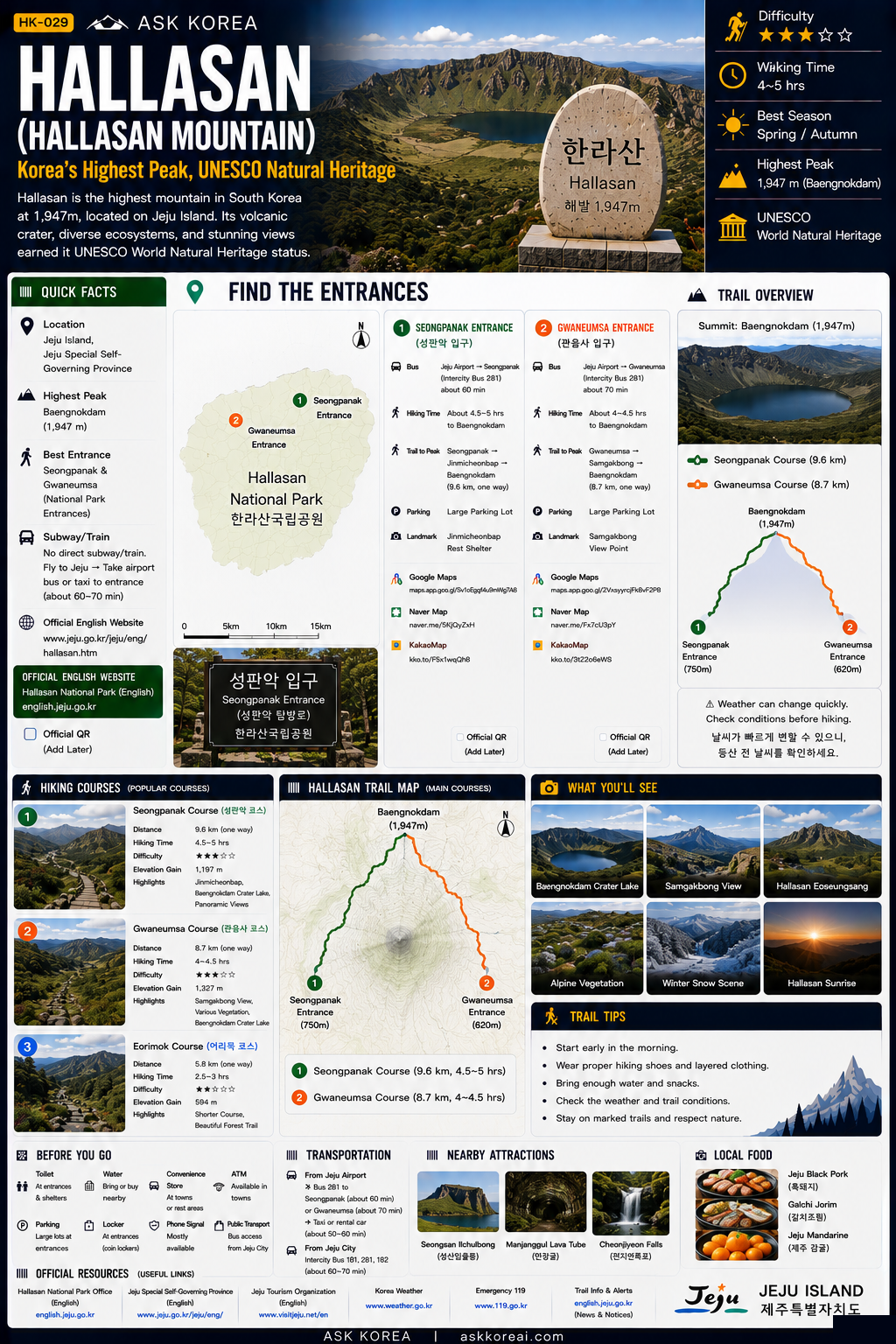
Jeju's Hallasan is Korea's highest mountain, offering volcanic craters, unique flora and unforgettable summit views.
Quick Summary
Jeju Region is dominated by Hallasan, South Korea's highest mountain and one of the country's most important natural landmarks. Rising from the center of Jeju Island, Hallasan is a dormant volcano recognized as part of the UNESCO World Natural Heritage Site. Its volcanic landscapes, alpine ecosystems, and spectacular panoramic views attract visitors from around the world.
Key takeaways
- Hallasan
- Highlights
- Quick Summary
The Complete Guide
Jeju Region is dominated by Hallasan, South Korea's highest mountain and one of the country's most important natural landmarks. Rising from the center of Jeju Island, Hallasan is a dormant volcano recognized as part of the UNESCO World Natural Heritage Site. Its volcanic landscapes, alpine ecosystems, and spectacular panoramic views attract visitors from around the world.
Mountains in the Jeju Region
Hallasan
Hallasan rises 1,947 meters above sea level, making it the highest mountain in South Korea. The mountain offers diverse hiking trails that pass through forests, volcanic terrain, alpine vegetation, and seasonal wildflowers before reaching the crater near the summit. Every season presents a completely different landscape, from spring blossoms and summer greenery to brilliant autumn colors and snow-covered winter scenery.
Highlights
Quick Summary
Hallasan stands as one of Korea's greatest natural treasures. Its volcanic landscapes, outstanding biodiversity, and spectacular summit views make it an unforgettable destination for visitors exploring Jeju Island.
Ask AI About This Topic
Have a question about Jeju Region?
Get instant, locally-checked answers from the ASK KOREA AI. Ask anything from specific edge cases to itinerary decisions.
"How do I hike Hallasan, and which trail should I choose?"
ASK KOREA Transit