Ulleungdo & Dokdo
Volcanic cliffs, coastal trails and ferry trips in the East Sea.
Quick Summary
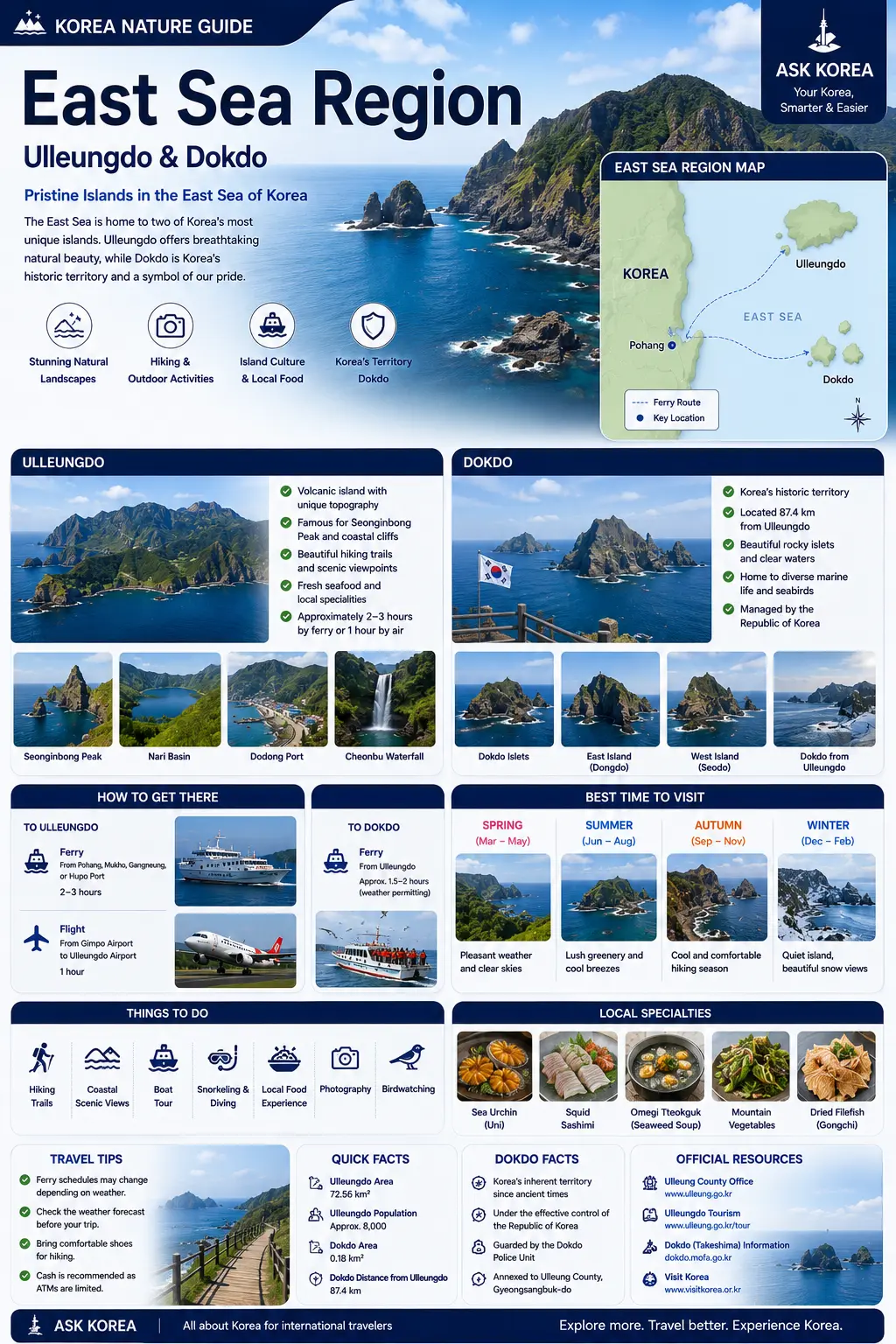
The East Sea Region is home to two of Korea's most remarkable islands: Ulleungdo and Dokdo. Rising dramatically from the deep waters of the East Sea, these volcanic islands are renowned for their spectacular cliffs, crystal-clear waters, untouched natural landscapes, and exceptional biodiversity.
Key takeaways
- Dramatic volcanic islands
- Spectacular coastal cliffs
- Crystal-clear waters
- Unique geological formations
- Scenic hiking trails
- Rich marine ecosystems
The Complete Guide
The East Sea Region is home to two of Korea's most remarkable islands: Ulleungdo and Dokdo. Rising dramatically from the deep waters of the East Sea, these volcanic islands are renowned for their spectacular cliffs, crystal-clear waters, untouched natural landscapes, and exceptional biodiversity.
Unlike the sandy beaches found along Korea's southern coast, the East Sea Region is defined by rugged coastlines, steep volcanic terrain, scenic hiking trails, and breathtaking ocean views. It is an ideal destination for travelers seeking nature, adventure, and unique geological landscapes.
Highlights
Islands in the East Sea Region
Ulleungdo — Ulleungdo is a volcanic island located approximately 120 kilometers east of the Korean Peninsula. Surrounded by steep cliffs and emerald waters, it is famous for its dramatic scenery, coastal walking trails, mountain peaks, waterfalls, and fresh seafood. Popular attractions include Seonginbong Peak, Haengnam Coastal Walking Trail, Nari Basin, and the island's scenic observation points.
Dokdo — Dokdo consists of two main volcanic islets and numerous surrounding rocky outcrops. Located east of Ulleungdo, it is known for its distinctive volcanic formations, abundant seabird populations, and pristine marine environment. Visits are possible by ferry from Ulleungdo, subject to weather and sea conditions.
Best Time to Visit
Spring
Summer
Autumn
Winter
Recommended Experiences
Travel Tips
Summary
The East Sea Region offers one of Korea's most spectacular island experiences. Ulleungdo captivates visitors with its volcanic peaks, dramatic coastlines, and scenic hiking trails, while Dokdo is renowned for its striking natural beauty and unique marine environment. Together, these islands provide an unforgettable journey into one of Korea's most distinctive coastal landscapes.
Ask AI About This Topic
Have a question about Ulleungdo & Dokdo?
Get instant, locally-checked answers from the ASK KOREA AI. Ask anything from specific edge cases to itinerary decisions.
"How do I get to Ulleungdo and Dokdo, and how many days do I need?"
ASK KOREA Transit