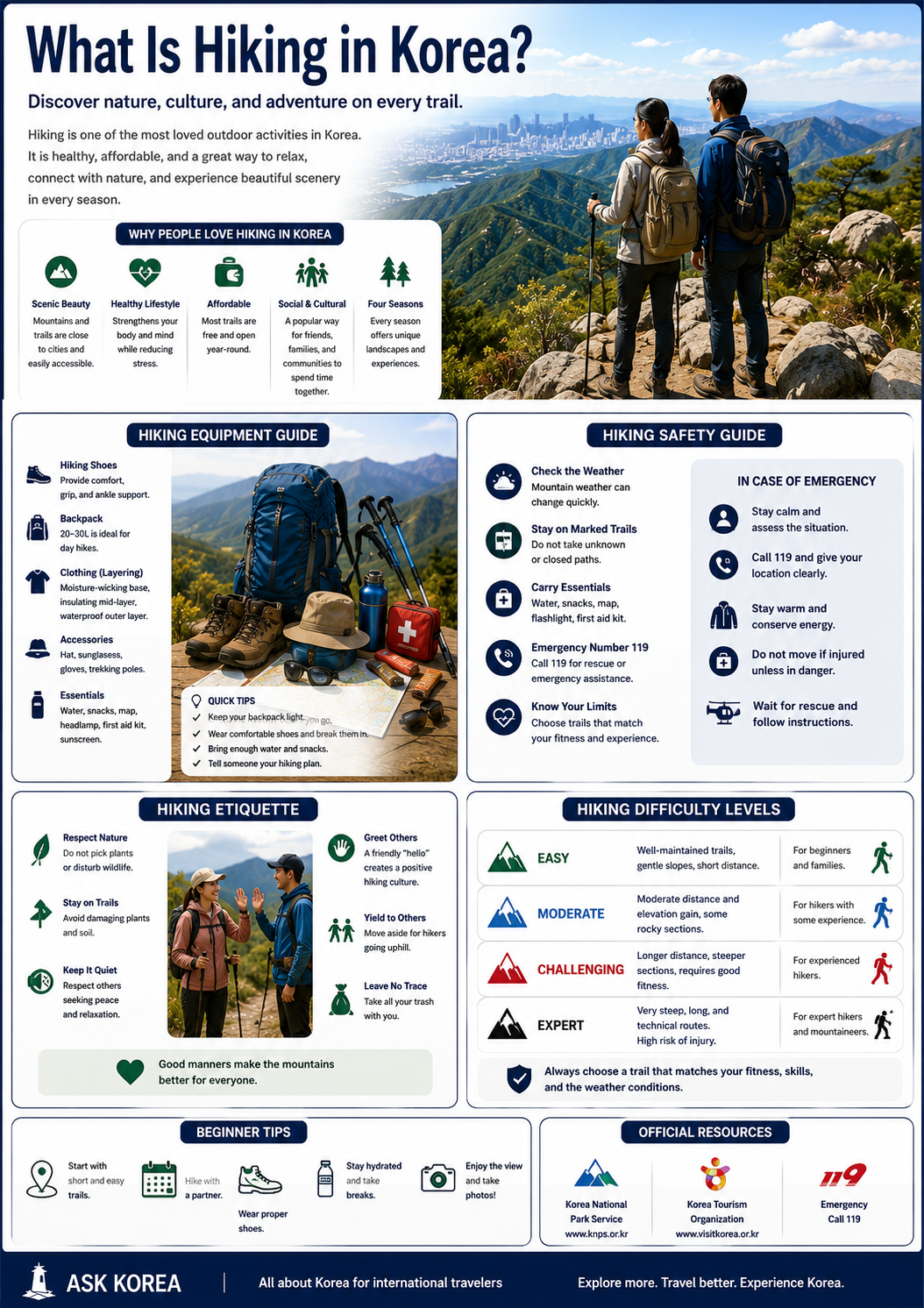
What Is Hiking in Korea?
Hiking is one of Korea's most loved outdoor activities — this guide covers what hiking in Korea is like, what to bring, how to stay safe, trail etiquette and difficulty levels.
Quick Summary
Hiking in Korea is safe, affordable and rewarding. With the right equipment, preparation and respect for nature, anyone can enjoy unforgettable mountain adventures all year round.
Key takeaways
- Proper equipment improves both safety and comfort. Wear appropriate footwear, carry sufficient water, and prepare for changing weather conditions before every hike.
- Good preparation, proper equipment, and following trail regulations are the keys to a safe and enjoyable hiking experience in Korea.
- Responsible hiking protects Korea's mountains and ensures enjoyable experiences for future visitors. Respect nature, other hikers, and local cultural sites at all times.
- Selecting a hiking route that matches your ability is essential for both safety and enjoyment. Korea provides excellent trails for beginners, intermediate hikers, and experienced mountaineers alike.
The Complete Guide
What Is Hiking in Korea?
Hiking is one of the most popular outdoor activities in South Korea and an important part of the country's lifestyle and culture. With nearly 70 percent of the nation covered by mountains, hiking is enjoyed by people of all ages throughout the year.
Korea offers an extensive network of well-maintained trails that range from short urban walks to challenging summit routes. Most hiking trails are clearly marked, equipped with safety facilities, and easily accessible by public transportation, making hiking convenient for both residents and international visitors.
Many mountains are also home to historic Buddhist temples, scenic valleys, waterfalls, and panoramic viewpoints, allowing visitors to experience Korea's natural beauty and cultural heritage in a single trip.
Whether you are looking for a leisurely forest walk, a sunrise summit, or a full-day mountain adventure, Korea offers hiking experiences suitable for every level of ability.
Why Hike in Korea?
Best Seasons
Spring (March–May)
Summer (June–August)
Autumn (September–November)
Winter (December–February)
Popular Hiking Destinations
Hiking Equipment Guide
Preparing the right equipment is essential for a safe and enjoyable hiking experience. Korea's mountains are generally well maintained, but weather conditions can change rapidly, especially at higher elevations.
Essential Equipment
Footwear
Clothing
Backpack
A backpack with a capacity of 20–30 liters is suitable for most day hikes.
Food and Water
Navigation
Safety Items
Seasonal Equipment
Summer
Winter
Equipment Checklist
Hiking Safety Guide
Korea's hiking trails are generally very safe, but mountain environments always require careful preparation and responsible decision-making.
Before You Start
During the Hike
Emergency Situations
If an emergency occurs
Common Safety Tips
Hiking Etiquette
Korea has a strong hiking culture built on respect for nature and consideration for other hikers. Following proper etiquette helps preserve the environment and creates a pleasant experience for everyone.
Trail Etiquette
Environmental Responsibility
Cultural Respect
Many hiking trails pass historic temples and sacred sites.
Visitors should
Photography Courtesy
Hiking Difficulty Levels
Korea offers hiking routes suitable for every level of experience.
Easy
Suitable for beginners and families.
Typical hiking time
1–2 hours
Examples
Moderate
Suitable for visitors with average fitness.
Typical hiking time
2–5 hours
Examples
Challenging
Steep climbs with longer hiking distances.
Typical hiking time
5–9 hours
Examples
Expert
Demanding full-day mountain routes requiring excellent fitness and careful preparation.
Examples
Choosing the Right Trail
Consider
Ask AI About This Topic
Have a question about What Is Hiking in Korea??
Get instant, locally-checked answers from the ASK KOREA AI. Ask anything from specific edge cases to itinerary decisions.
"I am new to hiking in Korea — how should I prepare for my first mountain trail?"
ASK KOREA Transit