What Is Korean Traditional Medicine?
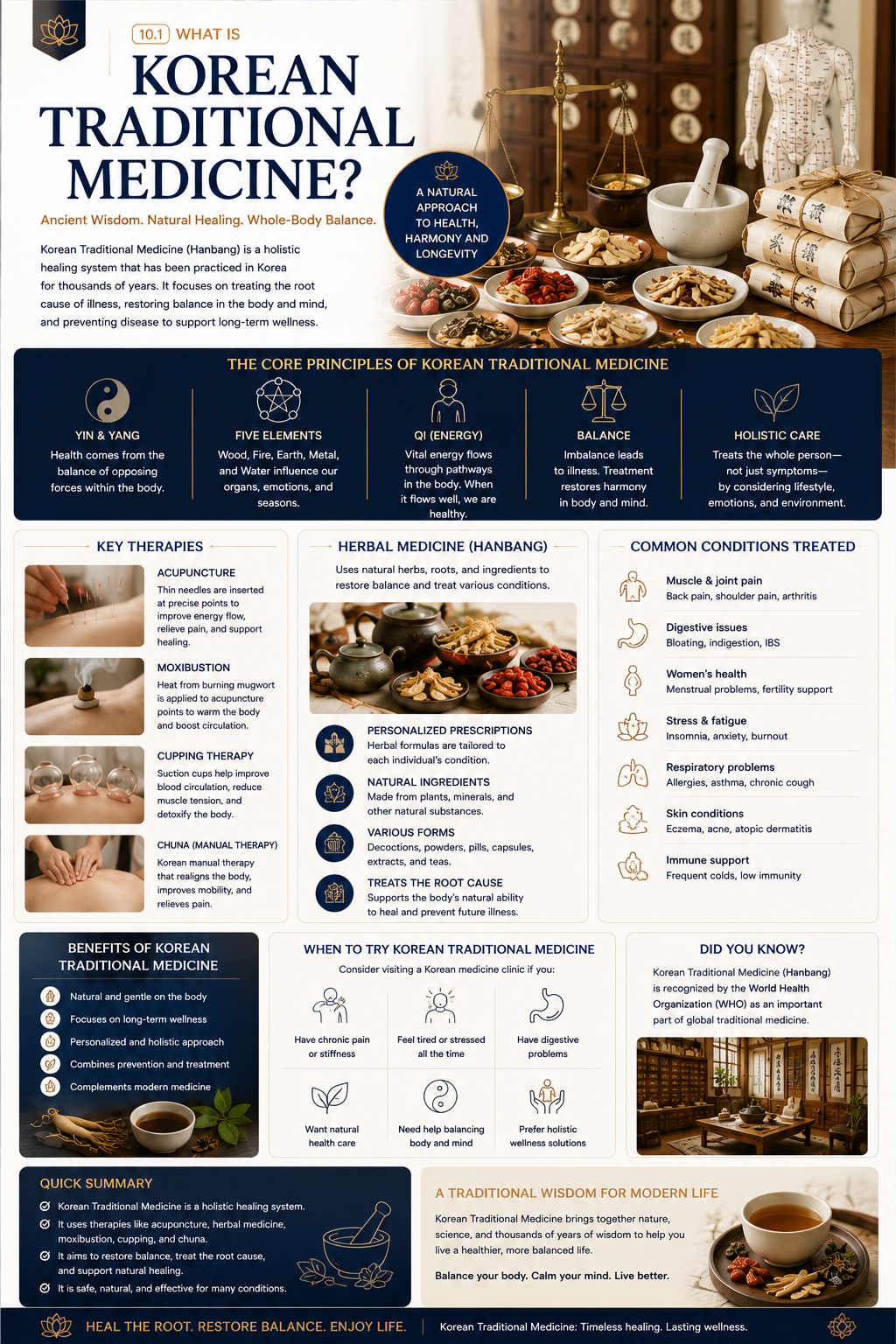
Korean Traditional Medicine, known as Hanbang, is a holistic healthcare system practiced on the Korean Peninsula for more than 2,000 years.
Quick Summary
Key takeaways
- Hanbang emphasizes prevention, balance, and holistic well-being, making it one of Korea's most important cultural and medical traditions.
The Complete Guide
Korean Traditional Medicine, commonly known as Hanbang, is a holistic healthcare system that has been practiced on the Korean Peninsula for more than 2,000 years. Rather than focusing solely on treating diseases, Hanbang aims to maintain harmony within the body, prevent illness, and promote long-term health.
Practitioners consider a person's overall physical condition, lifestyle, and individual characteristics before recommending treatments. Natural therapies such as herbal medicine, acupuncture, moxibustion, cupping therapy, and dietary guidance are commonly used to support the body's natural healing abilities.
Today, Korean Traditional Medicine is officially recognized within Korea's healthcare system and works alongside modern medicine. Visitors can experience Hanbang through wellness centers, traditional medicine hospitals, museums, and educational programs.
Principles of Hanbang
Holistic Care
Treatment focuses on the whole person rather than a single symptom.
Balance
Maintaining harmony within the body is considered essential for good health.
Prevention
Healthy lifestyle habits are encouraged to reduce the risk of illness.
Natural Healing
Traditional therapies are designed to support the body's natural recovery process.
Highlights
Ask AI About This Topic
Have a question about What Is Korean Traditional Medicine??
Get instant, locally-checked answers from the ASK KOREA AI. Ask anything from specific edge cases to itinerary decisions.
"Explain Korean Traditional Medicine (Hanbang) and how visitors can experience it."
ASK KOREA Transit