Moxibustion
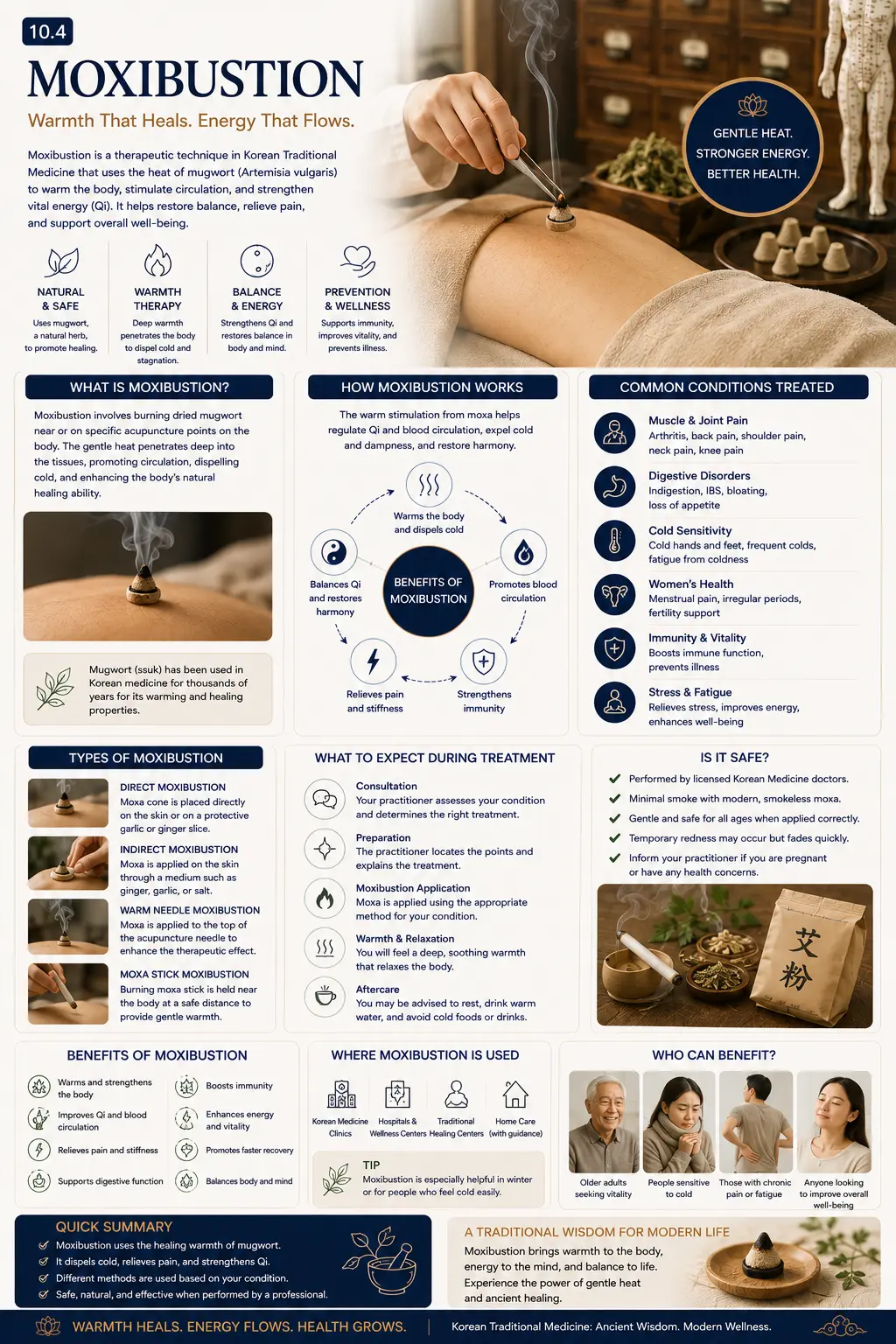
Moxibustion uses the gentle heat of burning dried mugwort near acupuncture points to warm the body and support circulation.
Quick Summary
Key takeaways
- Moxibustion combines traditional Korean medical knowledge with gentle heat therapy, providing a natural approach to wellness through licensed professional care.
The Complete Guide
Moxibustion is a traditional Korean therapy that uses the gentle heat produced by burning dried mugwort, known as moxa, near specific acupuncture points on the body.
Rather than inserting needles, moxibustion applies controlled warmth to selected areas. It has been practiced for centuries as part of Hanbang and continues to be offered by licensed Korean Traditional Medicine clinics.
Treatments are carefully supervised by qualified practitioners to ensure comfort and safety.
How Moxibustion Works
Natural Heat Therapy
Dried mugwort is heated to provide gentle warmth.
Targeted Treatment
Specific acupuncture points are selected according to the patient's condition.
Professional Supervision
Licensed practitioners carefully monitor each treatment session.
Individualized Care
Treatment plans are customized for every patient.
Common Wellness Applications
Highlights
Ask AI About This Topic
Have a question about Moxibustion?
Get instant, locally-checked answers from the ASK KOREA AI. Ask anything from specific edge cases to itinerary decisions.
"Explain moxibustion in Korean Traditional Medicine and what a session feels like."
ASK KOREA Transit