Korea Traditional Market Travel Guide
Across the country, traditional markets offer a true taste of Korean life — this guide covers how to plan a market journey from region to region.
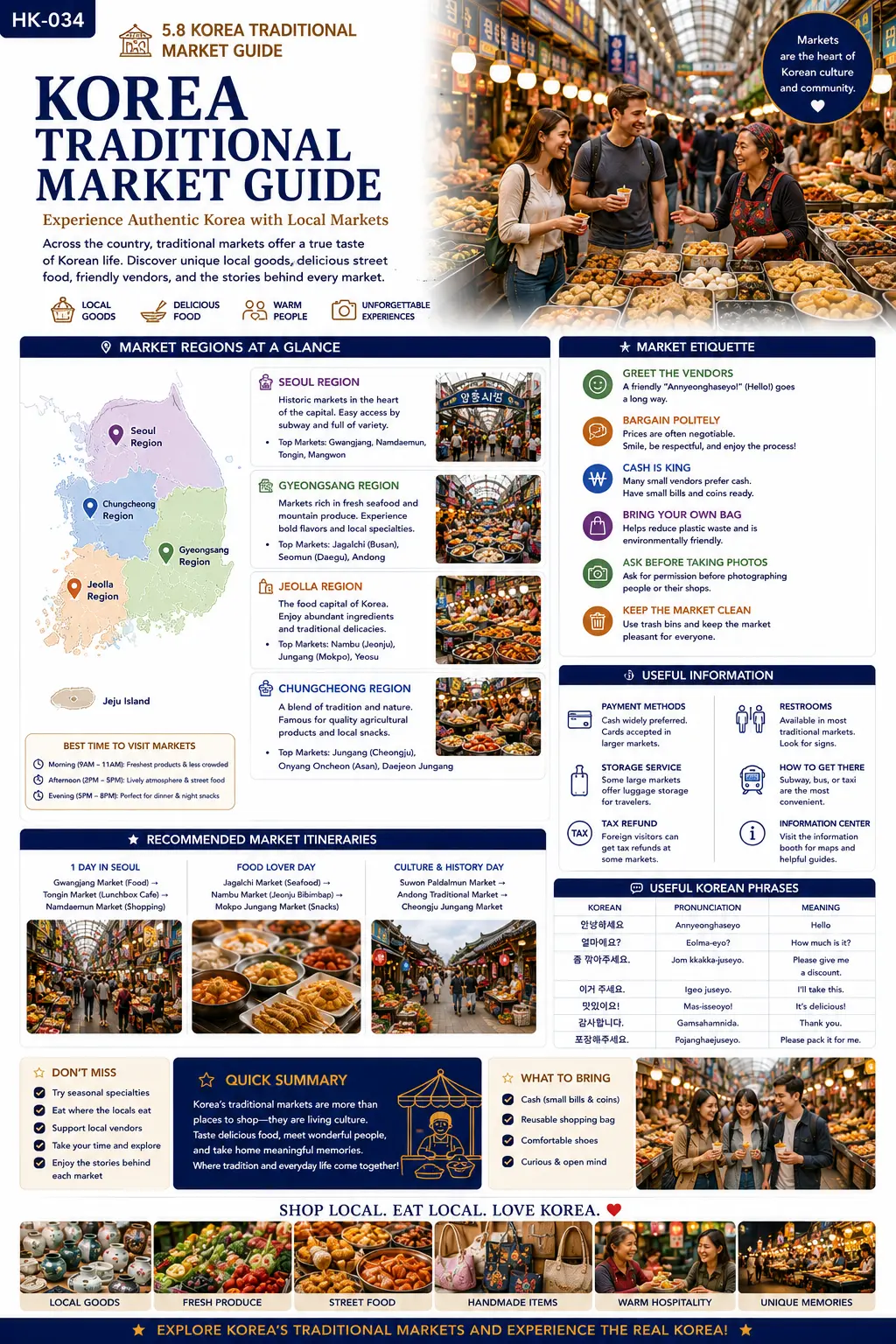
Quick Summary
Key takeaways
- Korea's traditional markets offer authentic cultural experiences through outstanding food, friendly local communities, and centuries of commercial history. Whether shopping, dining, or simply exploring, these markets provide some of the most memorable experiences for visitors to Korea.
- Korea's festivals provide visitors with authentic cultural experiences throughout every season, combining traditional customs, local communities, food, music, and spectacular celebrations.
The Complete Guide
Traditional markets remain one of the best places to discover Korea's authentic culture, cuisine, and everyday life. Every region offers distinctive foods, local specialties, and historic marketplaces that reflect the traditions of surrounding communities.
Whether enjoying seafood in Busan, tasting street food in Seoul, exploring culinary traditions in Jeonju, or shopping for fresh local products in central Korea, visitors will experience a side of Korea that cannot be found in modern shopping malls.
Choosing the Right Market
For First-Time Visitors
Namdaemun Market
Gwangjang Market
For Street Food
Gwangjang Market
Tongin Market
Seomun Market
For Seafood
Jagalchi Market
Noryangjin Fish Market
Mokpo Dongbu Market
For Traditional Shopping
Namdaemun Market
Seomun Market
Onyang Traditional Market
For Local Cuisine
Nambu Market
Gyeongju Jungang Market
Cheongju Yukgeori Market
What to Bring
Comfortable walking shoes
Reusable shopping bag
Camera
Reusable water bottle
Cash for small purchases
Mobile phone
Portable charger
Best Seasons
Spring
Fresh seasonal produce and comfortable weather.
Summer
Night markets and seasonal fruits.
Autumn
Harvest season with abundant local specialties.
Winter
Warm street food and festive market atmosphere.
Travel Tips
Visit early for the freshest products.
Try regional specialties unique to each market.
Support family-owned businesses.
Respect local customs and keep walkways clear.
Explore beyond the main entrances to discover hidden food stalls and specialty shops.
Use public transportation whenever possible, as parking near popular markets can be limited.
Festivals
Korea's festivals celebrate the country's rich cultural heritage, seasonal beauty, local traditions, and vibrant community spirit. Throughout the year, cities and regions across the country host festivals featuring traditional performances, food, music, lanterns, flowers, seafood, and cultural activities that attract millions of visitors.
Many festivals have centuries-old origins rooted in agriculture, religion, or local customs, while others have developed into internationally recognized cultural events. Together, they provide visitors with unforgettable opportunities to experience Korean traditions and contemporary culture.
Whether enjoying spring blossoms, summer beaches, autumn lantern displays, or winter ice festivals, Korea offers exciting celebrations during every season.
Highlights
Why Visit Korean Festivals?
Experience local culture.
Enjoy traditional performances.
Taste regional specialties.
Participate in seasonal celebrations.
Meet local communities.
Discover Korea's vibrant cultural atmosphere.
Best Time to Visit
Spring (March–May)
Cherry blossoms, flowers, and traditional celebrations.
Summer (June–August)
Beach festivals, mud festivals, and music events.
Autumn (September–November)
Lantern festivals, cultural celebrations, and harvest events.
Winter (December–February)
Ice festivals, snow events, and seasonal celebrations.
Popular Experiences
Cultural performances
Traditional games
Local food tasting
Fireworks
Lantern displays
Parades
Photography
Craft workshops
Music performances
Community celebrations
Ask AI About This Topic
Have a question about Korea Traditional Market Travel Guide?
Get instant, locally-checked answers from the ASK KOREA AI. Ask anything from specific edge cases to itinerary decisions.
"Build me a Korea traditional market itinerary across several regions."
ASK KOREA Transit