Seoul Traditional Markets
Seoul is home to some of Korea's oldest and most famous traditional markets, each with its own character, specialities and street food culture.
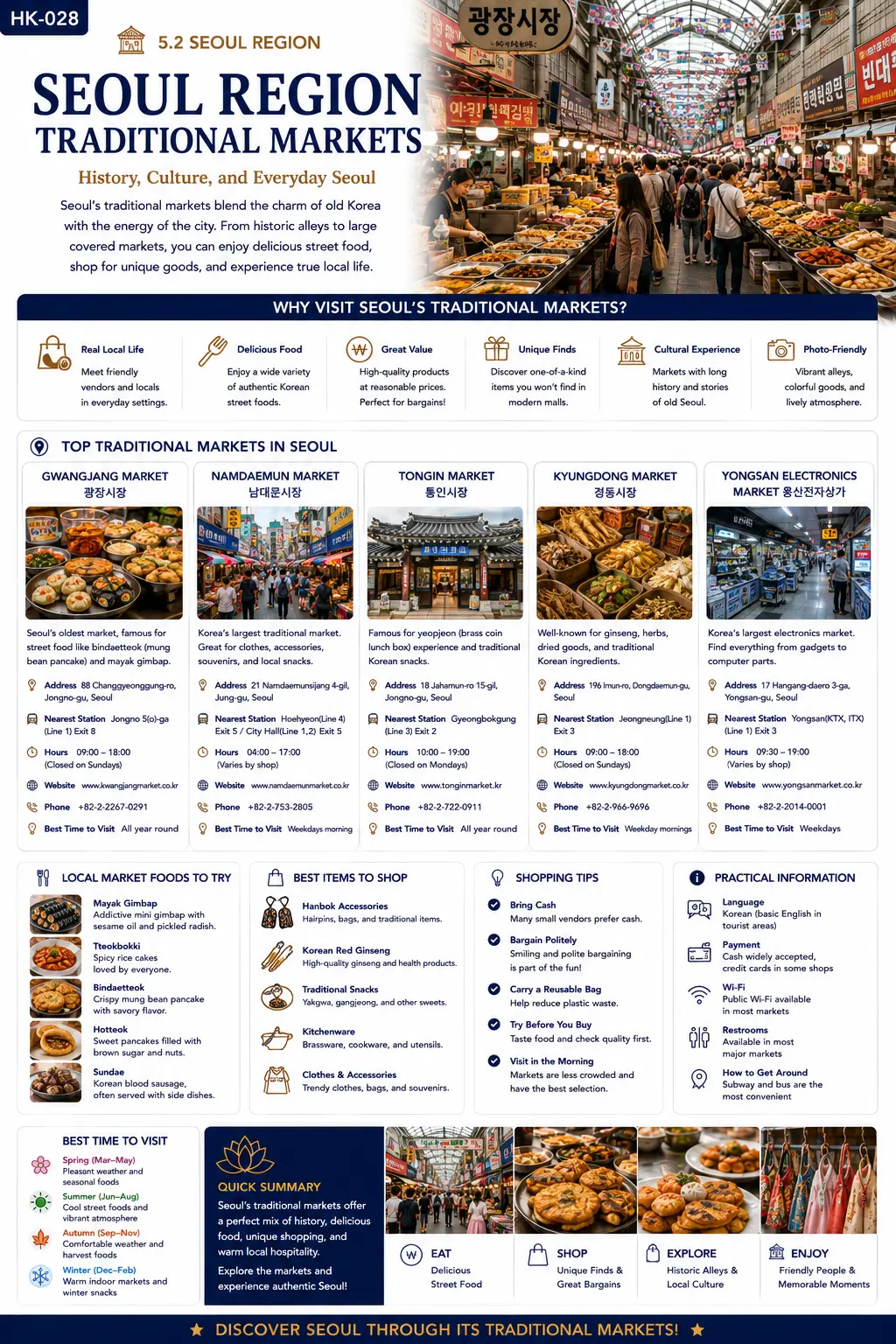
Quick Summary
Key takeaways
- Seoul's traditional markets combine history, food, shopping, and local culture, providing visitors with some of the city's most authentic and enjoyable experiences.
The Complete Guide
Seoul is home to some of Korea's oldest and most famous traditional markets. Each market has developed its own unique identity, offering everything from historic shopping streets and street food to seafood, textiles, antiques, and local specialties.
Traditional Markets in Seoul
Namdaemun Market
Namdaemun Market is Korea's largest traditional market and has operated continuously for more than 600 years. Visitors can shop for clothing, accessories, souvenirs, kitchenware, traditional crafts, and countless local products while enjoying classic Korean street food.
Gwangjang Market
Gwangjang Market is internationally famous for its vibrant street food culture. Signature dishes include Bindaetteok (mung bean pancakes), Mayak Gimbap, handmade noodles, and various traditional Korean snacks prepared fresh in front of visitors.
Tongin Market
Tongin Market is well known for its unique lunchbox café experience, where visitors purchase traditional brass coins to exchange for small portions of food from participating vendors. This interactive dining experience has become one of Seoul's most popular cultural attractions.
Noryangjin Fish Market
Noryangjin Fish Market is Korea's largest seafood market. Visitors can purchase fresh seafood directly from vendors and have it prepared immediately at nearby restaurants, creating one of Seoul's most memorable culinary experiences.
Highlights
Ask AI About This Topic
Have a question about Seoul Traditional Markets?
Get instant, locally-checked answers from the ASK KOREA AI. Ask anything from specific edge cases to itinerary decisions.
"Plan a one-day traditional market tour in Seoul with food stops and transport."
ASK KOREA Transit