What Makes Korean Traditional Crafts Special?
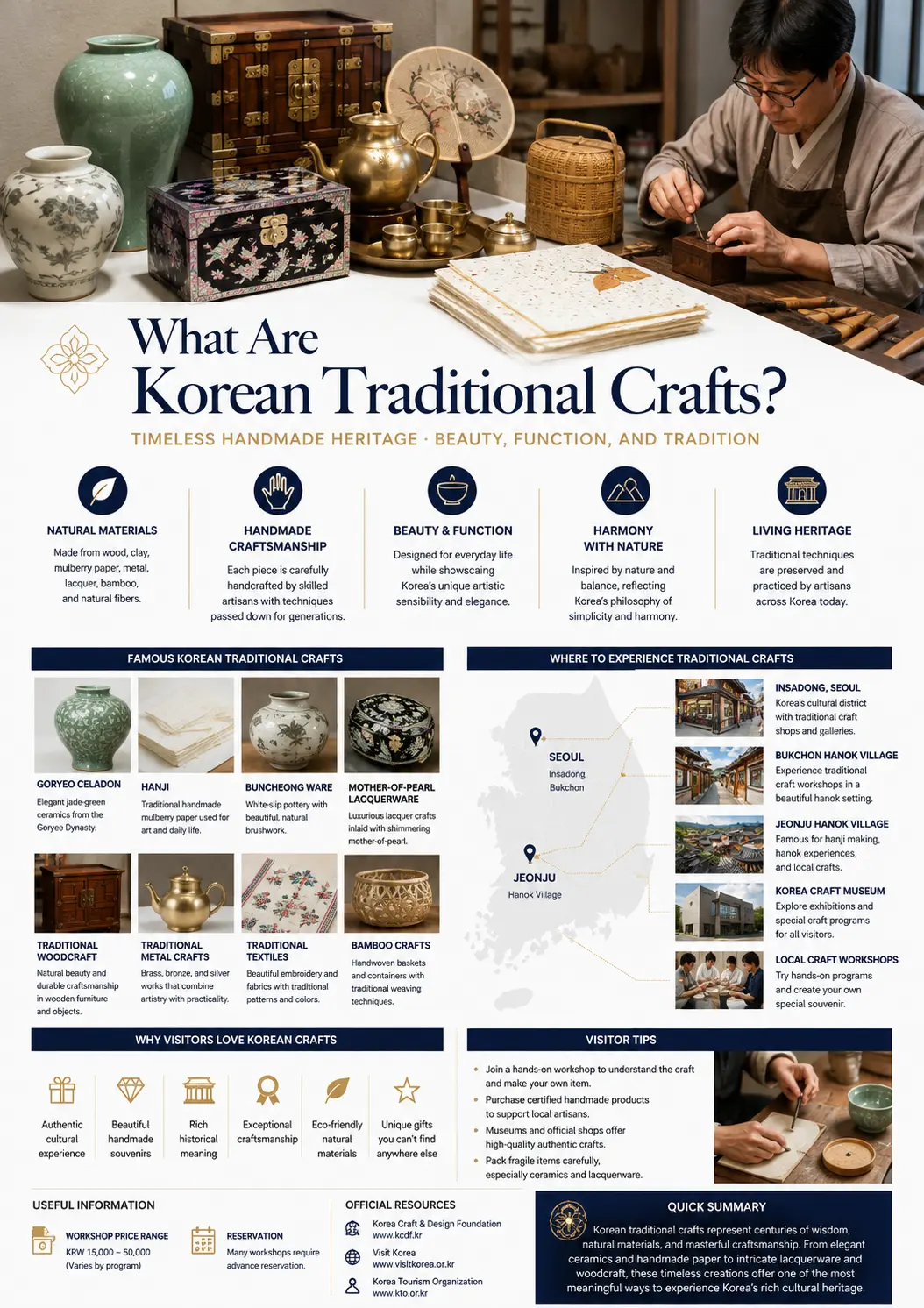
Korean traditional crafts represent centuries of artistic skill, cultural heritage and practical craftsmanship, combining beauty, functionality and harmony with nature.
Quick Summary
Key takeaways
- Korean traditional crafts preserve centuries of artistic knowledge through handmade techniques, natural materials, and timeless designs that continue to inspire modern artisans.
The Complete Guide
Korean traditional crafts represent centuries of artistic skill, cultural heritage, and practical craftsmanship. Created using techniques refined over generations, these works combine beauty, functionality, and harmony with nature.
Traditional Korean artisans carefully transform natural materials such as paper, clay, wood, bamboo, metal, lacquer, and shells into objects that are both practical and artistic. Many crafts were originally produced for royal courts, Buddhist temples, scholars, and everyday households, reflecting Korea's appreciation for simplicity, elegance, and fine craftsmanship.
Today, these traditions continue through master artisans, museums, cultural centers, and hands-on workshops, allowing visitors to experience Korea's living artistic heritage.
Characteristics of Korean Traditional Crafts
Natural Materials
Traditional crafts use environmentally friendly materials including wood, clay, bamboo, stone, lacquer, silk, and Hanji paper.
Handcrafted Excellence
Each piece is carefully made by skilled artisans using techniques passed down through generations.
Balance Between Beauty and Function
Traditional Korean crafts are designed to be practical while maintaining elegant artistic qualities.
Cultural Heritage
Many traditional crafts continue to preserve techniques developed hundreds of years ago.
Highlights
Ask AI About This Topic
Have a question about What Makes Korean Traditional Crafts Special??
Get instant, locally-checked answers from the ASK KOREA AI. Ask anything from specific edge cases to itinerary decisions.
"What makes Korean traditional crafts special, and which ones should I look for?"
ASK KOREA Transit